
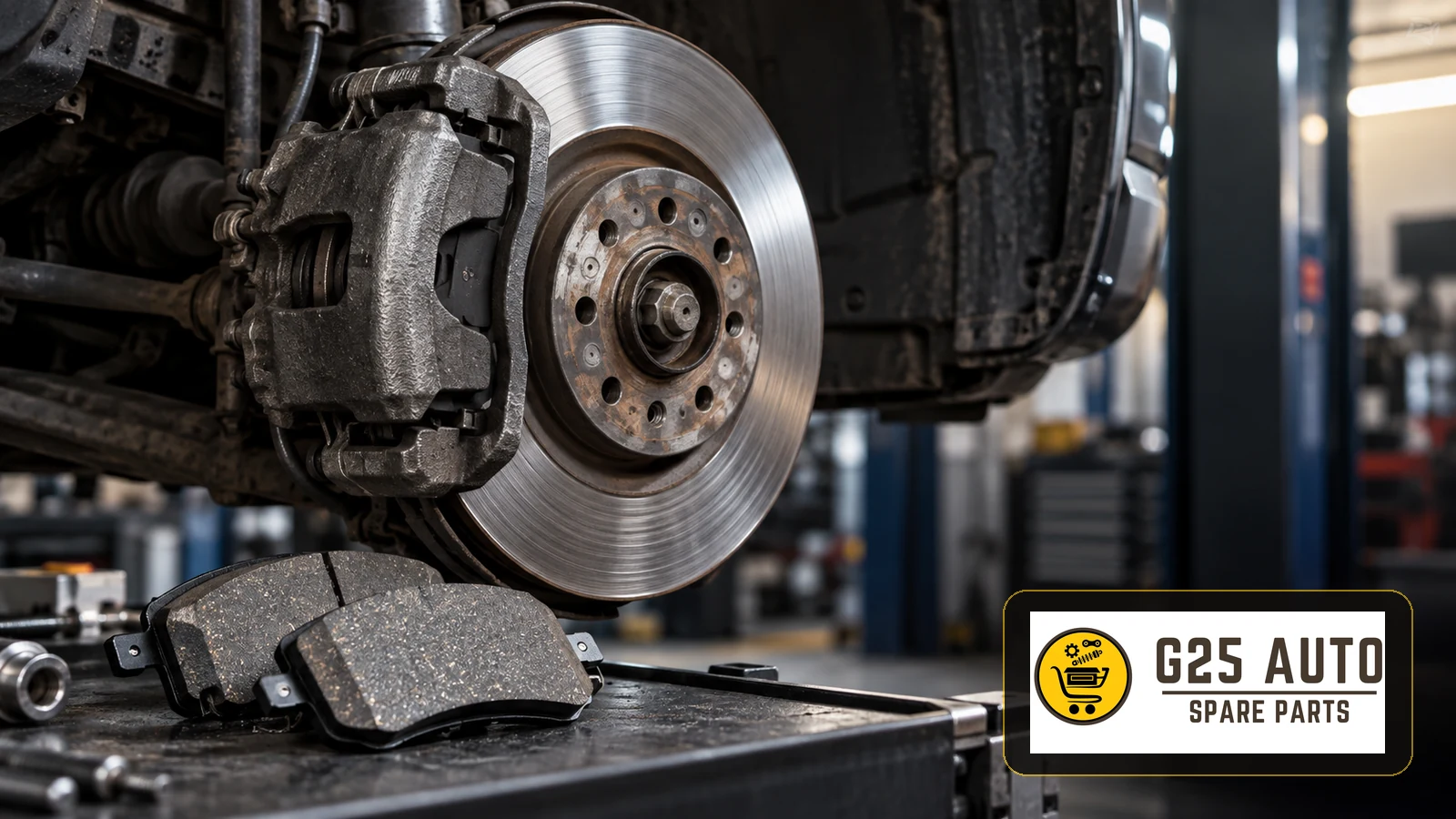
Why Brake Pad Replacement Matters: What You Need to Know for Safer Driving
The braking system is one of the foundations of safe driving. Among its critical components are brake pads, which help bring the vehicle to a controlled stop when required. Pads wear over time, and leaving worn pads in service can lead to more than a loss of performance: it can also put road users at risk.
So when should brake pads be replaced, which warning signs deserve attention, and why does replacement matter so much? The following points explain the essentials.
1. What Are Brake Pads and What Do They Do?
Brake pads press against the brake disc, creating the friction that slows the vehicle. Stopping distance, brake feel and overall braking safety depend in part on their condition. A worn pad may no longer perform these functions effectively.
2. When Should Brake Pads Be Replaced?
Brake pads should be inspected and replaced when necessary, following the vehicle manufacturer’s guidance rather than a universal mileage interval. The distance they last varies with driving style, road conditions and the load carried by the vehicle.
3. Five Signs That Brake Pads May Need Replacement
-
A metallic scraping noise when braking
-
A longer stopping distance than usual
-
Vibration through the brake pedal
-
Uneven or unstable steering response when braking
-
The brake pad warning light coming on, where fitted
These signs call for assessment of the braking system; they do not establish pad wear on their own. Ignoring them can allow brake disc damage to develop and lead to more costly repairs.
4. What Happens If Brake Pads Are Not Replaced?
Failing to replace worn brake pads in time can put the driver and other road users at risk. Overall braking performance can deteriorate, the vehicle may take longer to stop in an emergency, and the risk of a serious collision can increase.
5. How Do You Choose the Right Brake Pads?
Brake pad dimensions and fitment requirements vary between vehicle applications. The quality of the friction material also affects braking performance. For workshops and B2B buyers serving European and Balkan markets, selection therefore requires checking the intended vehicle application rather than assuming compatibility from the model name alone.
Conclusion: Do Not Neglect Brake Pads
Replacing worn brake pads in time supports both driving comfort and road safety. Choosing suitable pads and attending to their condition are part of keeping the braking system effective. Remember: small components play an important role in safe driving.