
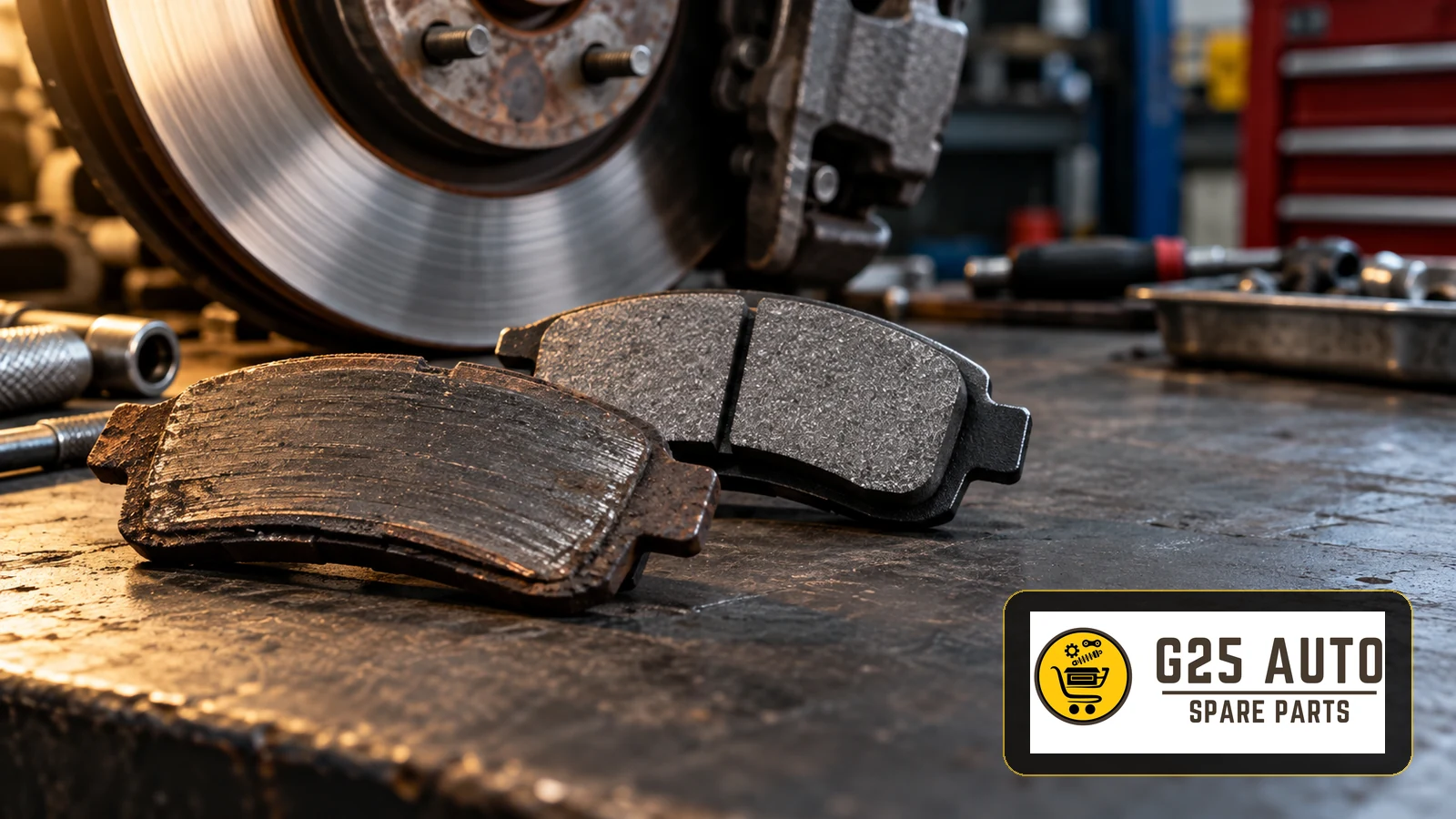
What Are Brake Pads and Why Do They Matter?
Brake pads are wearing components that press against the brake discs rotating with the wheels when the brake pedal is applied, helping the vehicle slow down and stop. This friction gradually wears away the pad material. Delaying replacement can reduce braking performance and damage the discs.
How Can You Recognise Worn Brake Pads? Seven Warning Signs
Drivers can notice changes in braking without specialist equipment. The following symptoms call for inspection, although they do not necessarily identify worn pads as the cause:
- Metallic rubbing noises: A high-pitched squeal or metal-on-metal grinding during braking may indicate worn pads and should be investigated.
- Longer stopping distances: Reduced stopping performance can be associated with pad wear or another braking problem.
- Brake pedal vibration: Vibration through the pedal or steering wheel during braking can indicate an issue with the pads or disc surfaces.
- A soft or spongy pedal: Unusually long pedal travel may indicate a hydraulic or other braking fault and requires professional assessment.
- A warning light: On vehicles equipped with pad wear sensors, an instrument-panel warning may indicate that the pads need attention.
- Pad thickness: Inspect the remaining friction material and compare it with the vehicle or component manufacturer’s specified replacement limit.
- Pulling to one side: Pulling left or right during braking may be associated with uneven pad wear or another brake system fault.
Original Equipment or Aftermarket Brake Pads: Which Should You Choose?
Choosing between original equipment and aftermarket pads can be confusing. The comparison below highlights the points European and Balkan workshops and B2B buyers should check for each application:
| Feature | Original Equipment Pads | Aftermarket Pads |
|---|---|---|
| Fitment | Verify the correct vehicle and brake system specification. | Verify the manufacturer’s application information. |
| Performance | Check the specified application and performance information. | Performance varies by product; review supporting documentation. |
| Cost | Compare the quotation for the required part. | Compare the quotation and product specification. |
| Service life | Depends on operating conditions and use. | Depends on the product, operating conditions and use. |
| Approval | Check the relevant manufacturer documentation. | Check applicable approval documentation for the intended application. |
Important: When selecting aftermarket pads, review the relevant product approval documentation rather than relying on general claims about a brand or supplier.
Key Points About Brake Pads
- Arrange inspections according to the vehicle manufacturer’s guidance and operating conditions.
- Unusual braking noises can provide an early warning that inspection is needed.
- Inspect the condition of the brake discs when replacing pads.
- Choose suitable parts with the relevant supporting documentation.
Frequently Asked Questions
What happens when brake pads are completely worn out?
The metal backing can contact the disc directly. This can seriously impair braking, increase stopping distances and damage the discs, potentially requiring disc replacement as well.
How long does brake pad replacement take?
The time required at a professional workshop depends on the vehicle, the condition of the braking components and whether one or both axles need attention. The workshop should assess the work before giving an estimate.
Why do brake pads wear out quickly?
Frequent aggressive braking, sudden stops from high speed, sustained heavy loads and dense urban traffic are among the factors that can shorten pad life.
Why do newly fitted brake pads make noise?
Some noise may occur while new pads bed in against the discs. Persistent or unusual noise should prompt checks of installation and disc condition rather than waiting for a fixed mileage to pass.
Conclusion
The braking system is essential to vehicle safety. Regular pad inspections and suitable replacement parts help maintain braking performance. Workshops should assess wear and disc condition, while buyers should confirm the correct application and product documentation before ordering.