
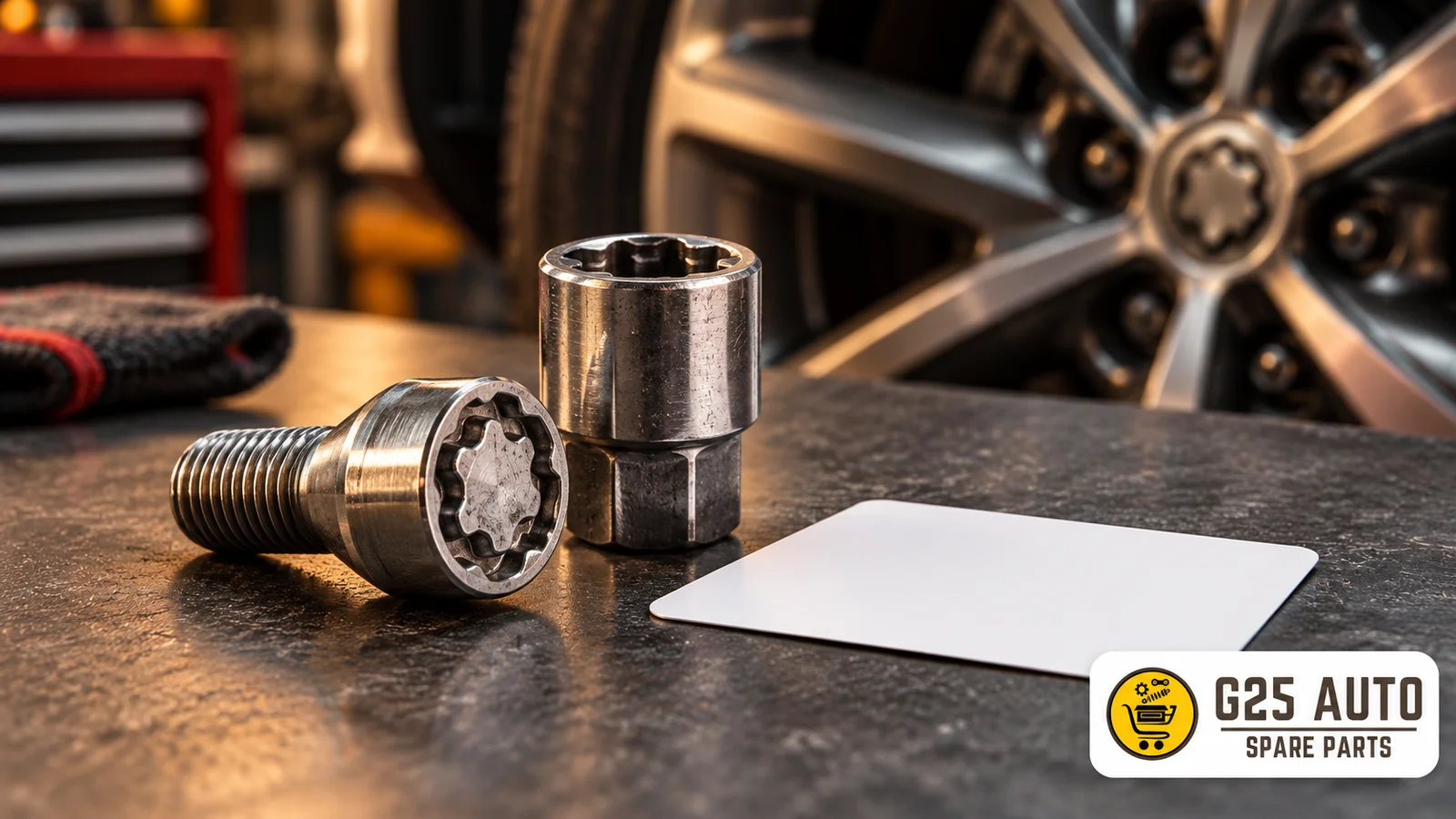
Short answer: When a locking wheel nut key is lost, do not order a new key based solely on the vehicle model or a similar photo. First find the lock set brand, code card if available, and previous records. Key matching and locking nut compatibility with the vehicle are separate checks. If the code cannot be found, follow the manufacturer’s current support procedure; leave the removal process to a specialist service.
Why is the code card kept separate from vehicle information?
The vehicle make and model alone do not indicate which lock set is installed. The previous owner or service may have subsequently fitted a different set to the vehicle. Therefore, do not start by purchasing the first key that appears suitable for the vehicle name. Try to identify the lock through packaging, invoices, accessories delivered with the vehicle, and service records. Also ask whether the product reference in the documents and the key code are the same field.
McGard offers a customer service that uses the code on its own personal code card for replacement keys. This is that manufacturer’s process; it does not mean you can use another brand’s card in the same system. You need to record the information on the card exactly as it is, not guess missing characters, and verify which set it belongs to. It should not be assumed that all accessory documents found in a vehicle match the current lock.
Where should you conduct the initial check?
After parking the vehicle safely, review the folder where vehicle documents are kept, the tool bag, and previous delivery documents. Photograph the key adapter you find separately without confusing it with ordinary sockets. If there are multiple adapters, note which vehicle they came from. While the presence of an old card is encouraging, ordering with a card belonging to the wrong set can create a new delay. This is why the source of the document is important.
What details should be in the photograph?
The record you share specifically with the service may include the general appearance of the adapter, any readable brand or reference mark, and in which vehicle file the card was found. Take photographs from different angles to clearly show dirty or damaged surfaces; do not perform any operation that will alter the surface. Image comparison is not a definitive match decision. The photograph is a record that helps prepare the information the manufacturer’s support team may request from you.
Do not confuse three different numbers
| Information | Role in verification |
|---|---|
| Vehicle identification | Helps assess vehicle application. |
| Lock set reference | Determines which product documentation to consult. |
| Personal key code | Used in the manufacturer’s replacement key matching process. |
The seller’s stock number may also be added to this information; however, do not assume the seller code is the manufacturer code. In the order message, write next to each number where it was obtained from. For example, phrases like “product reference on the box” and “key code on the card” are more descriptive than an ambiguous string of numbers. If the code is unreadable, clearly state which part is unreadable. Explain the omission from the start rather than creating a record that appears complete with an incorrect character.
Procedure if there is no card
McGard’s customer service page requests that users without a registration card contact the support unit. This information is not a common ordering procedure applicable to all brands. Start with your own lock manufacturer’s current contact page and find out which documents are required. This article makes no promise regarding regional service, delivery options, and fees. These details should be verified from the relevant provider at the time of ordering.
In the support request, distinguish whether the key is lost or damaged. If you have the damaged key, do not discard it; the manufacturer or service may want to examine it. If you know the name and date of the last service location, add it to the record. Rather than describing the problem only as “the lug nut won’t open,” list the parts and documents you have. This way the support team can ask more appropriate questions in the initial response and unnecessary guesswork is reduced.
Before going to the tire service
When making an appointment, state that the vehicle has locking wheel nuts and the status of the key. If the key is available, hand it over with other equipment and check that you received it back after the service. If there is no key, having the service know this in advance rather than learning it during the appointment makes planning easier. This article does not recommend lock breaking, forcing incompatible sockets, or forceful removal methods. The method to be applied should be evaluated by a specialist who can see the condition of the vehicle and the fastener.
A lost key and a loose wheel fastening are different situations. If you have doubts about fastening safety while driving, do not postpone this as a replacement key purchase; make the decision to use the vehicle based on a specialist assessment. Having the key available does not by itself show that the fastening was done correctly. Installation verification should be based on service information valid for the relevant vehicle and product.
How to close the record when the new key arrives?
Before opening the packaging, compare the order reference with the information on the received product. Have the matching verification performed according to the manufacturer’s instructions; do not use forcing as a verification method. If you suspect the wrong product, keep the packaging and correspondence. Rather than telling the service “it looks the same,” show them what code you ordered with. Until the mismatch is resolved, recheck the basis of the initial match rather than trying by purchasing different adapters.
When the process is complete, keep the key in an easily accessible location in the vehicle, and store the registration card as recommended by the manufacturer. If taking digital notes, write the connection to the vehicle and set in the file name. Do not publish sensitive codes in public advertisements or open social media shares. Making the key and related documents part of the handover list when transferring the vehicle can prevent the next user from experiencing the same uncertainty.
Frequently asked questions
Will the key from the same model vehicle fit mine?
The same vehicle model is not proof of a match. The identity of the existing lock set and the manufacturer’s key matching process should be the basis. Do not try forcing the key from a neighbor’s vehicle because it looks similar.
Can a definitive key be selected from a photograph?
A photograph can facilitate the support conversation; it does not provide certainty by itself. Do not consider visual similarity as an order guarantee before the verification requested by the manufacturer is completed. Ask in writing what information the matching is based on.
Does getting a replacement key mean replacing the entire set?
A replacement key and a new lock set are different orders. Describe your need clearly. If a new set is being considered, the vehicle application should also be evaluated separately; the existing key code does not determine the new set’s suitability for the vehicle.
What brief message can I send to the service?
Prepare a concrete record such as: “The vehicle has locking wheel nuts. The key is lost; I have a card and previous invoice belonging to this brand. What information should I communicate privately for matching?” Do not represent a document you don’t have as existing.
Sources and scope
The manufacturer’s McGard customer service and replacement key service with code card pages were reviewed on October 30, 2026. The sources were used only to explain that brand’s support process. Other sections are general verification recommendations for ordering and service communication; not installation or definitive compatibility instructions for a specific vehicle.
Also add to the appointment note which day the vehicle will be delivered and that key verification has not yet been completed. Keeping the expected procedure and verified result separate reduces misunderstanding at service delivery.