
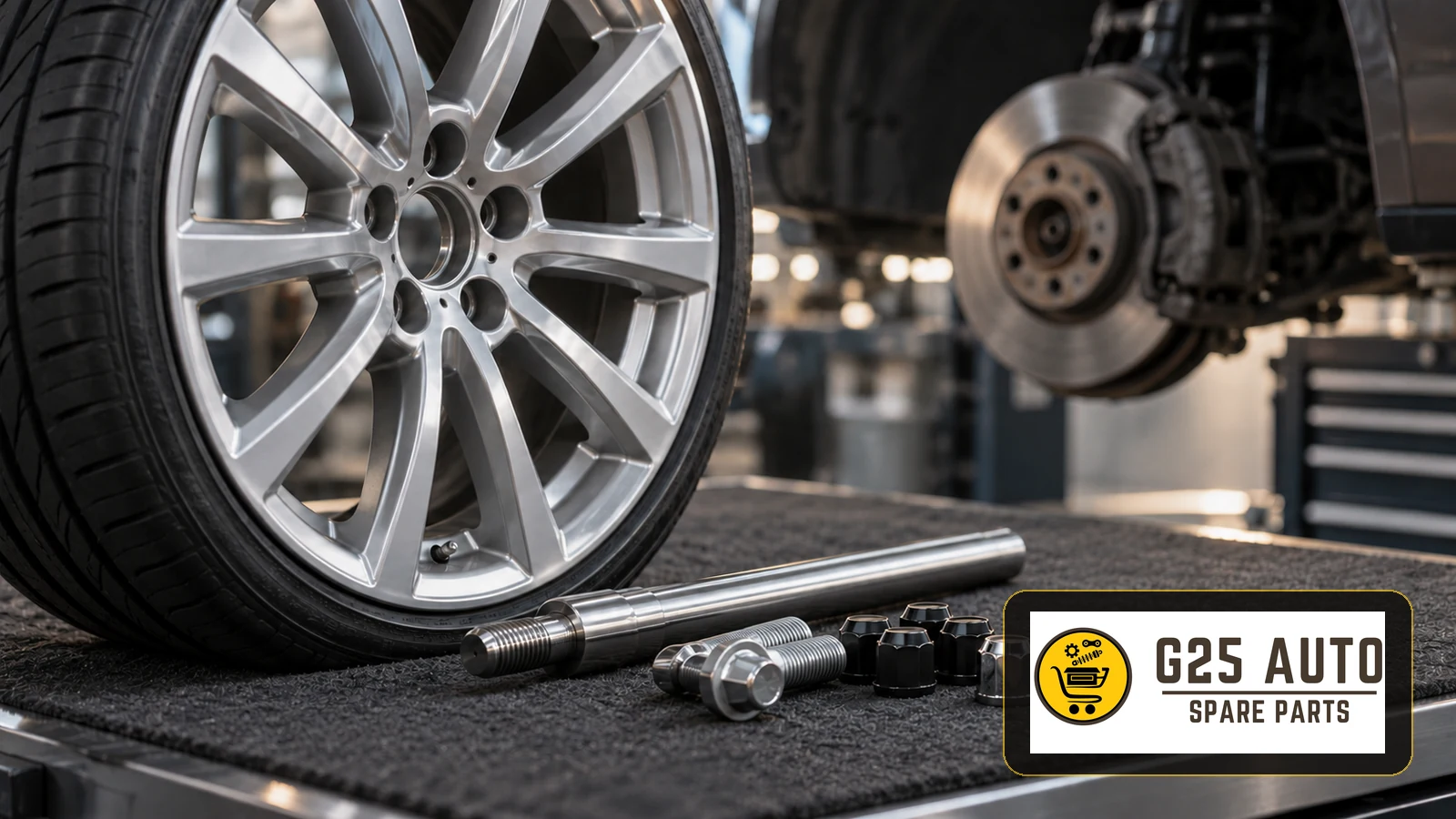
A wheel mounting guide pin helps align a wheel with the hub during installation and reduces the risk of damage around the bolt holes. Wheel bolt caps are plastic or metal accessories that cover the fasteners, providing a decorative finish and some protection from external contamination. Used correctly, these products can help protect the wheel finish and make installation easier.
What Is a Wheel Mounting Guide Pin and Why Use One?
A wheel mounting guide pin is a simple but useful tool, particularly when fitting heavy wheels and tyres. The wheel holes must align with the hub fastenings during installation. When the wheel is held manually, its weight can make alignment difficult and lead to scratches, chipped paint or damage around the holes.
On a suitable wheel-bolt arrangement, the guide pin temporarily screws into a vacant threaded hub hole and helps hold the wheel in position. This makes it easier to insert the remaining bolts. It can be particularly useful when handling alloy wheels with vulnerable edges around the bolt holes.
Advantages of Using a Guide Pin
- Helps protect wheel bolt holes from damage.
- Can reduce installation time.
- Makes wheel positioning easier for one technician.
- Reduces the risk of chipped wheel paint.
- Can reduce handling effort, especially with heavy wheels.
- Supports careful, controlled installation.
- Helps avoid damage to the wheel fastenings during alignment.
Wheel Bolt Caps: Appearance and Protection
A wheel bolt cap is a decorative and protective accessory fitted over a wheel fastener. Caps come in different materials, colours and designs. Alongside their visual role, they can limit direct exposure to dirt and environmental contamination, although they do not guarantee protection against corrosion.
Types of Wheel Bolt Cap
Plastic caps: A common option, plastic caps are available in various colours and price ranges. Some are made from ABS plastic; resistance to ultraviolet exposure and colour fading depends on the particular material and product specification.
Metal caps: Stainless steel or chrome-plated metal versions provide a different visual finish. Durability and cost vary with the construction and coating, so neither should be assumed from appearance alone.
Custom designs: Caps carrying a vehicle brand emblem or a distinctive design provide an opportunity to personalise the wheel’s appearance.
Using a Guide Pin During Wheel Installation
Installation Checklist
- Park the vehicle on firm, level ground.
- Apply the parking brake and select the appropriate gear or parking position for the procedure.
- Loosen the wheel fasteners slightly before raising the vehicle where the vehicle procedure requires it.
- Raise the vehicle safely and secure it with suitable supports.
- Remove the wheel and clean the hub mounting area.
- Screw the correct guide pin into a vacant hub bolt hole, using a position suitable for the tool and wheel arrangement.
- Slide the replacement wheel over the guide pin and position it against the hub.
- Start the other wheel bolts by hand and tighten them lightly.
- Remove the guide pin and insert the final wheel bolt.
- Tighten the bolts progressively in the specified crosswise sequence.
- Lower the vehicle as required by its service procedure and perform final tightening with a torque wrench.
- Follow the vehicle manufacturer’s specified torque settings and installation instructions.
Comparing Guide Pins and Wheel Bolt Caps
| Feature | Guide pin | Wheel bolt cap |
|---|---|---|
| Purpose | Assists wheel installation | Appearance and protection from contamination |
| When used | During wheel changes | Remains fitted in normal use |
| Material | Metal, such as steel or aluminium | Plastic or metal |
| Service life | Reusable while its condition remains suitable | Varies with material and operating conditions |
| Requirement | An optional installation aid where suitable | A decorative accessory; follow the vehicle specification |
Important Criteria for Choosing the Right Product
Both guide pins and wheel bolt caps must suit the vehicle and wheel arrangement. Fastener dimensions, thread sizes and the number of fastenings can vary between applications.
How Should Compatibility Be Checked?
OE and part references: Manufacturer catalogues identify original components by part reference. These references help assess alternatives, but the application and dimensions must still be checked. The reference may appear on the product or its original packaging.
VIN verification: The vehicle identification number helps identify the vehicle configuration in an appropriate catalogue. Use it alongside the wheel and fastener specifications; a VIN lookup alone should not be treated as a guarantee that a particular accessory fits.
Engine code and production date: Vehicles within the same model range can have different specifications depending on their build date and configuration. Include relevant vehicle identification details when checking the correct product.
Wheel Fastener Dimensions and Standards
Metric thread designations such as M12, M14 and M16 appear in wheel fastening applications. The letter denotes a metric thread and the number its nominal diameter in millimetres. A guide pin must match the actual hub thread specification, including its pitch; the diameter designation alone does not establish compatibility.
For a wheel bolt cap, check the exposed fastener head’s shape and dimensions, together with clearance in the wheel recess. Some wheel designs use special fasteners that do not accept a standard cap. Fastener seating geometry should not be confused with the external head profile that the cap covers.
Choosing Original or Aftermarket Products
The choice between original and aftermarket guide pins or bolt caps depends on the application and purchasing priorities. Both options have features to assess.
Original Products
Original products are supplied under the vehicle manufacturer’s brand or through its approved supply arrangements. Check the specified application, product quality information and any applicable warranty terms rather than assuming universal fit or service life. Original bolt caps, particularly on premium vehicles, may carry a brand emblem and form part of the intended wheel design.
Aftermarket Products
Aftermarket products offer alternatives from other manufacturers for the same intended function. The range can provide different designs and purchasing options, but quality, dimensions and suitability vary. Claims of OE equivalence or superior performance require product-specific evidence.
For a simple tool such as a guide pin, assess the thread, construction and intended use rather than relying on the brand category alone. Appearance may also influence the choice of bolt caps. For G25Auto B2B enquiries across Europe and the Balkans, provide the relevant vehicle details and product specifications so the requested options can be checked.
Possible Problems and Symptoms
Difficulties When Installing a Wheel Without a Guide Pin
Damage around the bolt holes: Poorly supported wheel handling can damage the edges of the holes. Initial scratches or marks should be inspected rather than assumed to be harmless, particularly if the hole is deformed.
Chipped paint: Damage to the finish affects the appearance of alloy wheels. Exposed metal can also be vulnerable to corrosion when moisture reaches it.
Difficult positioning: Holding a wheel in alignment while starting the bolts can be awkward, especially for one technician working with a heavy wheel.
Wheel Bolt Cap Problems
Missing caps: Caps that do not fit securely can detach while driving. This creates a replacement cost and may leave loose material on the road.
Cracking and deterioration: Plastic with inadequate resistance to sunlight may fade or become brittle. The rate of deterioration depends on the product and its exposure.
Sticking: Some caps may become difficult to remove as their condition or fit changes with use and temperature exposure.
Diagnosis and Assessment
Checks after wheel installation can reveal problems with the products or the fitting process. A definite diagnosis still requires an appropriate professional inspection.
Signs to watch for: Confirm that every wheel fastener has been tightened to the specified setting. A fastening that is noticeably loose or incorrectly tightened requires attention. Clicking, knocking or vibration from the wheel area after installation calls for prompt inspection of the fastenings and wheel assembly.
Professional assessment: These symptoms do not identify a single fault, as several problems can produce similar effects. A qualified workshop should inspect the vehicle and determine the cause using suitable equipment and service information.
Maintenance and Service Life
Maintenance Checklist
- Clean the guide pin after use and store it in a dry place.
- Inspect its threads for wear or damage.
- Check wheel bolt caps regularly.
- Replace missing or damaged caps with suitable replacements.
- Make sure all caps are in position after a tyre change.
- Check that caps remain securely fitted after washing.
- Have wheel fastener torque checked when required by the vehicle or wheel service instructions.
- Do not force bolt caps into place or apply excessive force.
- Select original or aftermarket products with suitable, verifiable specifications.
Frequently Asked Questions
Can a guide pin be used on every vehicle?
No single pin fits every arrangement. Guide pins are made for particular vehicle and fastener types. Select one that matches the hub thread and is intended for that wheel mounting system. The M12, M14 and M16 designations mentioned above are examples, not universal fitment information.
Are wheel bolt caps compulsory?
Decorative bolt caps are generally optional accessories; follow the vehicle specification. They provide a finished appearance and can reduce direct exposure to dirt or road salt, but they do not make the fastenings corrosion-proof.
Can a wheel be fitted without a guide pin?
Yes, where the wheel mounting arrangement and workshop procedure allow it. A suitable guide pin can make positioning easier, particularly for heavy wheels or when one technician is doing the work, and can reduce the risk of handling damage.
How often should wheel bolt caps be replaced?
There is no single replacement interval for all caps. Inspect them regularly and replace caps that are cracked, damaged, missing or no longer fit securely. Discolouration may also justify replacement for appearance.
Are plastic or metal caps better?
Each has different characteristics. Plastic caps are light and available in various colours and price ranges. Metal versions offer a different finish, with durability dependent on their material and coating. Choose according to fit, operating conditions, appearance and budget.
Which position should the guide pin occupy?
On a suitable wheel-bolt system it goes into a vacant threaded hub hole, often at the top or side if the tool instructions allow. Select a position that helps align the wheel and leaves access to fit the remaining bolts.
Choosing a Supplier for B2B Orders
A reliable supplier matters when purchasing automotive parts and accessories. Clear product descriptions and application information help workshops and trade buyers compare products for their requirements.
For guide pins and bolt caps, the technical specifications should be stated clearly and compatibility should be verifiable. When preparing a G25Auto enquiry for Europe or the Balkans, include the relevant references and dimensions and clarify any product selection or after-sales requirements.
Conclusion
Wheel mounting guide pins and bolt caps are small accessories with distinct roles. The guide pin assists installation and can reduce handling damage, while the cap provides a visual finish and some shielding from contamination.
Compatibility is the priority for both products. Relevant part references, VIN details, vehicle configuration and production date can support checks, but the actual wheel and fastener specification must also match. Refer to vehicle documentation and qualified advice for technical settings and application information.
Choose between original and aftermarket products according to the intended use and purchasing requirements. Assess the specific product’s construction and documented suitability, and source it through a reliable supplier.
Regular care and inspection help keep these accessories usable. Store the guide pin clean and dry, inspect caps regularly and replace damaged items in good time.
Correct product selection and professional wheel installation support proper vehicle maintenance. Check the application carefully and carry out the work to the relevant workshop and manufacturer instructions.