
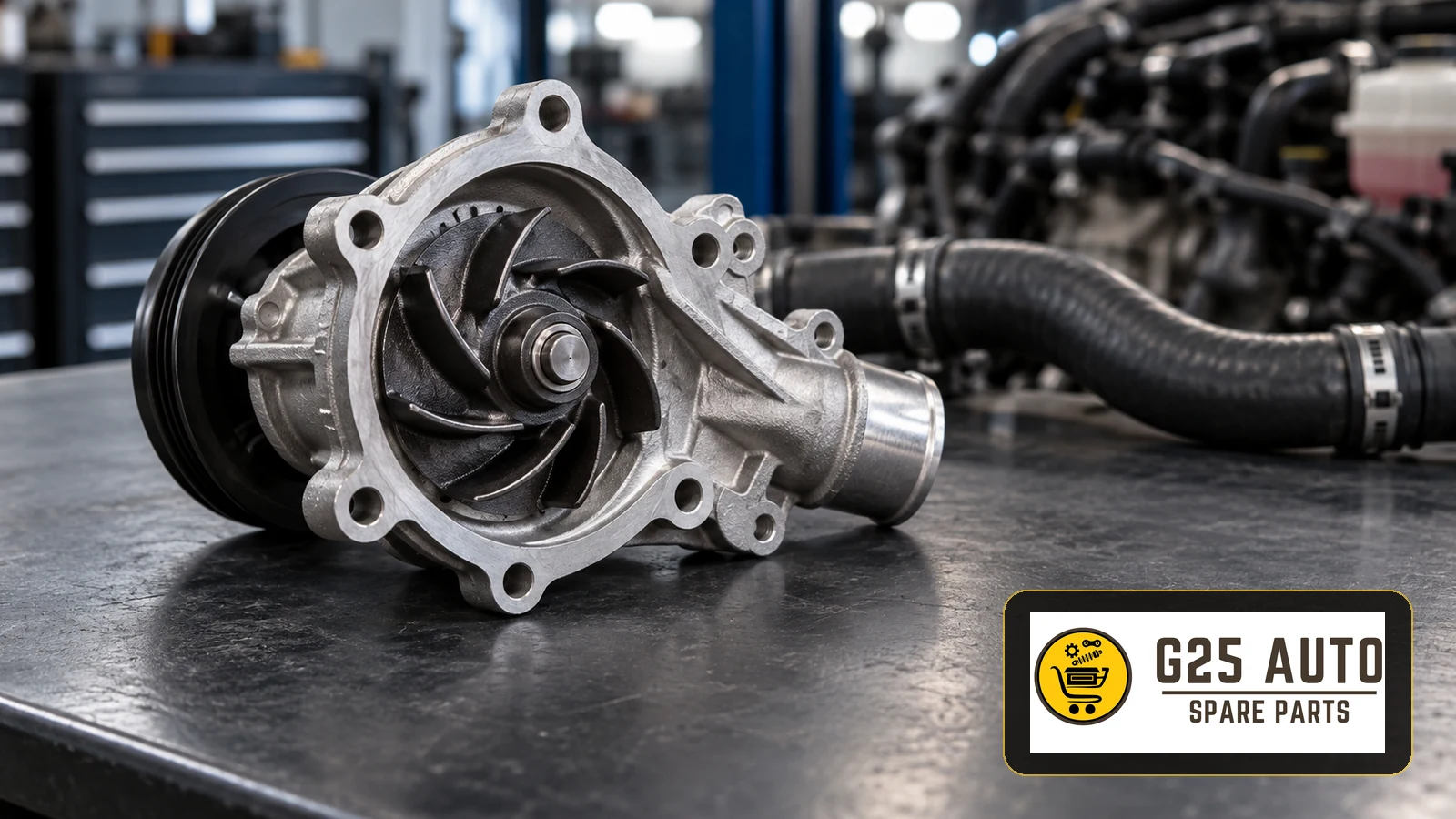
A water pump circulates coolant through the engine’s cooling system. Coolant loss, abnormal noise or overheating can justify a pump investigation, but they do not establish the failed component on their own. For European and Balkan workshops, a sound replacement order starts with diagnostic findings, identification of the installed pump and confirmation of the exact application before agreeing the repair scope.
Identify the pump before discussing replacement
HELLA’s coolant pump technical guide explains the distinction between mechanical and electric pumps. Mechanical pumps use an engine-driven arrangement; electric pumps can operate independently of engine speed. A vehicle may have more than one coolant pump, serving different circuits.
Make the component description specific. Ask the workshop whether the enquiry concerns the main engine coolant pump or another identified cooling circuit, and whether the installed unit is mechanically or electrically driven. This prevents an ambiguous request for a “water pump” from becoming an order for the wrong component.
For a cross-border enquiry, retain the manufacturer’s article reference alongside the local component name. Add photographs of the existing unit and its location to the enquiry record. Use photographs to explain what the technician is looking at, then obtain catalogue confirmation for the proposed replacement.
Separate reported symptoms from workshop findings
Leakage, noise and inadequate cooling
HELLA lists coolant loss, noise and insufficient cooling among possible signs of pump failure. Its guide also identifies bearing, seal, impeller, drive and electrical faults. Ask the technician to record what was actually found rather than treating the driver’s description as a confirmed pump diagnosis.
Use a short diagnostic handover: the reported complaint, conditions when it occurs, relevant repair history, checks completed and unresolved questions. Attach the workshop’s findings to the parts enquiry. If a quotation is requested before diagnosis is complete, mark the proposed component as provisional and agree who will authorise the final order.
Interpret leakage after recent installation carefully
Gates’ installation problem guide distinguishes limited initial seepage from continuous leakage associated with seal damage. For a recently fitted pump, record the leakage location and circumstances and consult the applicable product instructions. A photograph alone should not become a universal rule to accept or reject a pump.
Build an application record the supplier can check
Collect the VIN, engine identification and production details available for the vehicle. Add the existing pump’s legible markings, the installed drive arrangement and any relevant connections or housing details. Ask the supplier to identify the current catalogue entry for the exact offered article and clarify any application restrictions.
Keep the identification evidence with the quotation. If the proposed reference changes, request updated confirmation and record the accepted substitution. Avoid closing the enquiry with only a broad vehicle description or a statement that two pumps look alike.
Compare genuine and aftermarket offers using the same application record. Request the manufacturer, article reference, installation information and package contents for each offer. Treat price, availability, supply terms and warranty documentation as information to obtain from the supplier for that transaction; none is established by this guide.
Agree the replacement scope and timing
Use the relevant vehicle maintenance information and diagnostic findings to agree when work is required. Do not assign a universal mileage or age limit to every pump. Record the reason for replacement on the job card, including whether it follows a confirmed fault or forms part of an authorised maintenance operation.
For belt-driven applications, Gates’ water pump replacement guide recommends pump replacement when belt kits are fitted. Check this recommendation against the actual drive layout and applicable vehicle instructions. A recommendation for a belt-driven system does not define the replacement scope for every electric or auxiliary pump.
Ask the workshop to list the pump, required sealing items and any associated drive components as separate quotation lines. Confirm what the selected kit includes and what must be ordered separately. Obtain the workshop’s application-specific labour estimate and approval for the proposed work before releasing the parts.
Prepare installation and completion checks
Gates’ replacement guide calls for a cool engine, clean mounting surfaces, new sealing items and the specified coolant and tightening instructions. It limits sealant use to applications where the vehicle manufacturer recommends it. Give the technician the relevant instructions with the supplied part rather than substituting a generic torque or installation sequence.
The Gates installation problem guide explains how contamination and dry rotation can damage mechanical seal faces. Follow the actual product’s preparation procedure, including its coolant requirements, and avoid spinning a new pump dry as an informal counter check.
HELLA also directs workshops to the vehicle manufacturer’s filling and bleeding procedure. Before closing the job, retain the fitted reference, coolant specification and completion record. Ask the workshop to document leakage and functional checks under the applicable repair instructions, with any remaining concern clearly handed over for further investigation.
Workshop and purchasing checklist
- Separate the reported complaint from confirmed diagnostic findings.
- Identify the cooling circuit and mechanical or electric pump arrangement.
- Collect vehicle identifiers, existing markings and useful photographs.
- Obtain application confirmation for the exact offered reference.
- Resolve substitutions and confirm package contents before dispatch.
- Agree replacement timing, associated parts and the authorised scope.
- Prepare the specified coolant, sealing and installation information.
- Retain the fitted reference and the workshop’s completion checks.
Frequently asked questions
Does overheating prove the water pump has failed?
No. It is a symptom to investigate. Request the technician’s findings before approving a replacement pump order.
Is a pump always driven by the timing belt?
No. Identify the actual arrangement, including any electric or auxiliary pump, before discussing associated drive parts.
Should a water pump be replaced at a fixed mileage?
Use the vehicle’s applicable maintenance requirements and diagnostic evidence. This guide does not set a universal replacement interval.
Can an aftermarket pump be selected by appearance?
Use the exact reference and documented application. Photographs support the enquiry but do not replace the supplier’s application check.