
Replace scheduled service parts when the vehicle-specific maintenance plan requires them, and replace wear components when inspection or diagnosis confirms the need. A single mileage chart cannot reliably cover a mixed fleet. For European and Balkan workshops, distributors and fleet buyers, an effective maintenance plan connects the exact vehicle, its operating conditions and service history to a documented parts order.
Build a maintenance plan around the vehicle
Start with the VIN, engine and transmission identification, production details and available service records. Establish which maintenance operations are due by time, distance or the vehicle’s service indication. Record the source of each requirement so another workshop or fleet manager can understand the decision.
Frequent short trips, urban work and sustained loads deserve attention when reviewing the applicable maintenance instructions. Ford’s service guidance explains that intervals vary with model and engine, and that oil-life monitoring does not replace mandatory maintenance. Apply the instructions for the actual vehicle rather than transferring one manufacturer’s schedule across a fleet.
Separate scheduled work from inspection findings
A job card should distinguish an operation that is due from a defect found during inspection. An oil service may be scheduled; a worn suspension joint needs an inspection finding. Keep uncertain diagnoses open until the technician has established the cause. A warning light, vibration or noise should trigger investigation rather than an automatic order for the most familiar component.
Engine oil, filters and cooling components
Select engine oil using the required vehicle specification and approval information. A description such as synthetic or mineral is insufficient to establish suitability or justify a longer drain interval. Include the oil filter and other service items required by the maintenance procedure, checking the actual application before ordering.
Engine air, cabin and fuel filters have different functions and service requirements. Verify which filters the vehicle uses, their replacement instructions and the correct catalogue application. Do not assume every petrol or diesel vehicle shares the same filter arrangement or interval.
For cooling-system work, confirm the specified coolant and its service requirements. Check leaks, hoses and the condition of the system as part of diagnosis. Coolant colour alone does not establish compatibility. A thermostat or water pump should not become a routine replacement item solely because a generic mileage table lists it; use the applicable repair procedure and inspection findings.
Brakes, tyres and suspension: document the condition
Use applicable limits for brake assessment
Record pad condition and disc measurements against the limits for the actual braking system. Inspect for damage and investigate abnormal wear, vibration or noise. Brembo’s maintenance guidance identifies minimum disc thickness and surface defects as replacement considerations. Keep brake-fluid service requirements separate from the remaining life of pads and discs.
Check tyres and suspension together
Assess tyre wear, damage, pressure and age using the vehicle and tyre manufacturers’ guidance. Michelin’s tyre-life guidance highlights abnormal wear and the role of professional inspections. Uneven wear warrants investigation; it does not identify a failed suspension part by itself.
Inspect dampers, joints, bushes and relevant fixings using the applicable procedure. Document the defect and the required repair scope before purchasing. Seasonal tyre planning should reflect the vehicle’s use and destination requirements, with local rules checked for the markets concerned.
Clutch and transmission: identify the system before ordering
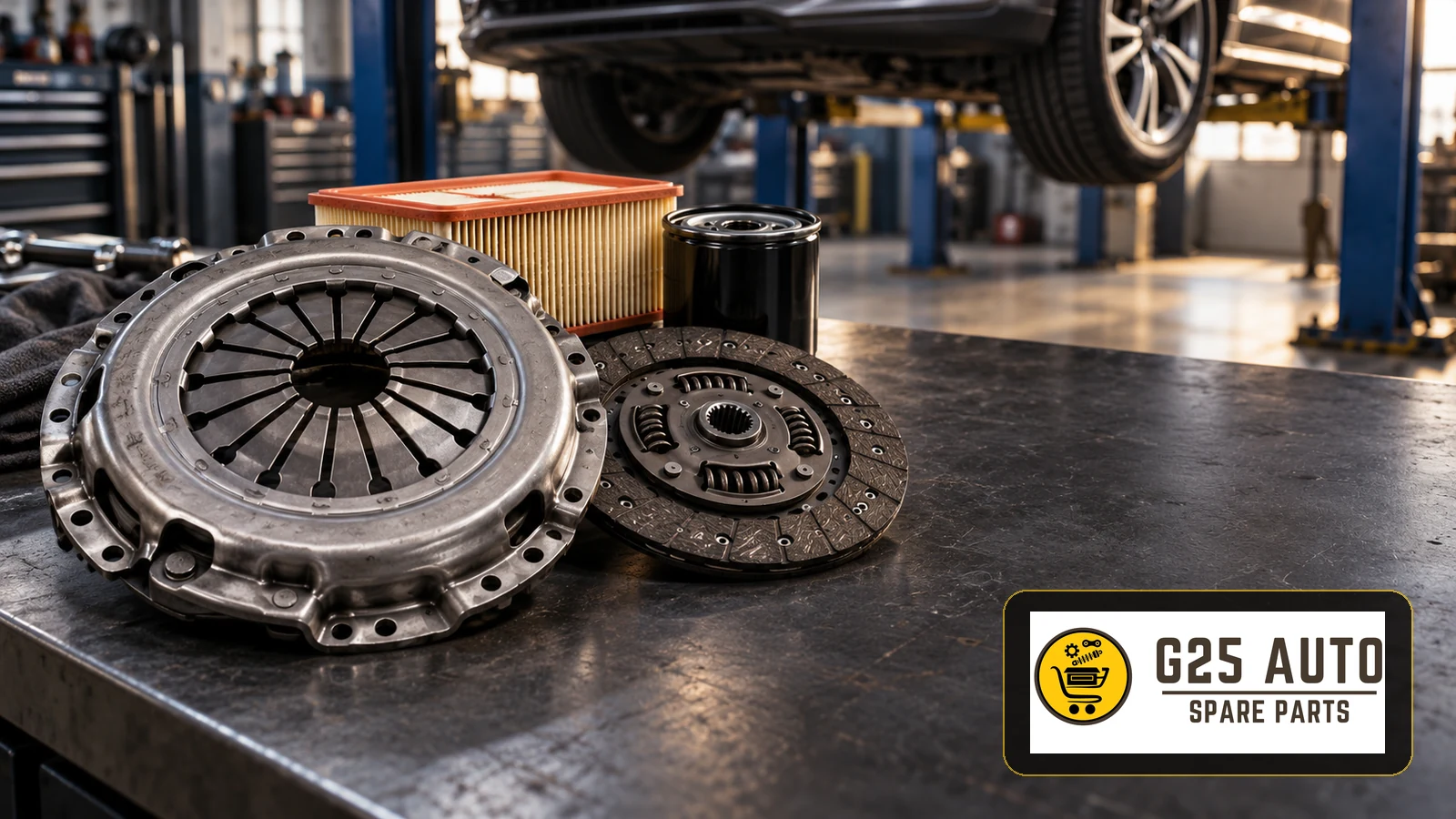
Clutch slip, difficult engagement and vibration can have different causes. Confirm the complaint and diagnose the system before selecting a clutch kit or related parts. Check what the chosen kit actually contains and which additional components the repair instructions require. A generic expected clutch lifespan is not evidence that a particular clutch needs replacement.
For automatic, dual-clutch and other transmission servicing, establish the exact transmission and the applicable fluid specification, service interval and procedure. ZF’s oil-service FAQ directs users to the relevant lubricant lists and manufacturer requirements. Its guidance also distinguishes an approval from wording such as suitability claims. Do not substitute a universal fluid or interval across different transmissions.
Battery and electrical checks need test evidence
A low voltage reading can indicate insufficient charge without proving that the battery has reached the end of its service life. VARTA’s battery-testing guidance distinguishes state of charge from state of health and stresses the correct test settings for the battery technology.
Record the test result and follow the prescribed charging, retesting or replacement process. Investigate related starting and charging faults where indicated. Confirm battery technology and any vehicle-specific replacement requirements before ordering; matching physical size alone is insufficient.
Workshop and procurement checklist
- Confirm vehicle, engine, transmission and relevant equipment identifiers.
- Retrieve the applicable maintenance schedule and review service history.
- Separate due service operations from faults requiring diagnosis.
- Record inspection findings, measurements and their applicable limits.
- Check each part against a current catalogue and its application restrictions.
- Verify fluid specifications, documented approvals and kit contents.
- Resolve unclear references with the supplier before authorising the order.
- Record fitted parts, completed work and the basis for the next service.
For aftermarket purchasing, request identifiable products and supporting technical information. A lower quotation, a familiar brand or a general quality claim does not establish fitment. Clear application data and traceable job records help workshops and distributors resolve questions without inventing compatibility, stock or delivery commitments.
Frequently asked questions
Can every vehicle use the same service interval?
No. Use the schedule for the vehicle and its powertrain, including applicable operating-condition requirements.
Does synthetic oil automatically permit a longer interval?
No. The required oil specification and vehicle maintenance instructions determine the service requirement.
Should a battery be replaced after one low voltage reading?
Not on that evidence alone. Follow the appropriate test, charge and retest procedure to assess its condition.
What should accompany a B2B parts request?
Provide vehicle identification, the diagnosed repair scope, verified part references and any necessary specification or kit-content requirements.