
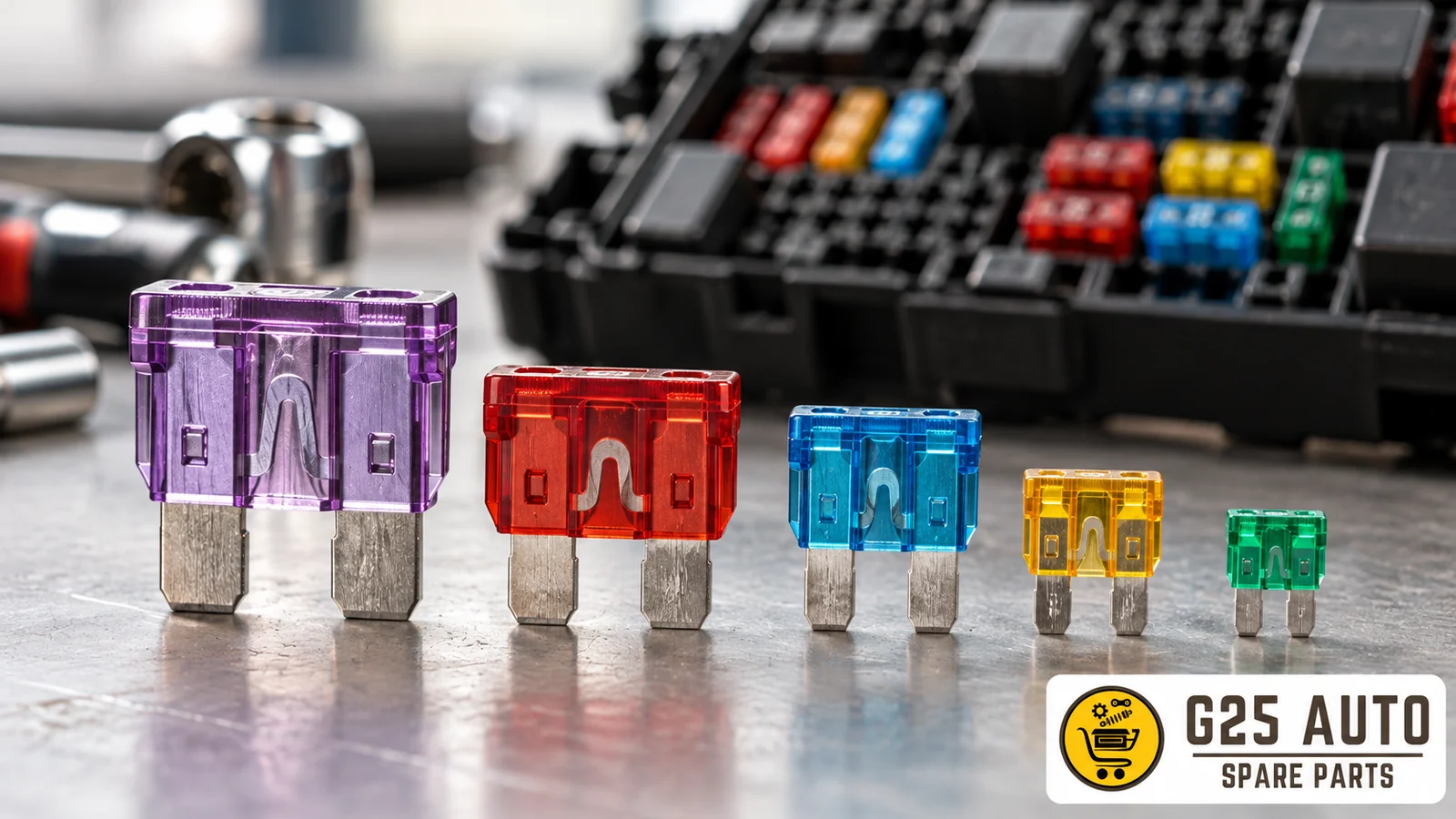
Short answer: Do not select a vehicle fuse based solely on color or socket fit. Find the correct circuit from the vehicle’s current owner’s manual; verify the specified current rating and fuse type together. If the fuse blows repeatedly, do not attempt to suppress the problem with a higher-rated product. The cause of the fault should be investigated, and the replacement decision should be made according to the relevant vehicle instructions.
Why doesn’t non-functioning equipment immediately mean ordering a fuse?
If an accessory does not work, it does not necessarily mean its fuse is faulty. Operating conditions, the relevant control, connections, or another component may also require evaluation. This guide does not extract a definitive fault diagnosis from a specific complaint. First, describe which function does not work and under what conditions. If there is any aftermarket equipment, also write that information in the service record. This way, fuse replacement does not turn into a guess that substitutes for proper inspection.
In fuse selection, it is helpful to separate two questions: What does the vehicle require for this circuit, and what exactly is the product in your hand? A photograph of the old part can help with the second question; the answer to the first question should be sought in the relevant vehicle document. Do not overlook the possibility that an incorrect product may have been installed previously. Treating the removed part as the sole source of truth can lead to the previous incorrect selection persisting in the new order.
First, find the correct owner’s manual
Do not confuse documents from different years or trim levels belonging to the same model name. Access the fuse section in the vehicle’s owner’s manual and check which circuit is being discussed. A box photograph on the internet may belong to a different vehicle. If the diagram on the cover is unreadable, do not directly use another similar-looking diagram. Verifying the document’s connection to the vehicle is a task that must be completed before purchasing parts.
Record location and circuit information separately
When speaking with service, instead of just saying “the box inside” or “the fuse in the corner,” communicate both the location description from the document and the circuit description. In applications with multiple boxes, location information helps prevent examination of the wrong part. This article does not describe which cover to open or which part to remove on a specific vehicle. Access and procedure sequence should be taken from the vehicle’s own instructions.
Physical type and current rating are checked together
Littelfuse’s automotive aftermarket catalog addresses both the suitability of the physical type of the fuse to be replaced and the selection of the correct current rating for the circuit. Ford’s owner’s manual also requires compliance with the specified current rating. The conclusion to be drawn here is that color or approximate size similarity alone is not sufficient. These sources do not provide a product reference for your specific vehicle; reference selection is completed with the document pertaining to the application.
| Information checked | Question to ask |
|---|---|
| Circuit description | Does the fuse being examined belong to the correct function? |
| Specified current rating | What rating is required in the vehicle instructions? |
| Physical type | Have the manufacturer designation and connection structure been verified? |
| Product identity | Do the package and product information match each other? |
A colored body may be eye-catching in an order photograph, but the image alone does not carry all product information. Do not settle for the family name mentioned in the listing title; request the complete product description. If you are buying a box containing multiple types, separately verify whether the contents match the need in the vehicle. The presence of numerous products does not prove that the correct required part is also in the box.
Why is selecting a higher rating not a solution?
Switching to a rating different from what is specified is not a repair decision compliant with vehicle instructions. Do not increase the fuse rating in an attempt to make non-functioning equipment work again; do not bridge the fuse socket with another conductor. This article does not recommend forcing the circuit by experimenting. The relevant Ford document explains that failure to comply with the required rating can have serious consequences. When in doubt, leave the procedure to expert evaluation until the correct rating is confirmed.
If the same problem recurs after the correct product is installed, this is new evaluation information. How many times it has recurred, when which function was activated when it occurred, and what procedures were performed recently can be recorded. This record does not automatically explain the cause of the fault. But it makes concrete the conditions the technician will examine, instead of repeatedly buying parts. The apparent disappearance of the problem does not by itself demonstrate that the applied procedure complied with the document.
What information should you include in a product order?
Start with the vehicle identification, the version of the relevant owner’s manual, circuit description, and the requested product type. Photograph readable markings; do not guess unreadable numbers. Instead of accepting a response from the seller simply as “okay,” ask which product designation has been matched with which document. Saving the confirmation message in the order record can reduce having to collect the same information again in subsequent communications.
If you are buying a fuse kit, examine the package’s contents list. Do not count an advertising image showing different physical families together as the package contents. Upon product delivery, compare the package information with the order description. If there is missing information in the description, ask the seller before installation. The purpose at this stage is not to try every part in the box in the vehicle, but to clearly identify the correct part needed.
Final check at service delivery
At the end of the procedure, learn which circuit was examined, the description of the product used, and whether any additional fault was found. If the vehicle has warnings or other non-functioning functions, state these as well. The statement “fuse was replaced” does not convey the same result as the statement “cause of complaint was verified.” Clarity in the service record about what was done and what uncertainty remains makes it easier for future inspections to start from the correct point.
The most useful record you can prepare as a user is a short and consistent note describing the conditions of the complaint. For example, when was the fault first observed, has any previous work been done, and is the problem continuous? You can provide this information even without taking electrical measurements or attempting intervention on the circuit. The technical findings the expert will observe and what you saw during use complement each other.
Frequently asked questions
Are fuses of the same color interchangeable?
Do not consider color similarity sufficient. The rating and physical type required in the vehicle document must be verified together. Do not place an order without reading the technical description of a product that looks similar in a photograph.
Is a fuse that fits in the socket correct?
Its ability to fit is not proof of selection by itself. The requirement for the circuit must be matched with the product description. Do not substitute mechanical appearance for correct electrical selection.
If the fuse blows again, should I immediately install another one?
A recurring problem requires investigation. Do not attempt to suppress the situation by switching to a higher rating or through successive replacements. Record the conditions of the event and obtain expert support according to the relevant vehicle instructions.
Is an internet diagram a sufficient source?
It is necessary to verify that the diagram belongs to your own vehicle and the relevant document version. An image of unknown origin is not proof of correct application. Do not intervene by guessing an unclear location.
Sources and scope
Littelfuse automotive aftermarket catalog and Ford fuse replacement document were reviewed on October 30, 2026. These support general selection principles; this article does not recommend a fuse number, location, or rating for a specific vehicle.