
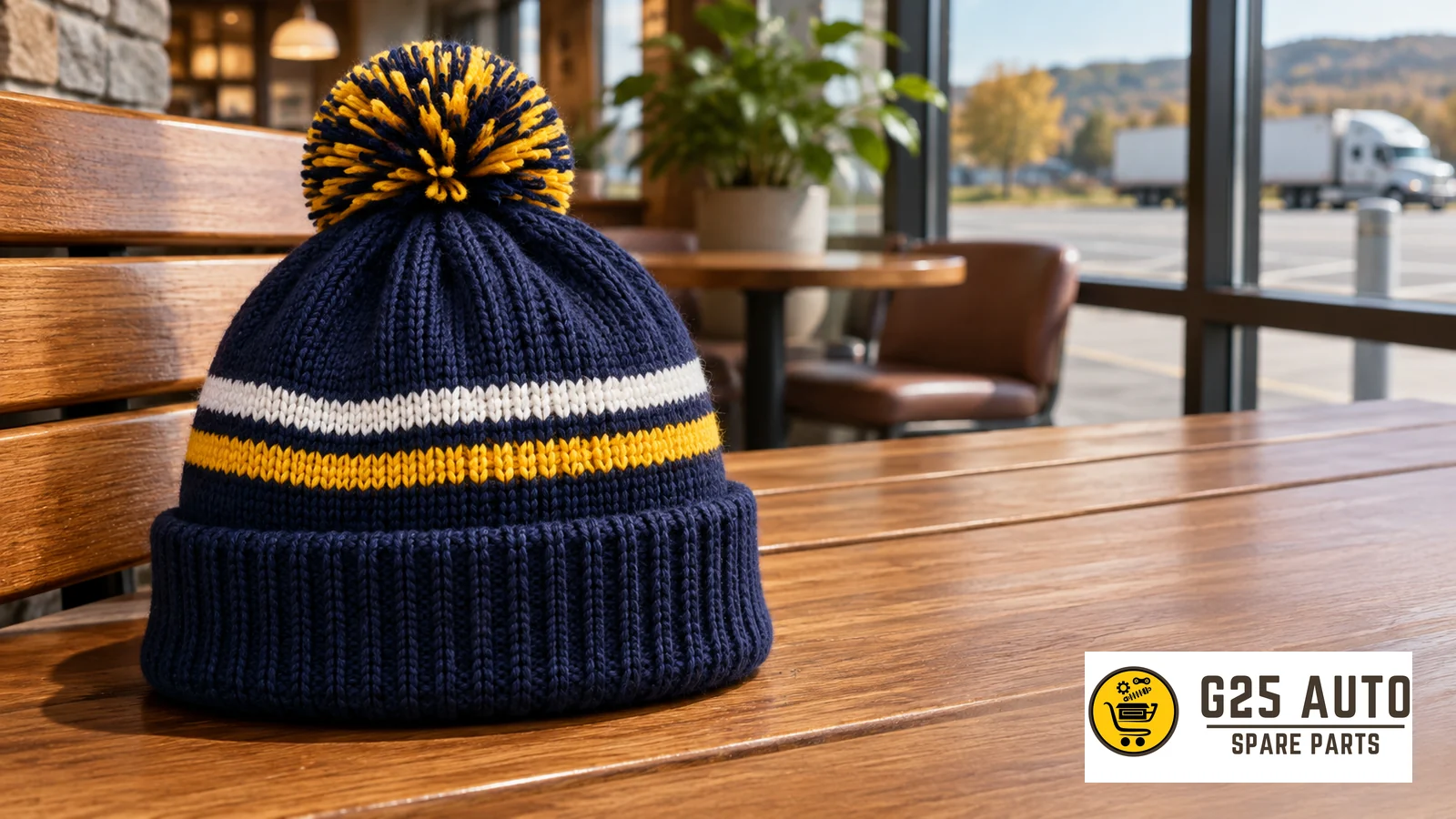
When choosing a beanie for everyday travel, it is recommended to separately record the folded edge structure, pattern layout, presence of pompom and size information. Requesting current model-specific descriptions from the seller, clarifying differences in material ratios and verifying visual features constitute pre-purchase control steps.
How Do You Record the Folded Edge Structure
You can keep the appearance and description of the folded edge as a separate field in your purchase record. Do not assume how many folds the edge of the model you are examining has or whether the fold is sewn if there is no description. Before purchase, it may be useful to ask the seller how many folds the edge structure has, whether the folds are sewn together or left free.
To measure edge width, it is recommended to note the height in the folded state. For example, in an edge sewn in two folds, the total width and the separate height of each fold can be recorded. The total length when the edge is unfolded and flattened and the location of the natural fold line can also be asked separately. This information is important for achieving the desired appearance when wearing the beanie.
Checking whether the edge color is the same as the main body or a different tone is valuable for understanding pattern harmony. If there is a separate border pattern, line or logo on the edge section, their position and size can also be added to the record fields. Requesting a detailed photo of the edge section from the seller helps verify these features.
Recording Pattern and Line Layout
The pattern layout, color transitions and line thicknesses on the beanie determine the visual identity. For example, in Volvo Group shop records, the Word Mark Beanie (model number 114099) examined on November 6, 2026 contains white and yellow lines on a navy blue background. In such a model, the tone value of the background color, the frequency of lines and color sequence can be noted separately.
To understand how the pattern repeats, it is recommended to ask the seller whether the lines are placed horizontally or vertically, how many rows each color is repeated and what the line thicknesses are in millimeters. The starting and ending points of the pattern on the beanie surface, its distance from the pompom or edge can also be included in the record fields. This makes it easier to compare with a similar model.
For beanies containing logos or text, the location and size of these elements should also be checked separately. Which surface they are located on (front, side, back), the readable height of the text and the harmony of their colors with the pattern can be asked. Getting information from the seller about whether the pattern changes after washing is useful for planning the long-term appearance.
Determining Pompom Features
You can record the presence of a pompom as part of your personal appearance preference. In the example examined, there is a two-tone pompom on top. It is recommended to record what colors the pompom consists of, the ratio of each color within the pompom and the diameter of the pompom. Asking the seller whether the pompom is fixed or attached with a removable button or loop is important in terms of usage preferences.
Do not assume from its appearance or yarn name that the pompom will maintain its shape in the future. It may be useful to ask the seller how many grams the pompom weighs, whether the yarn ends are cut and whether the pompom shape is a sphere or hemisphere. The ratio of the pompom to the beanie size is also noteworthy in terms of visual balance.
Checking whether the pompom colors are compatible with the pattern on the beanie body ensures overall style integrity. It is recommended to request information from the seller about the risk of the pompom fraying or color bleeding after washing. If a model without a pompom is preferred, you can ask whether a pompom-free version of the same model is available.
Side Label and Emblem Check
The label or emblem on the side surface shows the brand identity and model reference. In the example examined, a Swedish flag label on the side is described. Asking the seller whether such a label is woven or embroidered, what material it is made of and how high it is, is useful for detailed recording.
The way the label is sewn to the beanie and the visibility of the stitching affects the overall aesthetics. It is recommended to find out whether the label is placed on the right or left side, how far from the edge it is and whether there are any labels or prints on the back. Whether the label contains washing instructions can also be checked separately.
Also check from the photo or description whether there are other markings on the front or back surface of the relevant model. Recording in a list which emblems are located in which areas is useful during model comparison. Whether the label is removable or attached with permanent stitching can also be asked to the seller.
Verifying Material Ratios
Material percentages are inconsistent in the source; therefore, instead of directly transferring material ratios, it is recommended to request current model-specific or variant-specific descriptions from the seller. Do not assume that the material description of a different variant is valid for the product you have selected. Asking the seller what yarn types are used in what ratios, synthetic and natural fiber ratios, provides clarity before purchase.
It is useful to check whether the material label is inside or outside the beanie, whether it is written legibly and in what language it contains information. It is recommended to find out whether information such as manufacturer information, model number and country of manufacture are included on the label. This information is necessary to check consistency when the same model is sourced from different sources.
Asking the seller whether material ratios vary between different colors or patterns is important in terms of stock and batch tracking. Instead of filling in an undisclosed ratio yourself, wait for a written response for the relevant model. Recording this information together with the model number and color code creates a reference for future purchases.
Size Information and Measurement Record
Numerical size measurement or standard size nomenclature (such as S, M, L) may differ from model to model. It is recommended to request from the seller the internal circumference measurement of the beanie in centimeters, its height (with edge unfolded) and width (side by side on a flat surface). These measurements make it easier to compare with head circumference measurement.
If the beanie has a stretchable structure, it is useful to know the difference between the measurements before stretching and the measurements after maximum stretching. Asking the seller what the bottom edge width and the height of the top part (excluding pompom) are when you place the beanie on a flat surface helps create a standard record form.
If size information is given as “one size”, it is recommended to find out from the seller what range this term defines. Leaving blank space for recording actual measurements allows you to add your own measurements after purchase. You can also check whether the size label comes inside the beanie or on a separate card.
Control Questions and Record Table
| Control Point | Question to Ask Seller | Record Field |
|---|---|---|
| Folded Edge | How many folds and what is the total width? | ______ folds, ______ cm width |
| Pattern Colors | What exactly are the background and line colors? | Background: ______, Lines: ______ |
| Pompom Type | How many tones is the pompom, what is its diameter and weight? | ______ tone, ______ cm, ______ g |
| Side Label | What material is the label, what is its size? | Material: ______, Size: ______ |
| Material Ratio | What is the current material blend specific to the model? | ______% ______, ______% ______ |
| Size Measurement | What are the inner circumference and height measurements? | Circumference: ______ cm, Height: ______ cm |
| Model Number | Is there product code and production batch information? | Model: ______, Batch: ______ |
Pre-Purchase Preparation Recommendations
Before purchasing the beanie, it is recommended to request written or visual descriptions from the seller regarding the above control points. Especially in online purchases, product photos taken from different angles are useful for seeing edge, pompom and label details. If the seller provides a size chart, it is important to clarify which model or variant this chart belongs to.
Recording the selected color and variant in addition to the model number makes it easier to track which option the photo and description belong to. Asking the seller whether they remove labels when packaging the beanie and whether it will be sent with original packaging is useful for post-delivery control. Label and packaging information can be used as a reference in return or exchange processes.
Taking your own measurements after purchase and completing the record table makes it easier to compare when you want to buy a similar product in the future. Photographing the beanie before first use and after several washes can be recommended to track shape and color changes. These records are also useful for comparing different batches of the same model or transitioning to another model.
Frequently Asked Questions
How should I measure the folded edge width?
You can measure the total height in the folded state with a tape measure by placing the folded edge on a flat surface. By also requesting the total length in the unfolded state from the seller, you can calculate the folding ratio.
How can I resolve the inconsistency in material ratios?
You can request current material information for that specific variant by giving the seller the model number and color code. Requesting a label photo or manufacturer description helps clarify the inconsistency.
Is the pompom removable?
By asking the seller how the pompom is attached, you can find out whether it is a removable mechanism (button, snap) or permanent stitching. This information provides flexibility of use according to pompom preference.
If size information is given as “one size”, what measurements does it fit?
You can request from the seller what head circumference range the term “one size” covers, the internal circumference measurement and maximum stretch capacity in centimeters. This way you can check compatibility with your own measurement.
This content was prepared based on the Word Mark Beanie (model 114099) example examined with a web tool at https://shop.volvogroup.com/en/product/all-products/word-mark-beanie–114099 on November 6, 2026. The source features presented belong only to the specified example; it is recommended to request current information from the seller for other models or variants. Cover image is representative.