
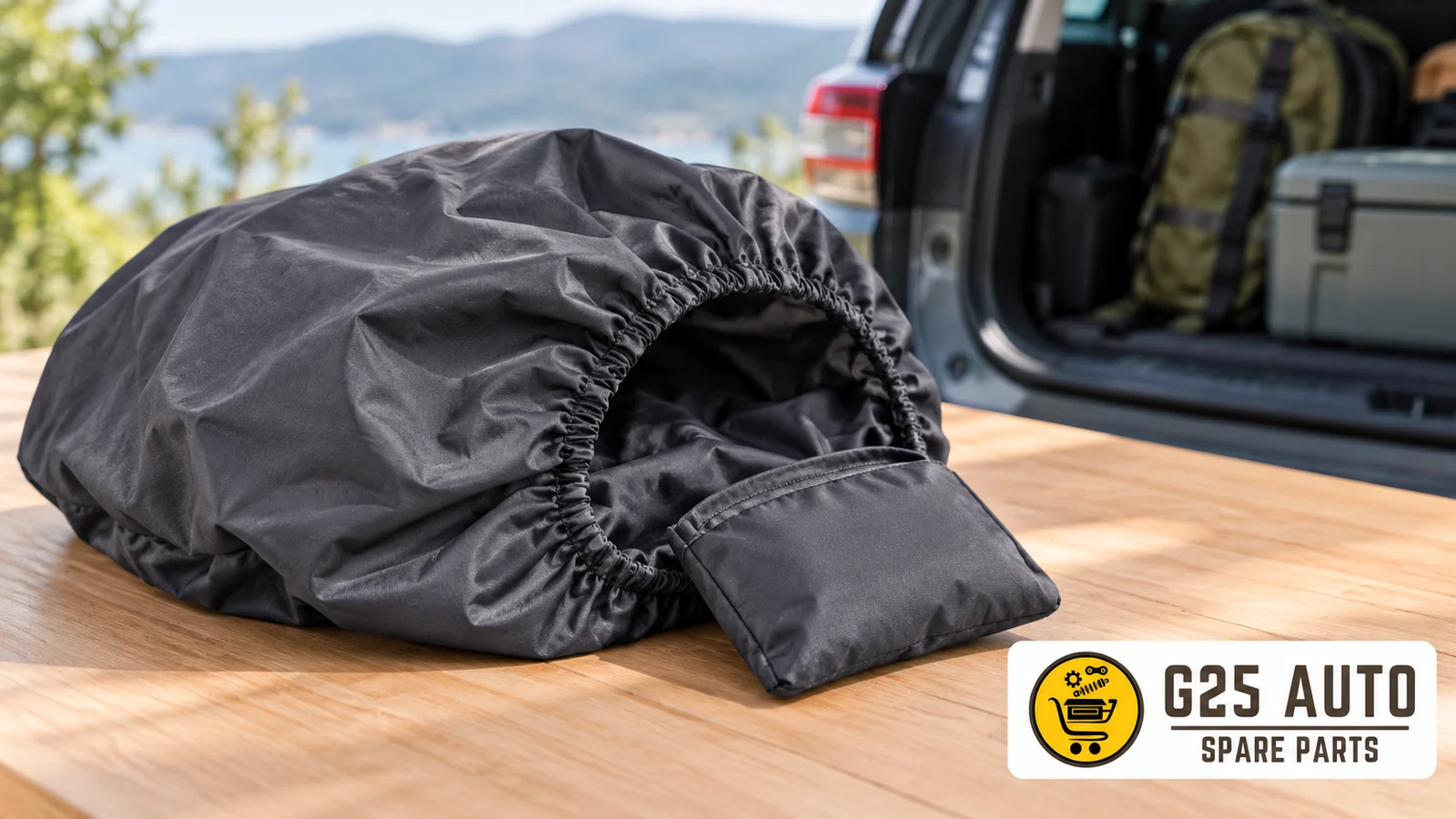
Short answer: When choosing a backpack rain cover, first learn in writing what the ordered item is, then what the storage pocket consists of, and which parts are included in the package. Do not automatically add the backpack shown in the photo to the package list. This article provides questions to compare offer and delivery records during travel preparation; it does not evaluate the protective performance of any cover or its suitability for your bag.
First identify the product being offered
Save the title and address of the page you are reviewing together. Keep the title stating cover and the appearance of a bag in the photo as separate pieces of information. Ask the seller whether the order line you selected covers the cover, the bag, or a clearly defined package. If it is unclear which offer the answer refers to, request clarification by restating the product name.
When comparing, create a separate record for each offer. Do not transfer content described on one page to fill blank spaces on another page with a similar title. Do not assume packages are the same even when you see the same photo. Leave fields in the record without description as awaiting response; this way your own interpretation remains separate from the information provided by the seller.
What does the storage pocket in the official example describe?
The official Volvo Cars Backpack Rain Cover page explains that the cover folds and is stored in its own fabric pocket when not in use, and is delivered in this form. The information taken as an example here is only this storage and delivery format. We cannot infer from this description that another offer has the same pocket or will be shipped in the same way.
For your own offer, ask whether the storage pocket is attached to the cover or is a separate part. The presence of the pocket does not establish whether the backpack shown in the photo will also be shipped. Ask the seller to separate the cover, pocket, and any additionally shipped parts by name. When recording the answer, also write what product the source describes; do not confuse a general product group description with the product you selected.
Distinguishing pocket from separate carrying pouch
If the words pocket, pouch, or bag appear in a description, clarify which object they describe. The use of the word alone does not determine how it is attached or package contents. Ask the seller whether the storage section of the product to be shipped is delivered separately. When you see a seam or closure part in the visual, convert this into a request for clarification rather than recording it as a technical specification.
Specific questions to ask about photos
Learn with a clear question whether the bag shown in the photo is included in the order. Specifying objects on or next to the cover one by one provides clearer correspondence than just asking if everything is included. Ask the seller to relate their answer to the package list of the selected offer. If the seller has not answered about an item, do not conclude either that it is included or that it is excluded.
Also ask about the relationship between the product in the visual and the selected option. Even if you learn which variant the photo belongs to, this does not eliminate the need to check your selection in the order summary. Do not interpret the visual as technical proof for color, size, or usage result. The purpose here is not to extract features from the photo, but to learn the written description of the product to be shipped.
Organize the offer record with a small table
| Field | Information to record | Question if unclear |
|---|---|---|
| Ordered item | Product name in offer | Does this order line include only the rain cover? |
| Storage section | Seller’s pocket description | Is the pocket attached or delivered separately? |
| Bag in photo | Written package response | Will the bag shown be shipped? |
| Selected option | Statement in order summary | Which option does the response describe? |
| Reference | Code and record type | Which system’s record is this code? |
When abbreviating answers in the table with your own interpretation, do not change their meaning. Especially do not use the terms included, separate, and not specified interchangeably. Also record the date of the description and the page it came from. If an answer changes later, instead of deleting the old record, note which question received a new description; keep visible what information your comparison was based on.
Do not confuse option and reference records
If there are options on the page, check how the phrase you selected is written in the order summary. Do not use the page address alone as a substitute for the option record. Also convey this phrase in your question to the seller. If the response describes a different option, do not assume it applies to your own order. First request the package description for the relevant option, then update your comparison table.
Ask whether the shared code is a manufacturer reference, seller stock code, or order number. Do not determine the types by looking at the format of codes. Do not complete unreadable characters on labels from other listings. Request a legible record and keep each code under its own heading. The description of the reference should not be used as proof of bag compatibility or a specific protective result.
Compare record and observation at delivery
When the product arrives, first open the item name in the order summary and the seller’s package list. Then write the parts you actually see in a separate list. Do not immediately conclude that your order is complete because the cover appears folded in a pocket. Conversely, do not automatically conclude that the delivery is incomplete because an item shown in the photo is absent. Let the basis of comparison be the scope described for the relevant order.
If you see a difference, specify which line does not match which observation. For example, ask separately about the response that the storage section is delivered separately versus the situation you see in the package. Do not speculatively name a label you cannot read or a part you cannot identify. This way of organizing records does not establish a legal conclusion; it is to clarify the scope of the question to be directed to the seller.
Frequently asked questions
Is the backpack in the photo also included?
Do not determine this from the photo. Request the written package list for the relevant offer and ask separately whether the bag is included. If the answer only describes the cover, do not assume the bag question has also been answered. Request that the scope be written clearly, specifying both items by name.
Does every cover fold into its own pocket?
The official example mentioned in this article is described that way. Do not generalize the same information to all covers. Learn the storage section of the product you are reviewing from its own source. If there is no description about a separate pouch, attached pocket, or other arrangement, keep the field as awaiting response.
Where can I check the option name?
If available, compare the phrase written in the order summary with the option you selected. If the phrase does not appear, ask the seller to explain in writing which product the relevant order line covers. Do not use the name of another photo or another offer to fill gaps in your own record.
Does the reference code indicate suitability for my bag?
Do not draw such a conclusion without learning which record type the code belongs to. This article does not make compatibility assessments. Keep seller stock codes and manufacturer references separate; do not guess unreadable labels. Do not write responses with unclear scope as definite information in the comparison table.
Storage and delivery format example: https://collection.volvocars.com/en/backpack-rain-cover — review: November 1, 2026. Other sections are purchase questions and record-keeping suggestions.