
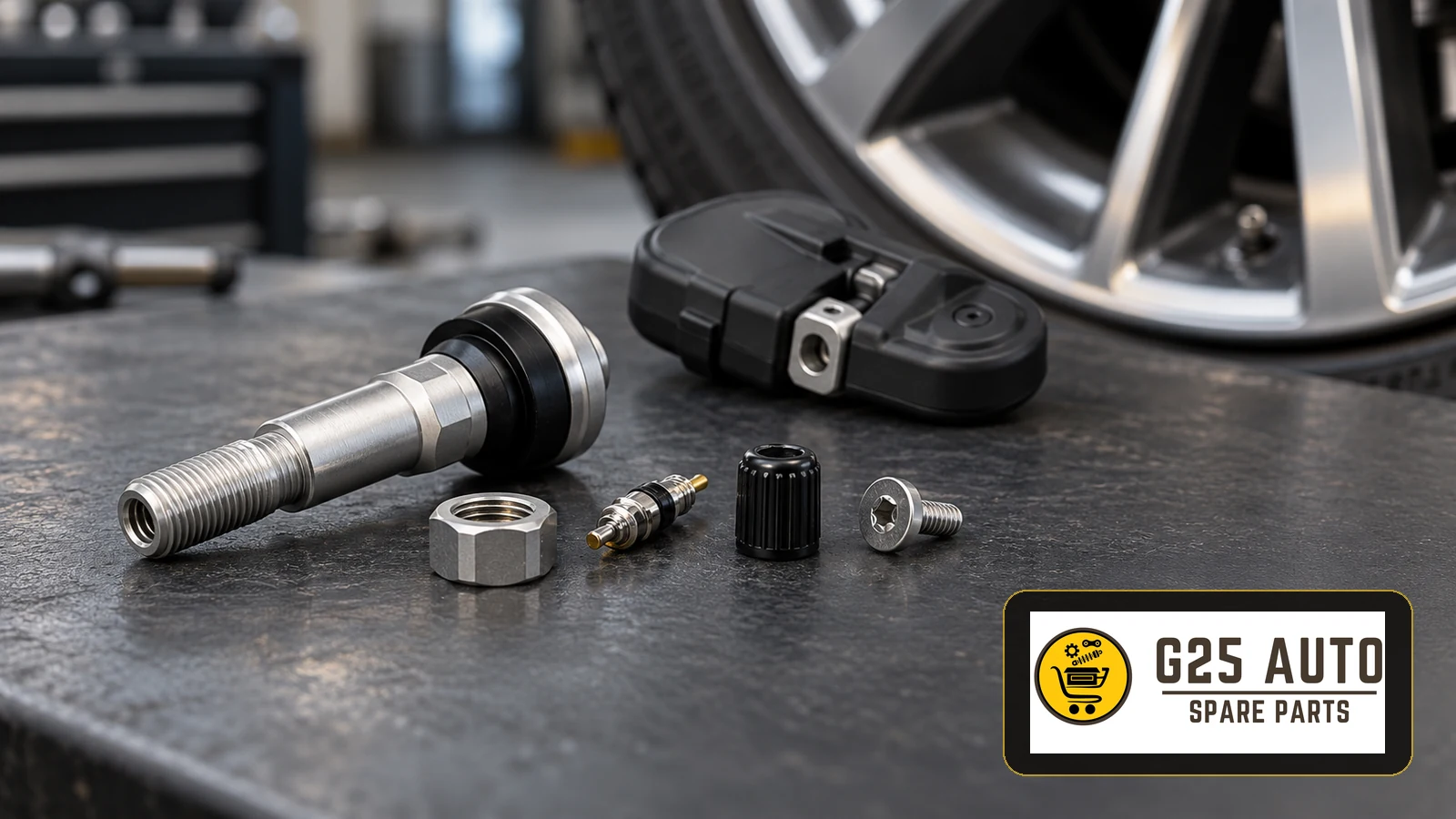
Short answer: A TPMS valve service kit brings together maintenance parts used at the valve connection of a compatible tyre pressure sensor. It is a different product from a complete sensor. When ordering, check the identity of the installed sensor, the valve design and the manufacturer’s kit matching information as well as the vehicle details. If air loss occurs, have a specialist inspect the tyre and valve area rather than simply resetting the warning.
Distinguish the Service Kit from the Complete Sensor
Before searching for parts, clarify the work requested from the workshop. Does the quotation cover a complete electronic sensor, the valve used with the sensor, or sealing and fastening components? Although these three options may appear to meet the same need, their package contents can differ. Ask for a written contents list instead of assuming that every component shown in a product photograph will be supplied. If the photograph is illustrative, matching it directly to a photograph of your sensor can be misleading.
This guide focuses on correctly identifying valve-related service parts. Electronic sensor selection, vehicle relearn procedures and fault-code interpretation are separate workshop tasks. Replacing a connection kit does not prove that an electronic fault has also been resolved. Similarly, the warning light going out should not by itself be treated as proof that the wheel has no air loss. Mechanical checks and system checks should have separate results recorded on the job sheet.
Which Parts Might the Box Contain?
Schrader’s service kit descriptions show different contents for rubber and metal valves. Some kits contain a valve, valve core, cap and screw, while metal valve options may also include parts such as a seal and nut. These examples do not mean that every sensor uses the same kit. The manufacturer also states that its kit components are single-use items. Removed small components should therefore not automatically be reused.
| Wording in the quotation | Question to ask |
|---|---|
| Valve service kit | For which sensor reference is it listed? |
| Complete sensor | Are the valve and maintenance parts included? |
| Seal kit | Does it contain seals only, or fastening components too? |
| Valve cap | Does it meet the relevant valve manufacturer’s requirements? |
This table is a list of questions that reveal missing information before purchase, rather than a compatibility list. If the supplier’s answer differs from the need identified by the workshop technician, hold the order until that difference is clarified. A small kit being readily available does not mean it can be used without correct matching.
How Should You Prepare the Order File?
Record the Vehicle and the Installed Part Together
Prepare the make, model, production information and vehicle identification number. If the workshop can identify the sensor, ask it to record the manufacturer and the reference marked on it. Tell the workshop if the sensor or wheel may have been replaced previously. The part listed in the vehicle catalogue for original installation may differ from the component currently in the wheel, so information about the installed part must not be overlooked. Do not guess missing characters in an unreadable reference.
Document the Comparison
Ask the workshop for a clear part photograph, a readable code and the required kit contents. Ask which manufacturer catalogue entry supports the supplier’s proposed product. Do not decide that a part definitely fits on the basis of a code missing a character, colour alone or a similar shape. Keeping the matching confirmation in the order notes makes it easier to understand which information was used if the wrong product arrives. When sharing personal vehicle documents, provide only the fields needed for the transaction.
A Warning Light Should Not Lead Straight to a Kit Order
NHTSA recommends checking tyre pressure monthly with a gauge, including on vehicles equipped with TPMS. A system warning does not replace routine pressure checks. Use the vehicle manufacturer’s label and owner’s manual to establish the required pressure; one value cannot be given for every vehicle. Do not ignore the warning, and arrange for the tyres to be checked safely.
When contacting the workshop, explain when the warning began, the date of the last tyre work and whether air has been added again. These details alone are insufficient for diagnosis, but they help organise the inspection. For example, saying that the warning started after tyre work and the same wheel needed another check creates a more useful record than simply saying the sensor is faulty. Measurements and the workshop inspection should determine the final decision.
What Information Should You Request During Installation?
This article does not provide removal or tightening instructions. A specialist with tyre and TPMS equipment should carry out the work. The method, tightening values and any single-use parts must be taken from the current instructions for the relevant kit. Do not apply a value used on another valve to a similar-looking part. If the kit instructions cannot be found, the workshop should obtain the manufacturer’s information before proceeding on assumptions.
- Have the reference of the kit being fitted recorded on the job sheet.
- Ask which record supports its matching to the relevant sensor.
- Have the package contents checked for completeness for the required maintenance.
- Request the result of the air-leak check after the work.
- If the system warning continues, have the separate diagnostic result recorded.
When collecting the vehicle, do more than look at the box for the replaced part. Find out which complaint was resolved, which checks were carried out and whether follow-up is needed. If the workshop recommends another check, obtain its date or conditions in writing. If a new symptom appears later, this record helps assess the previous work before ordering the same part again.
Frequently Asked Questions
Does the Same Service Kit Fit Every Metal Valve?
Appearance alone cannot establish this. The sensor and valve manufacturer’s current matching information, the product reference and package contents must be verified together. If a supplier describes a kit as universal, ask exactly which products that description covers.
Does Air Loss Mean the Complete Sensor Must Be Replaced?
The location of the loss and the condition of the electronic system must be established first. A need for a service kit and a need for a complete sensor should not be treated as the same thing. Without checks, neither the kit nor the sensor can be described as a definite solution.
Is Keeping the Old Nut and Seal Enough?
Keeping a removed component as a reference and reusing it are different decisions. The relevant manufacturer’s instructions determine whether reuse is acceptable. Do not set aside some of the new kit components on the assumption that they are unnecessary; the technician must follow the instructions.
Can I Clear the Warning Immediately After Replacing the Kit?
Mechanical checks and the system procedures required by the vehicle must be completed first. Clearing the warning alone does not show that the maintenance was successful. The owner’s manual explanations and the workshop’s measurement results should be considered together.
Sources and Scope
The source guide uses Schrader service kits for technical kit descriptions and NHTSA tyre safety information for pressure checks. Source review date: 30 October 2026. This general guide does not specify part compatibility, installation values or replacement intervals for a particular vehicle. The ordering checklist does not replace verified technical information.