
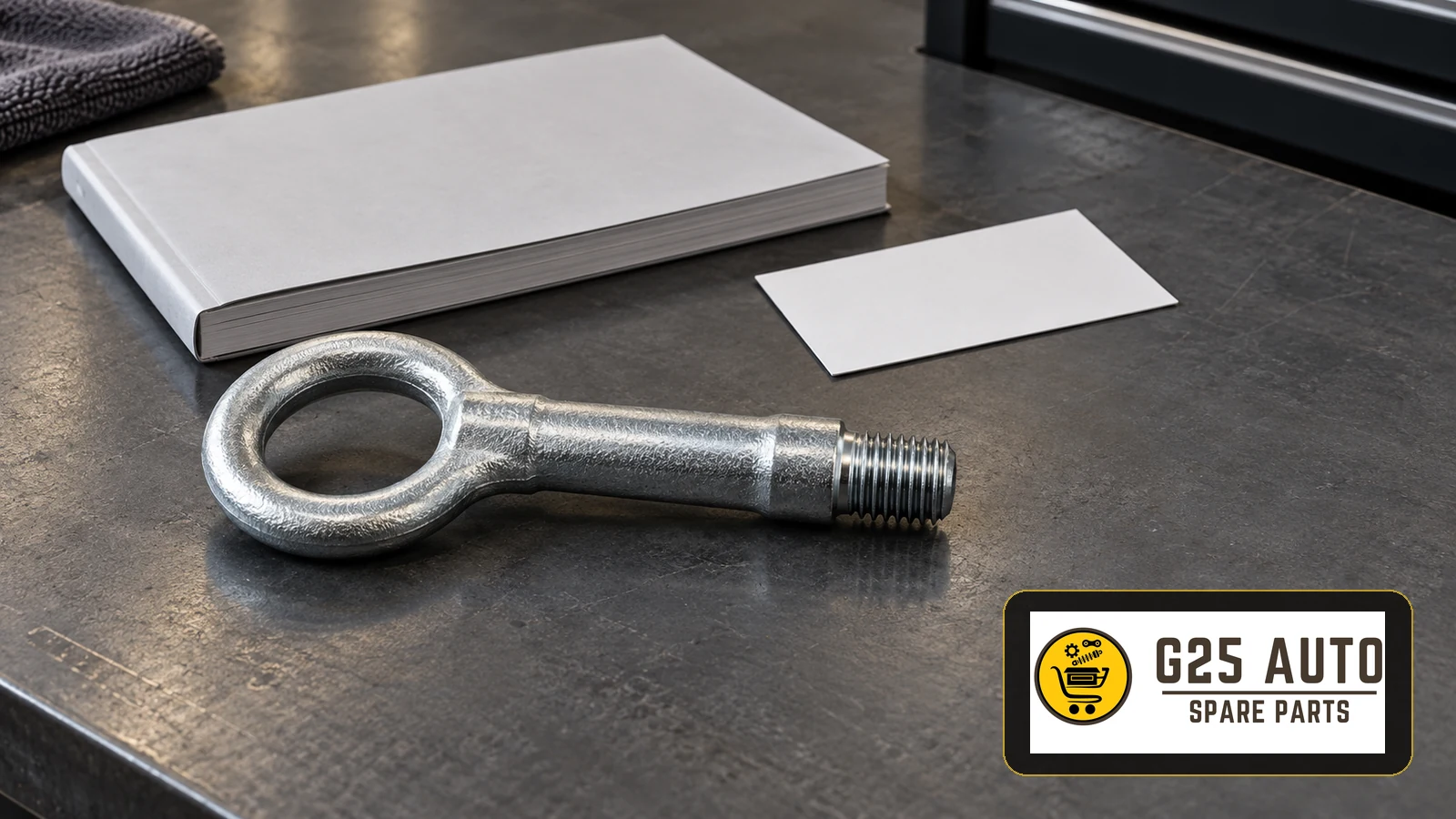
When searching for a towing eye, first review your vehicle’s owner’s manual and part reference together; do not decide based solely on product photos. However, uncertainties regarding the existence, location, and compatibility of this part are frequently encountered issues. Points to consider when purchasing a towing eye or inspecting an existing one are not limited to simply acquiring a physical product. Recording vehicle-specific reference information, reviewing manufacturer documentation, and asking sellers the right questions are the most reliable ways to prevent future uncertainties.
In this article, we will address what information you need to record, which questions you need to ask, and which assumptions you need to avoid during towing eye acquisition or inspection of your existing hook. The information presented here does not include technical instructions such as installation steps or towing capacities; instead, it should be considered a documentation and shopping checklist.
Record Full Vehicle Identification Details
The first step when searching for a towing eye is to correctly record your vehicle’s complete identification information. General descriptions such as ‘Sedan’ or ‘SUV’ are not sufficient. Brand, model, model year, engine type, transmission type, and even sometimes production date can be determining factors in terms of compatibility.
Gather your vehicle’s registration document, owner’s manual, and VIN (Chassis Number) information. Record this information in a notebook or digital file. Especially when contacting the used parts market or spare parts suppliers, this information will save you time and reduce the risk of purchasing the wrong product.
Identify the Manufacturer’s Manual and Storage Location
Knowing where the towing eye is stored in the vehicle is important not only to check its current condition but also to understand where you need to store it when you purchase a new hook. Check whether your own manual explains a storage location for this part.
However, the point to note is this: Every vehicle is different. The storage location valid for one brand or model may not be valid for another vehicle. For example, according to verified information for a specific Ford variant, the towing eye is stored in the storage compartment under the floor behind the front seats and must be carried in the vehicle. This information is valid only for the relevant variant and cannot be generalized to other vehicles.
Review your own owner’s manual and note the storage location. If your manual is missing or illegible, obtain and record this information by consulting the manufacturer’s official service content or customer service.
Distinguish the Towing Eye from Other Parts
The towing eye should not be confused with other parts such as the front bumper cover, tow bar, or tow rope. Each of these parts has different functions and is used in different situations.
Ask the seller to explain in writing whether the listing is offering a towing eye, a cover, or another accessory. Do not consider different product names as the same need. Do not derive how to use the product from this shopping list; base usage on your own vehicle’s manufacturer instructions.
In your purchasing or inspection process, clearly define exactly which part you need. Visually similar parts can be functionally very different from each other.
Ask the Seller About Package Contents and Reference Documentation
When purchasing a towing eye, you should ask the seller about the exact contents of the package and what reference documentation is included. Simply saying ‘towing eye’ is not enough.
Do not neglect to ask these questions:
- Does the package contain only the hook, or are mounting accessories also included?
- Is there an official document or reference number regarding which vehicle models it is valid for?
- Can the list of compatible vehicles be provided in writing?
- Is it a manufacturer-approved part or a third-party production?
Record the answers to these questions in writing. Create verifiable records such as emails, messaging applications, or order notes.
Do Not Infer Compatibility from Photos
One of the most common mistakes in online shopping is assuming compatibility by looking at product photos. Two towing eyes may appear almost identical visually, but thread diameter, thread pitch, length, or other critical measurements may be different.
A photo is only for giving a general idea. Precise compatibility information should come from technical specifications and manufacturer references. Instead of relying on the visuals provided by the seller, request written technical specifications and compatibility lists.
Record Missing or Illegible Information and Request Clarification
Sometimes sellers may present incomplete or unclear information in product descriptions. Reference numbers may be missing, compatibility lists may be written with vague expressions, or technical specifications may be completely omitted.
In these situations, contact the seller directly to request missing information. Note what information is missing and request it in writing. If the seller cannot provide this information, this may be a warning sign.
Also, do not neglect to document physical issues such as illegible labels, erased reference numbers, or damaged packaging.
Record Seller Responses and Your Own Storage Location
Record all responses, emails, messages, and verbal statements you receive from the seller. These records can make it easier to review which information came from which source in the future.
Likewise, note where you store the towing eye in your vehicle. Perhaps you will need this part six months later and may not remember where it is. A simple note saves you time.
Checklist: Before Towing Eye Purchase
| Checkpoint | Completed? |
|---|---|
| Vehicle VIN, model year, and engine type recorded | ☐ |
| Storage location checked in owner’s manual | ☐ |
| Seller asked about package contents | ☐ |
| Compatibility reference number requested | ☐ |
| Decision made from technical specifications, not photos | ☐ |
| Seller responses recorded in writing | ☐ |
| Storage location noted for myself | ☐ |
Recommendations Are Not Guarantees
All recommendations presented in this article are aimed at improving general documentation and shopping processes. No recommendation guarantees compatibility or serves as a diagnosis. Every vehicle and situation is unique; therefore, you should use your own vehicle manual and the manufacturer’s official resources as your primary reference.
Information received from sellers or third parties should always be compared with manufacturer documentation.
Frequently Asked Questions
Is the towing eye stored in the same place in all vehicles?
No. Every vehicle brand and model may use different storage locations. For example, it has been verified that in a specific Ford variant it is stored in the storage compartment under the floor behind the front seats, but this information cannot be generalized to other vehicles. Check your own owner’s manual.
Can I tell if it is compatible by looking at the photo?
No. Visual similarity does not mean technical compatibility. Details such as thread diameter, pitch measurement, or length cannot be understood from a photo. Request written technical specifications and reference numbers.
If the seller says ‘original part,’ can I trust it?
Do not blindly trust any claim without written proof. Request the manufacturer reference number, compatibility list, or official documents in writing from the seller and record them.
Source and Scope
When preparing this record, also note which vehicle and which language option the manual link belongs to. Do not assume that a page opened on the internet belongs to your own vehicle based solely on the page title. If the response from the seller is based on another variant, keep this difference visible in your file. Do not turn an unclear detail into definite information; write “not yet verified” in the relevant field and specify which document is expected. This way, in your later comparison, you will not confuse an old estimate with manufacturer data. Your final check before ordering should be to evaluate whether the records are internally consistent and whether open questions have been answered.
Source: Ford service content, verified information for specific variant (October 31, 2026): https://www.fordservicecontent.com/Ford_Content/vdirsnet/OwnerManual/Home/Content?ProcUid=G837507&Uid=G1368393&buildtype=web&countryCode=USA&div=f&languageCode=en&moidRef=G539644&userMarket=irl&vFilteringEnabled=False&variantid=2376