
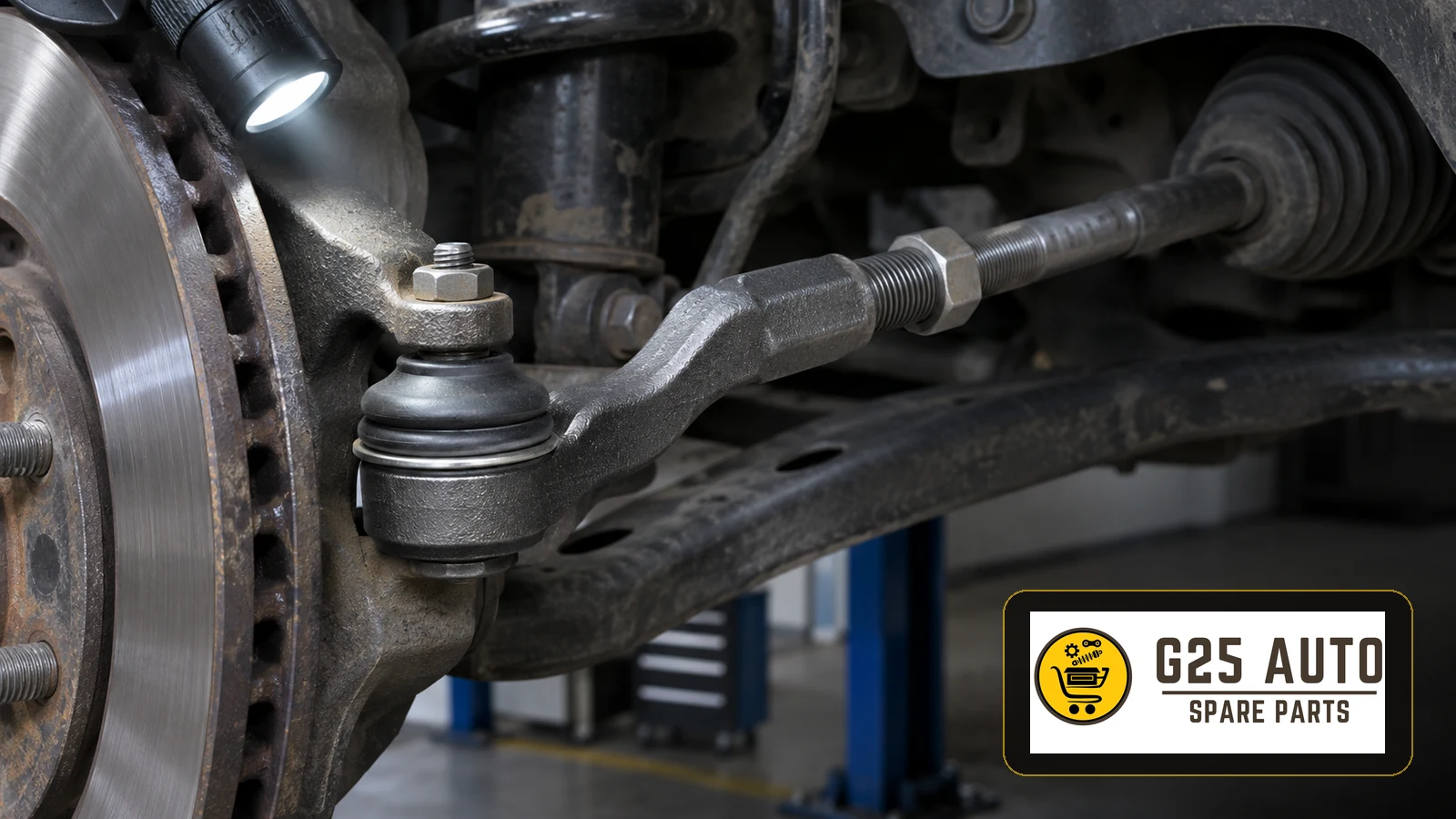
Brakes and tyres often come to mind first when people think about vehicle safety. The outer tie rod end is just as important to keeping the vehicle under control. If the joint fails, the affected wheel may stop responding properly to steering inputs.
What Is a Tie Rod End?
The outer tie rod end is the ball joint at the wheel end of the steering linkage. It consists of a ball stud seated in a housing. The joint passes movement from the tie rod to the steering knuckle.
As you turn the steering wheel, the steering gear moves the tie rod. The joint transfers that movement to the wheel while pivoting as the steering and suspension change angle.
What the Tie Rod End Does and Why It Matters
Main Functions
- Transfers steering movement. It carries movement from the steering gear to the wheel.
- Allows the wheel to turn. The ball joint pivots as the steering linkage moves.
- Accommodates suspension travel. The joint changes angle as the wheel moves over uneven surfaces.
Why It Matters for Safety
Excessive play can make the vehicle wander or respond unpredictably to steering inputs. If the joint separates, you can lose steering control of the affected wheel.
Signs of a Worn Tie Rod End
Changes in steering feel, unusual noises and tyre wear can all be reasons to have the steering linkage inspected.
Changes in Steering Feel
- Steering wheel vibration. You may notice a shake through the steering wheel.
- Steering play. The steering wheel may feel looser than usual.
- Steering kickback. You may feel a sudden jolt through the wheel when crossing a bump or pothole.
Noises
- Squeaking. Listen for a squeak as you turn the steering wheel.
- Clicking or knocking. You may hear a noise during slow turns or parking manoeuvres.
Changes in How the Vehicle Drives
- Pulling to one side. The vehicle may drift left or right on a straight road.
- Uneven tyre wear. Look for irregular wear across the front tyres.
These signs can have several causes. A workshop inspection can establish whether the movement or noise comes from the tie rod end.
When Should You Replace a Tie Rod End?
Driving Conditions and Wear
Road conditions and driving style affect how the part wears. Repeated impacts from potholes and rough surfaces are reasons to pay attention to changes in steering feel. Base the replacement decision on the joint’s condition.
When to Have It Checked
- During routine servicing.
- When the tyres are replaced.
- Before a wheel alignment.
- When you notice steering play, unusual noises or uneven tyre wear.
Signs That Need Prompt Attention
- A torn rubber dust boot.
- Excessive looseness or play in the joint.
- Visible damage to the joint or its housing.
- Grease leaking from the boot.
Original and Aftermarket Tie Rod Ends
Original Parts
The vehicle manufacturer’s parts catalogue can identify the original tie rod end for the application. Confirm the exact reference for the vehicle before ordering.
Aftermarket Parts
Aftermarket suppliers offer alternatives from different manufacturers. Compare the options that list the correct vehicle application.
What to Check When Choosing an Aftermarket Part
- Check the manufacturer’s documentation for fitment and part specifications.
- Review the warranty terms for the exact part.
- Have a qualified technician fit the replacement.
Tie Rod End Maintenance
- Check the condition of the rubber dust boots during routine inspections.
- Avoid hitting potholes at speed where possible.
- Have the wheel alignment checked if the vehicle starts pulling or the tyres wear unevenly.
The tie rod end is a small part of the steering system with a direct effect on vehicle control. Recognising changes in steering feel and arranging an inspection can help you identify wear and decide whether the joint needs replacing.