
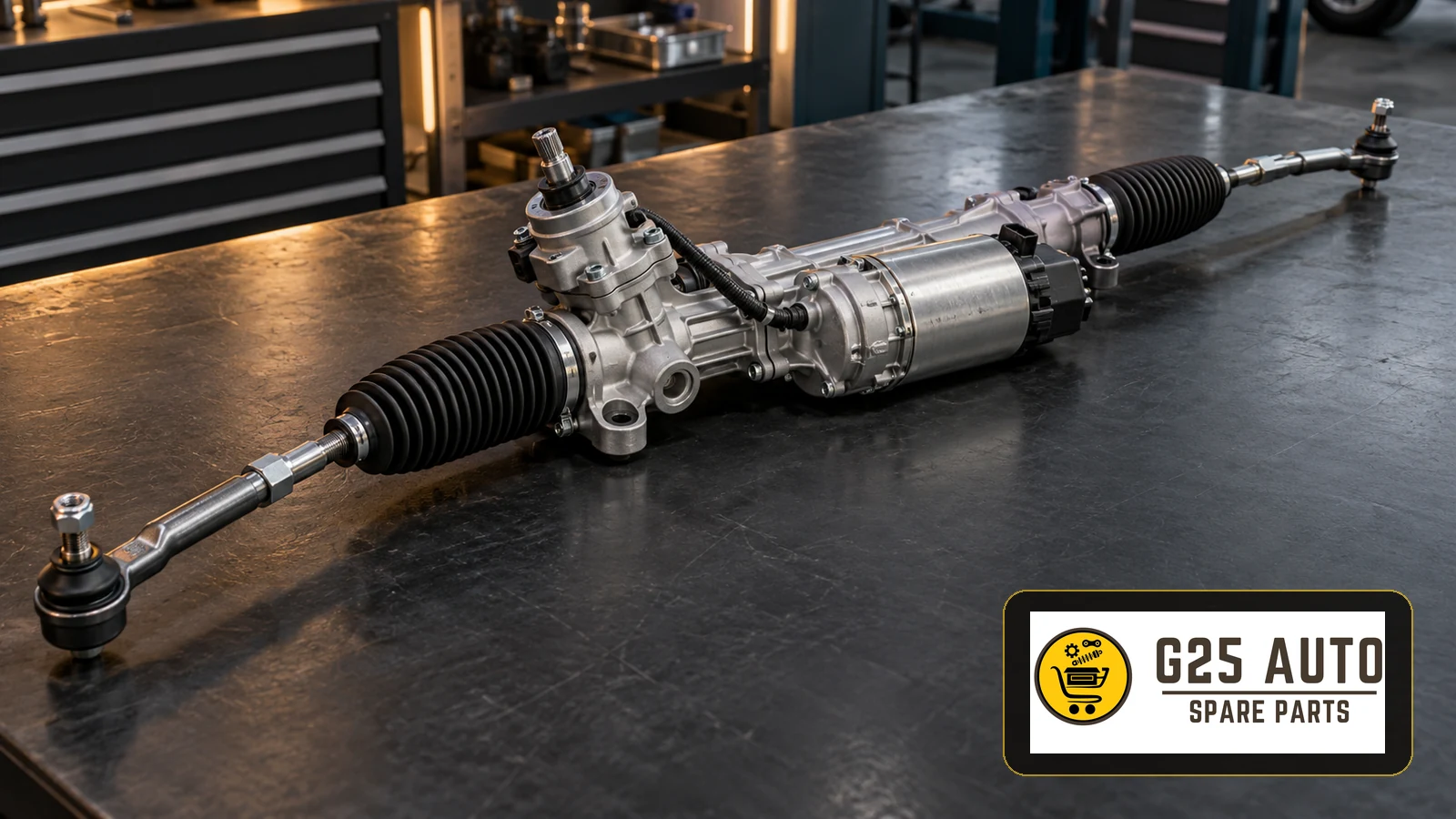
Heavy steering, knocking, free play or a steering warning can justify investigation, but none proves that the steering rack needs replacement. Approve a replacement only after a qualified workshop identifies the cause and checks the repair options for the installed system. For European and Balkan fleets, workshops and parts buyers, the useful starting point is a documented diagnosis and a precise parts enquiry, rather than a mileage target or a general claim about original and aftermarket quality.
Understand which steering assembly is involved
A rack-and-pinion mechanism converts steering input into movement through the steering linkage. Assistance and the mechanical steering gear are related parts of the system, but a complaint about assistance does not automatically establish a mechanical rack defect. Identify the vehicle’s actual arrangement before discussing replacement.
Record whether the system uses hydraulic or electric assistance and where the relevant components are located. Catalogue terms such as steering box, rack and steering gear can be used differently. Include photographs and readable unit identification so that the technician, distributor and supplier are discussing the same assembly.
For enquiries crossing language boundaries, use the vehicle details and identification reference alongside the component name. A translated description or photograph alone is insufficient to confirm an application. Record any known previous replacement or modification that could explain a conflict with the catalogue.
Separate steering symptoms from confirmed defects
Heavy steering and poor return
Describe whether the complaint is constant or intermittent, occurs in one direction or both, and follows recent work. Leave testing to a qualified technician using the applicable vehicle information. A change in steering control requires professional assessment before the vehicle is released.
For hydraulic systems, CARDONE’s power steering diagnostic chart lists possible causes of heavy steering outside the rack, including pump problems, restricted hoses and binding components. It also associates poor return with alignment or seized components. These are diagnostic possibilities, not permission to replace any listed part without testing.
Knocking, vibration and free play
Ask the workshop to identify where movement or noise originates and how that finding relates to the complaint. The same CARDONE chart lists suspension components and the intermediate shaft as possible contributors to steering free play, alongside the steering gear. Avoid converting a driver’s noise description into a rack order.
Document the circumstances in which the symptom occurs and preserve the inspection findings. A report that distinguishes an observed defect from an unresolved suspicion helps a fleet authorise work and gives a supplier a clearer basis for an enquiry.
Leaks and electronic warnings
With hydraulic assistance, have the origin of a leak established. Fluid on a component or beneath the vehicle does not, by itself, identify the failed seal or assembly. Do not identify a fluid solely by its colour or assume every steering system contains hydraulic fluid.
For an electronic complaint, retain the diagnostic report and relevant fault codes. CARDONE’s electronic power steering technical sheet recommends retrieving codes and checking related manufacturer service bulletins. It directs detailed installation work to the original equipment service manual. A warning message still needs application-specific diagnosis.
Choose replacement timing from condition and repair information
This guide gives no universal rack lifespan or mileage replacement interval. Distance travelled and operating history can inform an enquiry, but they cannot replace an assessment of the actual defect. Record what has failed, which repair options the applicable information permits, and why the proposed work addresses the cause.
CARDONE’s steering service bulletin summary emphasises determining and correcting the original cause before installing a replacement. It refers technicians to the vehicle service manual and states that its technical bulletins do not authorise repairs. Its index should not be treated as a universal installation checklist.
Ask the workshop to distinguish the assembly requiring replacement from associated work and outstanding diagnostic questions. A loose seal, boot or bush offered in a catalogue does not establish that the installed rack is serviceable with that item. Confirm the supported repair scope before purchasing.
Compare original, aftermarket and remanufactured offers
Compare the documented product and application rather than assuming a category guarantees fit, durability or value. Request the manufacturer, exact reference, stated condition and catalogue evidence. Ask the supplier to explain any supersession or mismatch between vehicle records and the installed unit.
Define what the quotation includes
Clarify whether the offer concerns a complete assembly and which associated parts are supplied. Ask separately about any electronic components, steering linkage items, boots or installation hardware required by the repair plan. Record exclusions so that the workshop can identify missing items before the job is booked.
For a remanufactured or exchange offer, request the actual core-return and acceptance conditions. Obtain written warranty terms for the quoted product. Price, stock, dispatch and delivery should be confirmed for the specific order; this guide makes no claim about available quantities or lead times.
Workshop and purchasing checklist
- Record the driver’s complaint separately from confirmed findings.
- Identify the assistance system and the assembly under assessment.
- Collect vehicle details, unit markings and contextual photographs.
- Reconcile the catalogue application and any conflicting references.
- Confirm replacement scope and the quoted assembly contents.
- Check the workshop’s installation and commissioning requirements.
- Agree warranty and any exchange-core conditions in writing.
- Retain receiving checks, diagnostic evidence and handover results.
Plan installation and handover before ordering
Make sure the receiving workshop has the applicable procedure and equipment. The electronic steering sheet above discusses centring and programming for relevant units. Establish the actual requirements for the proposed replacement; do not assume every rack uses the same programming or calibration process.
Use the vehicle procedure for hydraulic preparation where applicable, fasteners, steering geometry and electronic checks. Confirm the delivered identification against the agreed order before installation. Keep the final part reference and completed verification record with the vehicle history, and investigate any unresolved complaint before handover.
Frequently asked questions
Does a steering knock mean the rack has failed?
No. A technician must locate the cause and distinguish rack defects from surrounding components.
Should a rack be replaced at a fixed mileage?
Use the vehicle’s maintenance and repair information and its diagnosed condition. There is no universal interval in this guide.
Is an original rack always better than an aftermarket unit?
A category label alone cannot settle the comparison. Check the supported application, product documentation and written terms.
Does every electric rack require programming?
Requirements depend on the application. Confirm the replacement unit’s fitting and commissioning instructions before booking the work.