
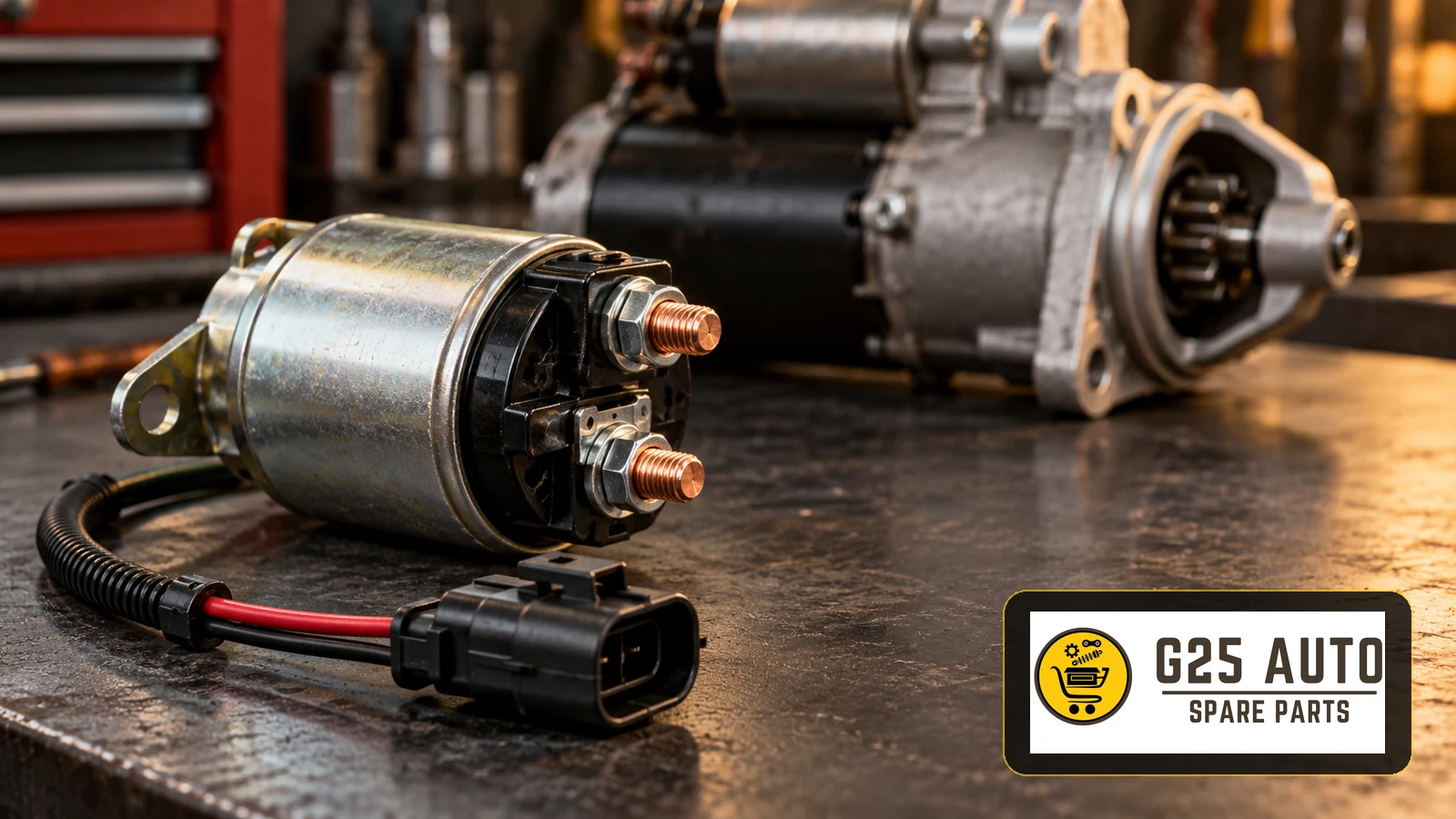
A starter solenoid is an electromagnetic switch involved in starting the engine. Its electrical connector provides a connection to the control circuit. When starting is requested, the solenoid switches current to the starter motor; sound electrical connections are essential to reliable operation.
What Is a Starter Solenoid and How Does It Work?
The starter solenoid operates as an electromagnetic switching device associated with the starter motor. When the ignition switch is moved to the start position, a low-current signal activates the solenoid. In the arrangement described here, it performs two main functions.
First, the electromagnet moves a plunger or lever, pushing the starter pinion into engagement with the flywheel ring gear. Second, the high-current contacts close, connecting the battery supply to the starter motor. The motor then turns the flywheel to crank the engine.
The electrical connections form the interface to this system. Depending on the design, they include the battery positive connection, starting signal input and motor output. These are not necessarily all housed in one plug. The connector and terminals must be identified for the particular starter arrangement.
Fault Symptoms: When Should You Suspect a Problem?
Several symptoms can suggest a problem with the starter solenoid or its electrical connector. Recognising them helps establish what needs to be inspected:
Common Fault Symptoms
- A single click: One click without the engine turning may mean the solenoid moves but the required electrical connection is not being established.
- Repeated clicking: Rapid clicks can accompany a weak battery or poor electrical connections; a solenoid problem is another possibility.
- No sound: Complete silence may point to a disconnected connector, a failed solenoid coil or a fault in the signal circuit.
- Continuous starter operation: Sticking solenoid contacts can allow the starter to keep running after the engine starts.
- Intermittent starting: Having to make several starting attempts may indicate worn solenoid contacts.
- A burning smell: A smell of hot plastic or electrical burning near the connector or starter calls for inspection for overheating and wiring damage.
Symptoms Are Different from a Confirmed Diagnosis
These symptoms do not establish that the solenoid or connector is the cause. Similar behaviour can result from:
- A weak or discharged battery
- Poor battery terminals or earth connections
- A faulty ignition switch or immobiliser system
- Mechanical faults in the starter motor itself
- Damage to the flywheel ring gear
A professional diagnosis is therefore necessary. A technician checks battery voltage and electrical connections, then measures the relevant solenoid terminal voltages. Mechanical movement and contact condition can also be assessed using the procedure appropriate to the vehicle.
Comparison: Original and Aftermarket Parts
| Feature | Original Equipment Part | Aftermarket Part |
|---|---|---|
| Compatibility | Verify the specified application and part reference | Verify the supplier’s application and cross-reference information |
| Cost | Check the actual quotation | Compare the actual quotation for the verified application |
| Availability | Confirm current supply arrangements | Confirm current supply arrangements |
| Quality requirements | Check the applicable manufacturer documentation | Assess the particular manufacturer’s documentation and specifications |
| Warranty | Read the applicable terms | Read the applicable seller or manufacturer terms |
What Matters When Choosing Between Them?
Original and aftermarket options should be compared against the required application. Neither the category name nor a general price assumption establishes that a particular part is suitable.
Evaluate the specific manufacturer’s information rather than assuming equal performance or improved features. The choice of supplier matters because identification, documentation and support are part of selecting the correct replacement.
Checklist for Choosing the Correct Part
Use the following checklist when sourcing a starter solenoid or electrical connector:
- Identify the vehicle fully: Make, model and production year alone may be insufficient.
- Find the engine code: Different engines in the same model can use different starting systems.
- Have the VIN available: It supports catalogue identification but does not by itself guarantee compatibility.
- Check the OEM or part reference: Record the marking on the existing part and verify the replacement reference.
- Consider the production date: Revisions can occur within the same model year.
- Verify the electrical connection: Check connector shape, terminal count and terminal positions.
- Check voltage and power requirements: Use the specifications for the actual vehicle and starter rather than assuming them from the fuel type.
- Identify the mounting arrangement: Establish whether the solenoid is integrated with the starter or mounted separately.
- Check warranty and documentation: Request relevant product information and assess what any certification actually covers.
- Assess the seller: Review available customer feedback and the return policy.
Why OEM and Part Reference Verification Matters
Ordering the wrong replacement is a recurring problem in parts sourcing. With a starter solenoid, incompatibility can waste both workshop time and purchasing expenditure.
What Is an OEM Number?
An OEM reference is an identifier assigned to a part by the original equipment manufacturer. It supports application and specification checks in the relevant catalogue. Similar-looking parts with different references require further checking; appearance alone does not establish whether they are interchangeable.
Verification Using the VIN
The vehicle identification number helps identify the vehicle in parts databases. A professional supplier can use it to narrow the application search. The result still needs to be checked against the relevant catalogue and fitted starter, rather than treating the number as a complete specification or an automatic fitment guarantee.
Engine Code and Production Date
A model can be produced with several engine options, with different starter requirements. Petrol and diesel applications may use different starters. Production date also matters because manufacturers can introduce technical changes during a model year.
Frequently Asked Questions
How long does a starter solenoid last?
Service life varies with operating conditions, climate and manufacturing quality. Extreme temperatures, frequent starting and electrical system problems can affect it. There is no universal number of starting cycles that establishes the life of the particular part.
Can a solenoid fault be confused with a battery problem?
Yes. Both can prevent starting and produce similar sounds. Battery voltage measurement and an appropriate load test help distinguish the causes. If the battery is sound and the problem remains, the solenoid and starter motor require further checks.
Does connector corrosion mean the solenoid must be replaced?
Not always. Minor corrosion may be repairable using the appropriate procedure. Severe corrosion, melting or breakage requires assessment for replacement. Whether a connector is available separately depends on the application, so have its condition and service options checked before ordering.
Can I replace a starter solenoid myself?
Access and complexity vary by vehicle, and incorrect connections can cause serious electrical damage. Connection identification, the prescribed battery isolation procedure and specified tightening values matter. Anyone without the necessary experience should use professional assistance and the vehicle’s service instructions.
Is an aftermarket solenoid different from the original?
Construction, materials and manufacturing tolerances can vary between products. Check the particular part’s specifications and application information. An aftermarket label or a familiar brand name alone does not prove identical performance, trouble-free operation or a cost advantage.
What else should be checked during replacement?
Relevant checks include battery terminals and cables, earth connections, starter brush condition, ignition switch operation and flywheel ring gear wear. Assess these as appropriate to the diagnosis; checking them does not guarantee the life of the replacement.
Installation and Maintenance Considerations
Several points deserve attention when a new starter solenoid or electrical connector is installed:
Cleanliness: Inspect and clean mounting surfaces, connection points and terminals using the appropriate procedure. Dirt and corrosion can interfere with electrical contact.
Correct tightening: Excessive tightening can damage connector plastics or threads, while insufficient tightening can leave a poor connection that overheats. Follow the specified fastening requirements.
Electrical connections: Check that cable ends are clean, secure and undamaged. Loose connections can overheat. Assess damaged cable ends for the repair or replacement specified for the application.
Protective products: Use a protective electrical product only where the applicable instructions permit it. Do not assume that spraying every connection is appropriate or guarantees corrosion prevention.
Testing: Check starting operation after installation according to the service procedure. Investigate unusual noise, smells or behaviour rather than continuing repeated attempts.
What to Check When Sourcing Parts
For components such as starter solenoids and connectors, consider the supplier’s experience, support and available customer feedback. Application assistance and technical information help resolve identification questions.
Check the product reference, manufacturer identification and installation information on the packaging and documentation. Professional-looking packaging alone is not evidence of quality. Read the warranty period and conditions for the particular product.
Reducing Solenoid and Connector Problems
The following maintenance considerations can help address conditions associated with starting system faults:
Battery care: Check battery condition regularly and replace it when the assessment calls for replacement. A weak battery should be investigated as part of a starting problem.
Limit cranking: If the engine will not start, observe the vehicle manufacturer’s cranking and rest instructions. Do not apply one universal starting duration to every vehicle.
Electrical system checks: Investigate alternator faults and unwanted current draw that can affect the electrical system.
Cleanliness: Address dirt, moisture and corrosion around the relevant connections using suitable maintenance procedures.
Cold conditions: Follow the vehicle’s prescribed cold-start procedure, including a preheating system where fitted, rather than assuming every engine should be preheated in the same way.
Conclusion
The starter solenoid and its electrical connections are important to starting operation. Their faults can resemble problems elsewhere, so professional diagnosis should also consider the battery, connections and ignition switch.
Part selection depends on verifying the OEM or part reference, VIN-based application information, engine code and production date. Model and year alone may leave important differences unresolved, making an incorrect order more likely.
Compare original and aftermarket options on their documented suitability and actual supply terms. Avoid treating either category as a guarantee of compatibility, equal performance or lower cost.
Careful installation and appropriate maintenance help address preventable problems. Regular inspections can reveal faults, but they cannot guarantee a particular service life or eliminate every future repair.
When starting problems occur, focus on an accurate diagnosis, a verified replacement and correct installation before making a purchase decision.