
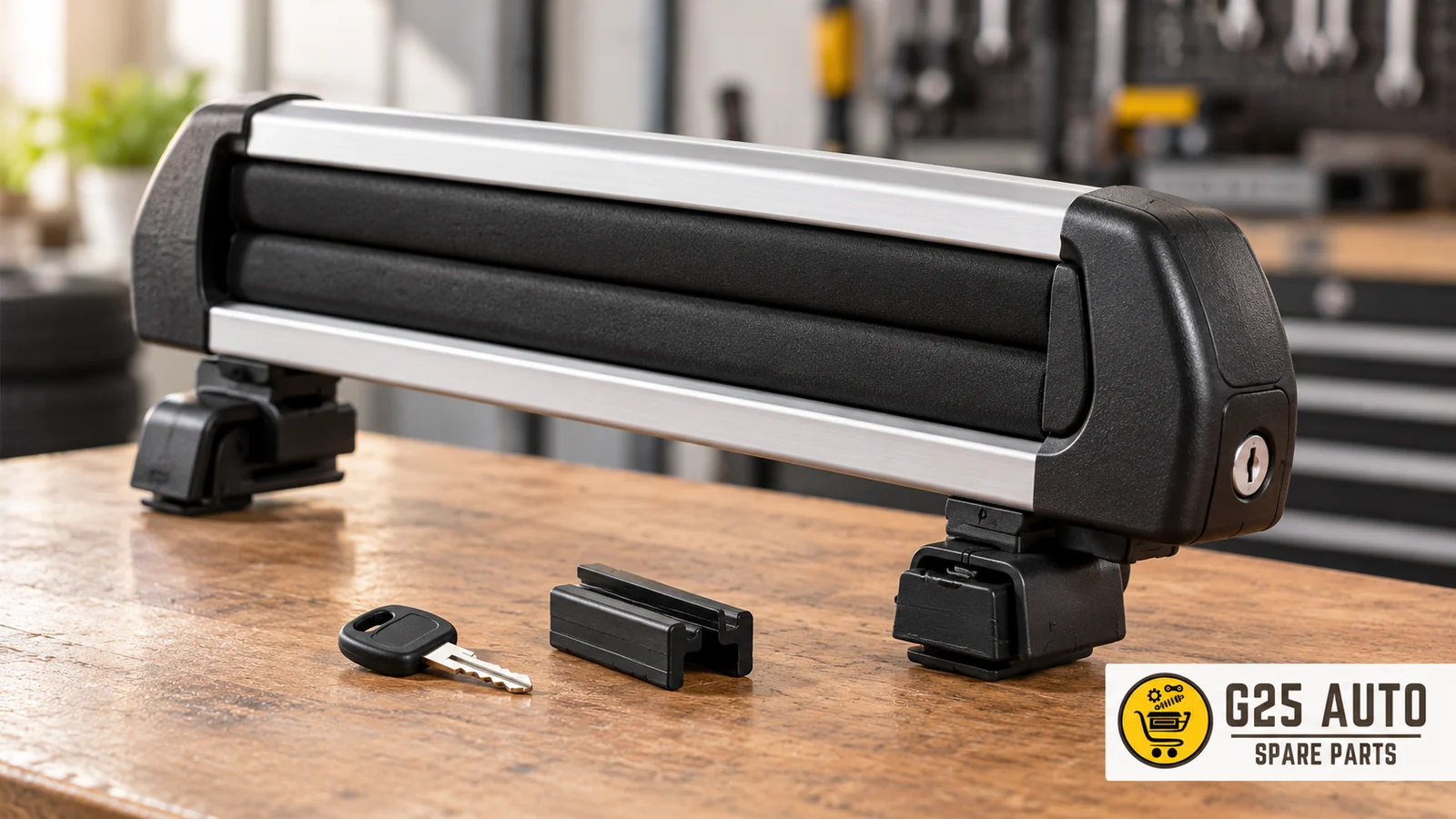
Short answer: When ordering a ski carrier, verify the complete reference of the carrier, its relationship with the existing roof bar, and the lock and key scope separately. Do not count the photo in the listing as a package list. If an adapter is mentioned as required, ask in writing which part is meant and whether it is included in the offer. Instead of reaching a compatibility conclusion by testing on the vehicle, request manufacturer documentation for both the vehicle and the product.
Separate the ski carrier from the roof bar
When searching, first clearly state which product you need. A ski carrier and the bar on the vehicle’s roof are not the same product. Being shown together in a photo does not mean both will be sent with the same order. If you have an existing bar, communicate to the seller not only the vehicle model but also the readable reference of the bar you have. If the code is unreadable, renew the label photo instead of guessing.
When purchasing a new carrier, do not fill the uncertainty about the existing bar with the description of the new product. Let the seller’s written response clarify which carrier they are evaluating with which bar. Do not place parts from different listings side by side and define a package yourself. Do not record the seller’s stock code as the manufacturer reference; clearly note in your records which source the codes are taken from.
Use the manufacturer example within the correct boundary
The Ski Holder section in Volvo’s official accessory presentation shows an example of a ski carrier that can be pulled sideways. This information does not show that all ski carriers have the same mechanism. It also does not prove on its own that the listing you will purchase is the same product as this example. If you are looking for a movable mechanism, request the description of the reference you selected.
Do not add capacity, connection method, or vehicle application to another product based on a feature from a presentation page. Do not substitute the general accessory page for your order’s technical documentation. If detailed product documentation cannot be accessed, note this deficiency. Filling in an unclear area by transferring information from another product of the same brand can further confuse which part is being discussed in the conversation.
Ask about lock and key scope in writing
If the product description mentions a lock, ask which part the lock is related to. A lock on the carrier and a separately offered part may not describe the same scope. Request that the seller clearly show in their offer list whether the key will be sent or not. The presence of a key in the image is not sufficient documentation on its own that the key is included in the offer you selected.
If you have an old key, record the information on it in a readable form. Do not match it with a new lock because of similar appearance. Evaluate the definitive result regarding the key or lock code with the relevant product documentation and the seller’s reference-based explanation. If you cannot read part of the code, do not complete it from another listing’s photo. This article does not describe lock opening, replacement, or key duplication methods.
Define the part when adapter is mentioned
If an adapter is stated as required, do not settle for just the “required” answer. Ask the part’s full name, reference, and for which connection between which products it is recommended. Request that the seller state whether the adapter is included in the offer or is a separate item. Do not assume that every carrier uses the same connection just because a specific connection system’s name is mentioned. This article does not offer a universal adapter list.
If the offer changes, reopen the questions for the new carrier reference. Do not automatically transfer the adapter answer for the previous product to the new product’s record. If the seller recommends another bar, also record the bar’s separate code. When it remains clear which parts are being evaluated together, missing information is more easily visible before the order. Do not complete by estimating the number or measurement of parts to be used from the image.
Offer comparison table
| Verification area | Record to request | Approach in uncertainty |
|---|---|---|
| Carrier | Full product name and reference | Request clear label image |
| Existing bar | Explanation linked to bar’s reference | Do not draw conclusions from vehicle name |
| Lock and key | List of parts to be sent | Do not count photo as package |
| Adapter | Reference, included or excluded information | Do not order with general name |
| Application | Relevant product and vehicle documentation | Record as documentation pending |
Fill the table separately for two offers. Before saying one offer is more comprehensive, look at which parts it includes. Leave unexplained areas blank or in “response pending” form. Do not assume two listings using the same photo offer the same product. Recording the offer link and response date helps you track which explanation was taken as basis in the subsequent conversation.
Questions that can be asked to the seller in one message
- What is the complete manufacturer reference of this carrier?
- Can you communicate the application explanation for the bar reference I shared?
- Can you list the carrier parts, locks, and keys to be sent?
- If an additional adapter is recommended, what is the reference and offer scope?
- Which reference does the product’s use and assembly documentation belong to?
If the answer only states “compatible,” ask again which parts are being evaluated together. If the code given differs from the label in the photo, clearly point out the difference. If one answer does not answer other questions, do not consider the entire verification complete. Store the seller’s explanation without expanding it with your own interpretation; do not rewrite unconfirmed connection or package information as definite information.
Delivery record and use documentation
When the package arrives, compare the product label, sent parts, and written offer scope. If there is a difference, photograph it and ask the seller with the relevant order record. Trying to fit a connection part into a different place is not delivery verification. Base assembly, loading, and use decisions on the instructions for the product and vehicle. This article does not propose a value for load capacity, speed, or connection force not specified in the source.
Frequently asked questions
Can all ski carriers be pulled sideways?
Do not accept as a general feature. Check the documentation for the product reference you selected instead of the example in the presentation.
If the bar is in the photo, is it included in the package?
Request that the seller list the parts to be sent. A shared photo alone does not determine the offer scope.
Can the old key be used with the new carrier?
Do not match by appearance. Request a reference-based explanation regarding lock and key information.
If adapter information is not provided, how is the order record kept?
Leave the field as “response pending.” Do not fill the uncertainty with information from another listing; clarify in writing which part is recommended.
If the offer changes later, which information is asked again?
Write the new product’s complete reference separately from the first record. Ask the seller again whether the package list, key scope, and adapter answer are also valid for the new reference. Do not delete previous correspondence; keep in chronological order which product is recommended in place of which product. A code change should not be interpreted as merely a name change. Until the explanation arrives, record the new product’s application status as uncertain. Compare the code in the order confirmation with the code in the last correspondence. Link the list you will verify at delivery to the last offer you accepted. This way, different parts of old and new offers do not appear as if they were one package.
Source: Volvo Cars — Ski Holder. Verification: October 31, 2026. Manufacturer example used within general presentation boundary.