
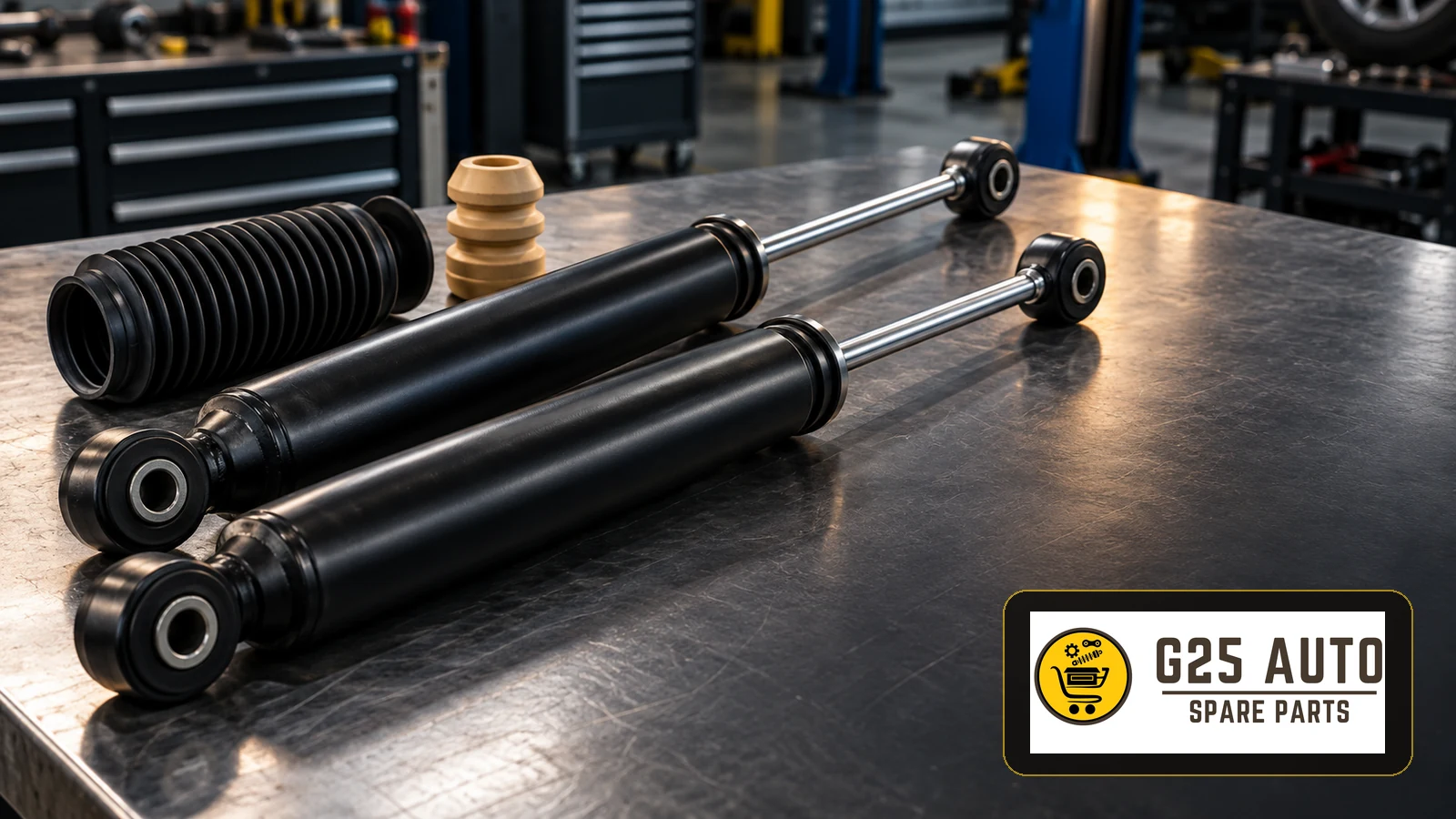
Worn shock absorbers can cause persistent bouncing, poor body control and irregular tyre wear, but these symptoms need a suspension inspection before parts are ordered. For European and Balkan workshops, the practical route is to document the fault, identify the exact suspension specification and select a supported replacement application. Plan damper replacement in axle pairs and include the associated components and installation checks in the repair scope.
What the shock absorber actually does
The spring accommodates suspension movement; the shock absorber damps the resulting oscillation. Effective damping helps control body and wheel movement as the vehicle crosses uneven surfaces. A deterioration in ride quality can therefore matter to steering and braking as well as comfort. A strut may also form a structural part of the suspension, so identify the assembly correctly before choosing a replacement.
A gas-pressurised damper still uses hydraulic oil for damping. Gas pressure helps limit aeration; the word gas alone does not establish that a replacement is sportier or suitable for a particular vehicle. Choose the specified application and damping design rather than treating oil and gas as competing quality grades. KYB’s gas damper description explains the role of pressurisation in reducing foaming.
Recognise symptoms without jumping to a diagnosis
Changes reported by drivers
Record whether the concern involves repeated bouncing after a bump, increased body roll, pronounced nose dive, instability or vibration. Ask when it occurs and whether the vehicle is laden. Irregular tyre wear and knocking also justify inspection, but they do not identify a failed damper on their own. Tyres, springs, mountings, bushes and other suspension components must be considered together. KYB’s suspension guidance lists common warning signs and explains the interaction between tyres, springs and dampers.
Visible damage and oil traces
Inspect the damper body, accessible piston rod, mounting points, dust cover and bump stop. Record corrosion, deformation, damaged protection parts and fluid traces. Light oil misting should be distinguished from substantial leakage: ZF’s leakage assessment explains that a small lubricating film can be normal. Road contamination can also mislead an inspection. Where the finding is uncertain, follow the component maker’s assessment procedure rather than declaring every damp surface a failure.
Build a workshop repair decision
Combine the complaint, physical inspection and vehicle-specific diagnostic procedure. A quick body bounce check cannot, by itself, establish that the whole suspension is serviceable. Where suspension testing equipment is used, interpret its results alongside the other findings and the applicable procedure. Do not assume that the absence of an obvious oil leak proves that damping performance is satisfactory.
Use condition and the relevant maintenance guidance to decide when intervention is needed. A universal replacement mileage cannot account for every application, load pattern or operating environment. For a fleet vehicle, document the affected axle, observed defects and related work before agreeing the repair. If handling is unsafe, the workshop should assess vehicle use before any further journey.
Replace dampers as a matched axle pair to maintain balanced damping from side to side. Inspect the associated mounts, bearings where fitted, springs, bushes and protection parts; specify replacements according to their condition and the relevant instructions. ZF’s replacement guidance covers axle pairing and completion checks. Avoid quoting a fixed labour duration before the actual installation and condition are known.
Choose genuine or aftermarket parts by evidence
A purchasing decision needs more than a familiar brand or a visually similar cylinder. Ask for the exact manufacturer reference, catalogue application and any exclusions for the vehicle’s suspension version. Confirm whether the order is for a separate damper, a strut or an assembly with additional components. Keep the supplied contents explicit so the workshop can plan the complete job.
Use the VIN and vehicle specification to support catalogue identification, then cross-check existing markings and the actual installation. An old part may already be an incorrect substitution. For standard, sport or electronically controlled suspension, resolve the specification before accepting an alternative. Do not assume that a general quality certificate establishes fitment or that a longer stated warranty proves equivalent damping performance. Request written application evidence, fitting information and the applicable commercial terms.
Ordering checklist for workshops and distributors
- Record the VIN, model, production details and relevant suspension equipment.
- Identify the front or rear axle and left or right position where applicable.
- Photograph the existing markings and mounting arrangement for cross-checking.
- Confirm the replacement reference against the manufacturer’s current application data.
- Specify an axle pair and confirm which components each package contains.
- List the required mounts, bearings, dust covers, bump stops and fitting hardware.
- Obtain fitting instructions and identify the required alignment or electronic procedures.
- Request written quotation, availability, warranty and return terms before approving the order.
Installation and release checks
Strut work requires trained personnel and suitable spring-handling equipment. Use the vehicle and component instructions for assembly sequence, orientation, fastener replacement, tightening position and torque. Protect the polished piston rod and use the specified counterholding method. KYB’s fitting tips explain why pliers on the rod and impact tightening of its upper nut can cause damage.
Verify the routing and attachment of any disturbed brake hoses and sensor wiring. Complete the alignment checks and any calibration required by the vehicle procedure. Record the fitted references, related parts and final inspection results, then carry out an appropriate controlled function check. Do not dismiss new knocks, leaks or instability as a generic bedding-in period.
Frequently asked questions
Does a knocking noise prove the shock absorber has failed?
No. Mountings and other suspension parts can produce similar complaints. Locate the cause before ordering a damper.
Should only the leaking side be replaced?
Plan replacement as an axle pair to preserve balanced damping, following the applicable vehicle and component guidance.
Is a gas damper always a performance upgrade?
No. Gas pressurisation does not establish suitability or a sport setting. Select the documented application.
Can the supplier confirm fitment from a photograph alone?
A photograph helps identify features, but it should support vehicle and catalogue checks. Resolve conflicting information before fitting.