
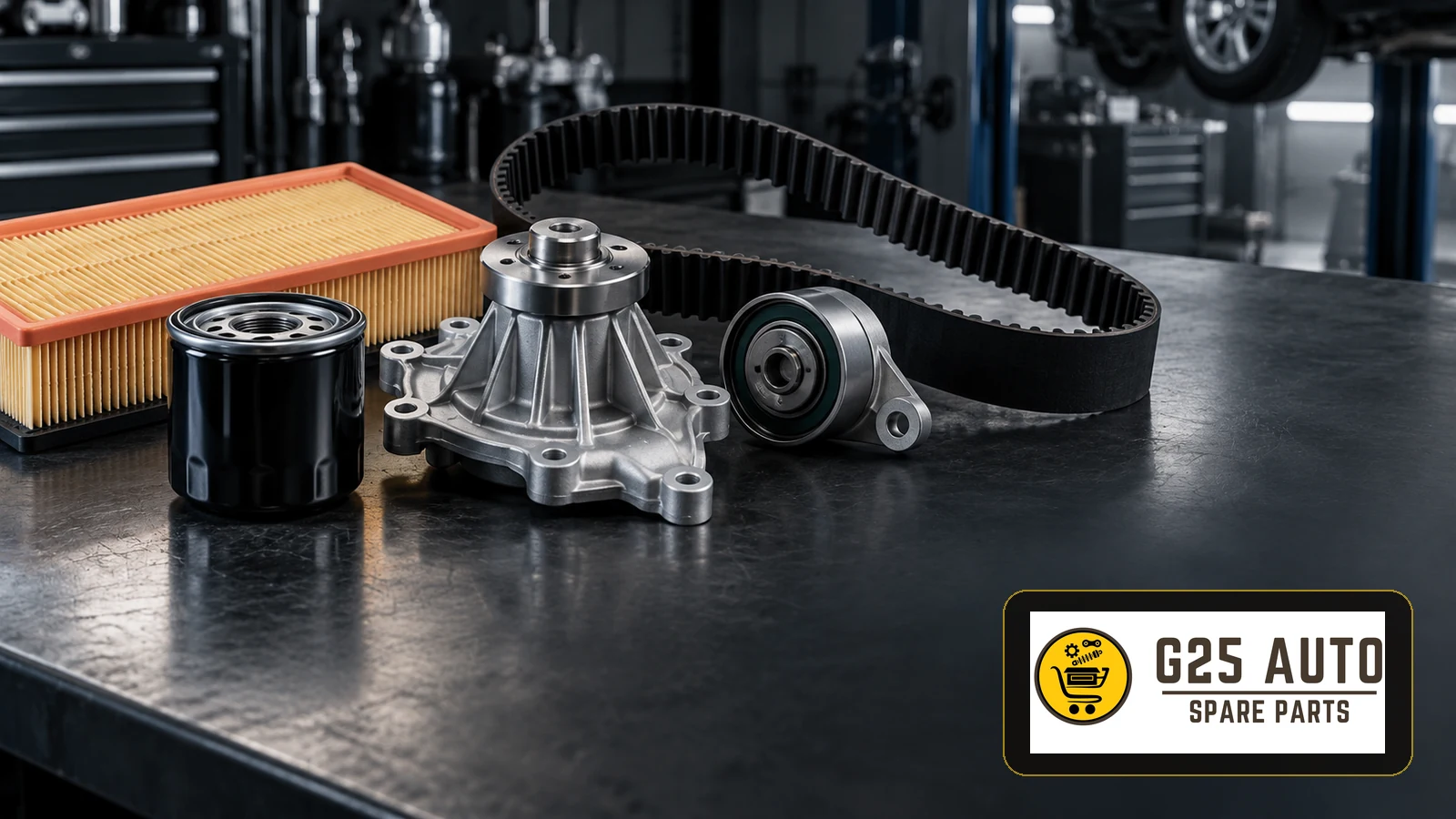
Replace service parts when the vehicle-specific maintenance schedule requires it, when inspection confirms that a component has reached its service limit, or when diagnosis identifies a fault. There is no reliable replacement mileage for every oil filter, brake disc, battery or timing belt. For European and Balkan workshops, distributors and fleet buyers, the useful starting point is a documented service history matched to the exact vehicle and its operating conditions.
Build the maintenance plan before the parts order
Record the vehicle identification number, engine variant, current mileage, age and previous work. Check the applicable manufacturer schedule and any relevant service information. Separate items that are due by time or distance from components that need an inspection or a diagnostic test. A missing invoice is a reason to investigate the history, rather than assume that a critical service has been completed.
Fleet use also matters. Urban delivery work, repeated short trips, heavy loads and long idle periods can affect service requirements. Ford’s oil-service guidance explains that operating conditions can shorten variable oil intervals while mandatory maintenance intervals still apply. Use the instructions for the actual vehicle when setting the job date.
Oil, filters and ignition: follow the exact application
Select engine oil by the required specification and approvals, with the appropriate filter for the engine. Follow the specified oil and filter replacement procedure; a different lubricant description does not create permission to extend the interval. Investigate repeated top-ups or contamination separately from a routine oil service.
Air, fuel and cabin filters serve different systems and need their own schedule and application checks. Dust exposure or airflow complaints may justify inspection, but a filter’s appearance alone does not establish every service decision. On petrol engines, verify the prescribed spark plug type and replacement interval. Misfires require diagnosis before ordering plugs, coils or ignition leads as a package.
Brakes, suspension and tyres: record the inspection evidence
Brake pads, discs and fluid
Measure friction components against the limits for the fitted parts and inspect their condition. Do not use a fixed number of pad changes to decide whether a disc is reusable. Brembo’s disc-thickness guidance describes comparing measured thickness with the disc’s specified minimum. Surface defects and the condition of the wider braking system also need assessment.
Brake fluid has its own vehicle-specific service requirement. Specify the correct fluid and procedure instead of carrying a generic calendar interval across a mixed fleet. Record the reason for replacement so the purchasing team can distinguish planned maintenance from a brake fault.
Suspension, steering, tyres and wheels
Inspect dampers, springs, joints, bushes and stabiliser links for the relevant wear or damage. Noise, uneven tyre wear or poor directional control can guide an investigation, but they do not identify a failed part on their own. A spring also needs assessment for damage, not just whether the vehicle appears to sit low.
Tyre decisions need tread, damage, age and usage information, together with the requirements of the market where the vehicle operates. Michelin’s tyre-life guidance highlights abnormal wear and professional assessment. Check whether the tyre configuration permits rotation; do not impose a universal rotation interval. Wheel damage, imbalance and alignment concerns should be assessed on their own evidence.
Battery and charging complaints need testing
A difficult cold start does not automatically prove that the battery needs replacement. Assess the battery alongside connections, the starting system and charging performance as appropriate. VARTA’s test-interpretation guidance explains why suitable test equipment and battery technology matter, especially for start-stop applications.
Before ordering, verify the specified battery technology and application requirements, including any vehicle-specific replacement procedure. Alternators and starter motors should be purchased against a confirmed diagnosis and exact catalogue identification, rather than an assumed end-of-life mileage.
Cooling, air conditioning and belt drives
Use the specified coolant and the correct service procedure. A coolant loss or temperature complaint calls for investigation; scheduled fluid replacement does not identify whether a pump, hose, thermostat or radiator has failed. Air-conditioning performance also needs diagnosis. HELLA’s leak-detection guidance illustrates why refrigerant loss requires a structured search, including possible leakage at service connections. Avoid treating a routine top-up as a complete repair.
Identify the engine’s timing drive before planning the job. Follow its specified timing belt requirements and repair instructions; do not transfer a belt interval to a chain-driven engine. Establish the required kit contents, tensioners, guides and pump arrangement before purchase. Gates recommends replacing a timing-belt-driven water pump with the timing belt. That advice concerns the relevant drive arrangement, rather than every water pump on every engine.
Accessory belts and their drive components need the applicable inspection and service instructions too. Record contamination, visible deterioration or a diagnosed drive fault so the order reflects the repair scope.
Workshop and purchasing checklist
- Confirm vehicle identity, engine variant and relevant equipment.
- Retrieve the applicable schedule and review the service history.
- Classify each item as scheduled, inspection-led or diagnosis-led.
- Record measurements, symptoms and test findings that justify the work.
- Verify catalogue application and required fluid specifications.
- Check kit contents and any installation items required by the procedure.
- Compare documented product suitability and traceability when selecting suppliers.
- Record the installed parts, completed checks and next service requirement.
An aftermarket description, supplier reputation or general quality certificate does not establish fitment for a particular vehicle. Ask for application evidence and relevant product documentation. Keep the technical acceptance decision separate from the commercial quotation.
Frequently asked questions
Can one replacement chart cover an entire mixed fleet?
Use one planning format, but populate it with each vehicle’s schedule, history and inspection findings.
Does low mileage remove time-based maintenance?
No. Apply the time requirements and operating-condition instructions specified for the vehicle.
Should every related component be replaced together?
Follow the applicable repair procedure and documented system guidance. Check what the selected kit actually contains.
What should a B2B parts enquiry include?
Provide verified vehicle details, the diagnosed or scheduled work, and the required specification. Include relevant measurements or references without assuming compatibility.