
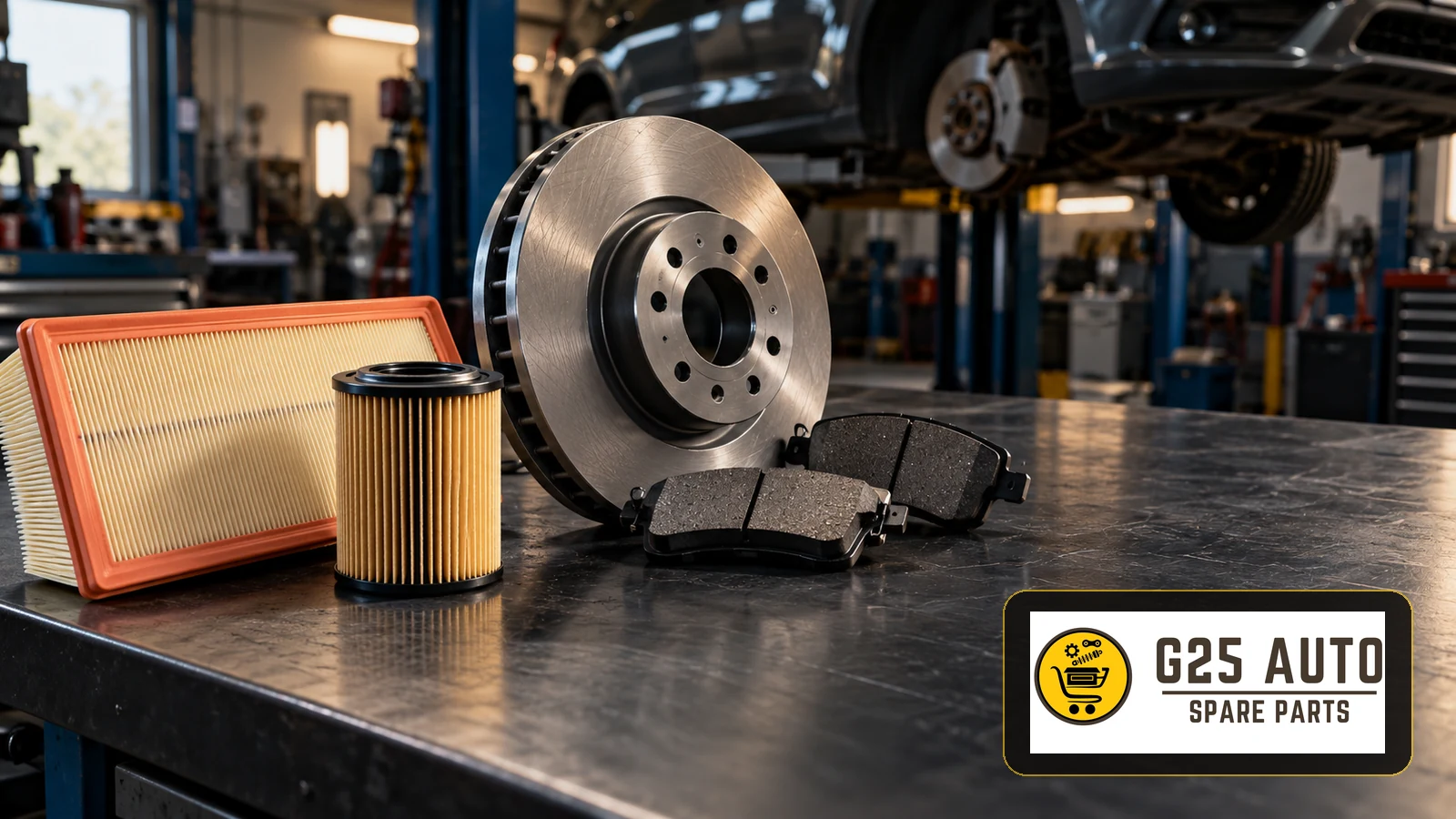
Replace service items according to the maintenance requirements for the exact vehicle, and replace wear or failed components when inspection or diagnosis justifies the work. Oil filters, brake discs and batteries do not share a universal replacement calendar. For workshops, fleet operators and parts distributors across Europe and the Balkans, the useful question is which requirement or finding supports each line on the service order.
Give every maintenance item a clear decision basis
Start with the vehicle identification, engine details, relevant equipment and available service history. Retrieve the applicable maintenance information before preparing the parts list. A fleet spreadsheet can track work, but it should point to the correct schedule rather than impose the same interval on every vehicle.
Scheduled replacement
Record work required by time, distance or an applicable service indication. Confirm the due date against the vehicle’s records. If a previous service cannot be verified, document the uncertainty and establish the appropriate action using the maintenance instructions.
Condition assessment and fault diagnosis
Keep inspection findings separate from scheduled tasks. A worn brake disc needs an assessment against its specified limits; a starting complaint needs diagnosis. A symptom alone is insufficient to establish which component should be purchased. Record whether the item is due, defective or still awaiting investigation.
Oil and filters: follow the application requirements
Engine oil selection must match the specification required for the engine. Descriptions such as synthetic, premium or long-life do not independently establish suitability or authorise an extended service interval. Confirm the oil filter application and the replacement operation specified for the service.
Ford’s service-interval guidance explains that requirements vary by model and engine. It also distinguishes variable oil servicing from mandatory maintenance and identifies short journeys, urban driving and high loads as factors affecting oil life. Use this as a reason to check the actual vehicle instructions, rather than as a schedule for other makes.
Check engine air and fuel filters separately. Verify the filter arrangement, catalogue restrictions and service requirements for the vehicle. Where a water separator is fitted, use its specified maintenance procedure. A generic filter replacement distance cannot establish the correct operation for every petrol or diesel application.
Brakes: record measurements and service requirements
Inspect pads and discs for wear and damage, and investigate uneven wear or braking complaints before agreeing the repair scope. Compare measurements with the limits for the actual braking system. Neither the vehicle’s mileage nor the remaining pad material alone establishes whether a disc is serviceable.
Brembo’s maintenance guidance identifies minimum disc thickness, cracks and other surface defects as replacement considerations. Keep the inspection record with the job card so the decision can be explained to the fleet customer and the correct parts selected.
Brake fluid has its own specification and maintenance requirements. Check these independently of pad and disc replacement. Do not carry a single fluid-change interval across a mixed fleet without confirming the relevant vehicle instructions.
Steering, suspension, tyres and wheels
Assess dampers, joints, bushes and related steering components using the prescribed inspection procedure. Record the defect rather than replacing a component solely because it has reached an assumed lifespan. A noise or uneven tyre wear may involve several possible causes and should lead to investigation.
Check tyre condition, wear, pressure and age against the vehicle and tyre manufacturers’ guidance. Michelin’s tyre-life guidance highlights abnormal wear as a reason for prompt professional assessment. Do not promise a fixed tyre lifespan or treat a generic mileage interval as proof that alignment or balancing is required.
When wheel or tyre replacement is needed, verify the required application details and catalogue information. A similar appearance or nominal size is insufficient to confirm suitability. Check destination-specific requirements when planning tyres for vehicles operating across several markets.
Battery, starting and charging systems
Use test evidence to assess a battery rather than a blanket age limit. VARTA’s testing guidance distinguishes state of charge from state of health and explains why the test method must suit the battery technology. Follow the appropriate charging and retesting process before concluding that replacement is necessary.
Starting difficulties or charging warnings also require system diagnosis. Confirm the fault before ordering an alternator or starter motor. For a replacement battery, verify the technology and vehicle-specific requirements; a matching case size does not settle the application question.
Cooling-system maintenance and repair
Use the specified coolant and the applicable service instructions. Check reported coolant loss, visible leaks and temperature concerns through the appropriate diagnostic process. Coolant colour alone is insufficient to establish compatibility.
Thermostats, radiators and water pumps should enter the repair plan because of a confirmed defect or an applicable service procedure. A generic replacement mileage is insufficient. Check any related components and installation requirements before defining the order.
Parts-order checklist for professional buyers
- Confirm the vehicle, engine and relevant system identifiers.
- Retrieve the applicable schedule and review previous work.
- Label each operation as scheduled, condition-based or awaiting diagnosis.
- Retain inspection evidence and the applicable measurement limits.
- Check current catalogue references and application restrictions.
- Verify fluid specifications, kit contents and required related items.
- Resolve unclear product information with the supplier before ordering.
- Record fitted parts, completed work and the next maintenance requirement.
Evaluate aftermarket products through identifiable references and relevant technical documentation. General certification, price or quality claims do not by themselves prove fitment or equal performance. Keep purchasing decisions traceable to the vehicle and the documented repair requirement.
Frequently asked questions
Can one mileage chart cover every service part?
No. Scheduled items and condition-based repairs need different evidence, specific to the vehicle and component.
Does a more expensive oil allow a longer service interval?
Price does not establish an interval. Follow the required oil specification and vehicle maintenance instructions.
Should an alternator be replaced at a standard mileage?
Use the applicable maintenance information and diagnostic findings rather than an assumed universal lifespan.
What makes a B2B maintenance order useful?
Clear vehicle identification, a documented reason for each item and verified application information allow the supplier to assess the request.