
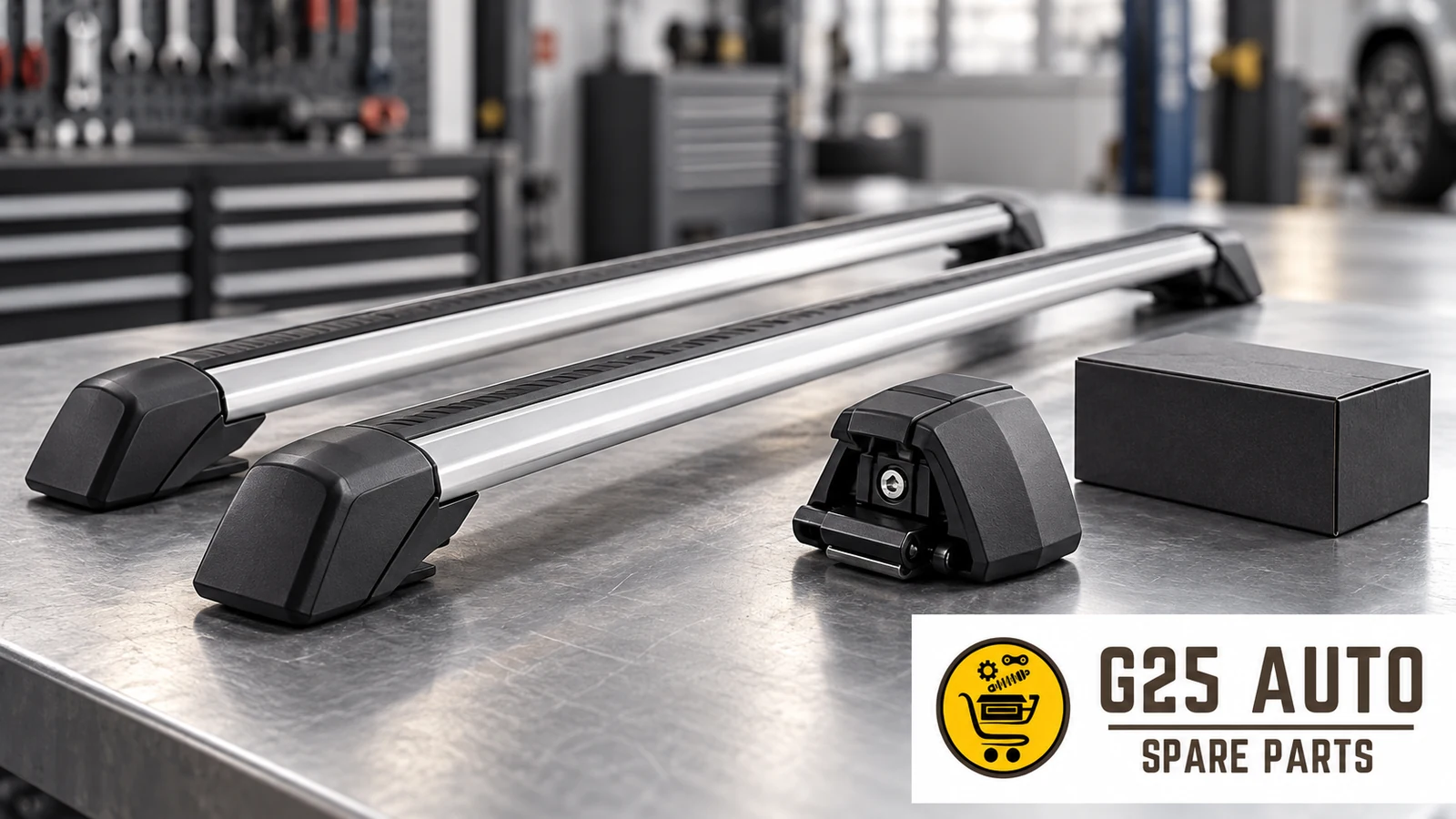
Short answer: When buying roof rack bars and foot kits, verify the exact reference validated for your vehicle, check which components the offer includes, and review the box’s own installation documentation together. Don’t infer content from names like bar pair, foot kit, or complete package; see each item and quantity in a written list. If there are missing or conflicting responses, don’t proceed to use without clarifying the order.
Difference Between Bar Pair, Foot Kit and Vehicle-Specific Package
When an offer title says bar pair, foot kit, or vehicle-specific package, it doesn’t fully explain the content on its own. Use these names for questions you’ll direct to the seller: Does the offer cover only the bars? Are the feet provided separately? Which items specify the connecting parts that need to be selected according to the vehicle? Request the answer to each question from that product’s documentation; don’t assume all sellers use the same naming or package structure.
You should keep in mind that sellers don’t always clearly state this distinction in product descriptions. When an offer is presented as a ‘roof rack system,’ be sure to clarify whether this term covers the complete package or just one component. Request a detailed list of each package’s contents before purchase.
Vehicle Catalog Reference and Roof Configuration Query
Ask the seller which roof configuration your vehicle model is listed under in the catalog. Instead of making a decision based on a general roof name, use the information you’ve verified for your vehicle. Compare the vehicle definition in the catalog with which application the offer covers. If what a term in a title means for your own vehicle is unclear, record this as a question awaiting response.
During the purchasing process, you should ask these questions: How is my vehicle model’s production year and version defined in this catalog? Under which code or category is it listed? What exact reference number does the recommended kit for this model have? These questions should receive answers based not only on the seller’s verbal statement, but on written catalog documentation.
In the catalog search, share the exact model name, production information, and chassis code if available that you’ve verified for your vehicle. Ask in writing which year and equipment scope the offer was selected for. If you don’t know information about your own vehicle, don’t fill it in by guessing; specify that this field also needs verification. Don’t substitute visual similarity for catalog matching.
Requesting Catalog Evidence Instead of Seller Statement
If you receive a general response like ‘this kit fits your vehicle’ in the purchase discussion, ask for the basis. Even if these statements are well-intentioned, they should always be supported by written catalog evidence. Request from the seller a page image or digital catalog screenshot showing where your vehicle appears in the catalog list.
There are points to note during the catalog evidence request. The catalog should be current and published by the manufacturer or authorized distributor. Remember that third-party compatibility lists may not always be accurate. If possible, access the manufacturer’s official compatibility guide directly or ask the seller to provide this.
Checking Package Contents and Component Quantities
When buying a rack kit, it’s necessary to clarify exactly what’s included in the package. However, the point to note here is to check what’s written in the documentation of the specific product you’re buying, rather than assuming a standard kit contents list from memory.
Information to be obtained from the seller includes: How many bars are in the package? How many mounting feet are there? Which additional connecting parts are included? Is any tool or wrench for installation included in the package? In which language is the user manual provided? The answers to these questions should be in writing in the product description.
Requesting photographs of the package contents is also useful. Images of the label on the product box, the contents list, and if available, photographs of parts visible through transparent packaging are valuable evidence for pre-purchase verification. This check becomes even more critical especially for second-hand or open-box products.
Readable Label and User Manual Photographs
Request readable photographs of product labels and the user manual before purchase. Ask which product the shared label belongs to, whether the full reference is visible, and whether the manual links to the same reference. Don’t assume every label will contain the same fields; request missing information separately from the seller.
Label photographs you should request from the seller include: The main label on the top surface of the product box, compatibility and warning labels on the side surfaces, hologram or authenticity marks if available. These photographs should not be blurry or unreadable, but taken clearly and close-up.
Request the cover page of the manual, the document code, and the section containing applicability information. Don’t assume these are always on the first page. Have them explain which product the document was prepared for and how it matches the reference presented to you. If you can’t decide with a partial photograph, request an accessible copy of the entire document; also note in which language it’s provided.
Waiting for Responses with a Comparison Table
When receiving quotes from multiple suppliers, preparing a blank comparison table for systematic comparison is an effective method. This table can be sent to sellers and you can request the same information from each seller in a standard format.
| Control Criterion | Supplier 1 Response | Supplier 2 Response | Supplier 3 Response |
|---|---|---|---|
| Full catalog reference number | |||
| Vehicle model’s location in catalog | |||
| Package components list | |||
| Number of bars and number of feet | |||
| Manual language | |||
| Product label photo provided | |||
| Manual sample pages provided | |||
| Authenticity documents available |
The purpose of this table is to collect concrete answers and avoid vague statements. When sellers cannot fill in blank spaces, these unanswered points indicate the need for more research or searching for alternative suppliers.
Recording Unanswered Questions
During the purchasing process, some of your questions may not receive clear answers or sellers may give evasive responses. Recording these situations is important because these unanswered questions can be warning signals about potential risks.
Keep a separate list for unanswered questions and review this list before making a purchase decision. If critical questions remain unanswered, it may be safer to postpone the purchase or look for an alternative supplier. Especially if there is uncertainty about vehicle compatibility, package contents and authenticity, clarity should be obtained before completing the transaction.
Keep written communication records. Archive email correspondence, messages, and documents sent by the seller along with the order record. Date which response belongs to which product and offer version. If a different kit is suggested later, don’t automatically transfer the old response to the new reference; have the content of the new offer explained again.
Pre-Delivery Review of Purchase Documents
Immediately before making payment, you should review all purchase documents one last time. Make sure the information in the order confirmation document, proforma invoice, or sales contract exactly matches the information you previously requested and confirmed.
Documents to be checked include: Order form or confirmation email, invoice or proforma, warranty document if available, document specifying delivery terms. In these documents, product reference number, description, quantity, and vehicle compatibility information if available should be clearly written.
If there are vague statements in the documents, request corrections. Instead of a general system name, request that the exact reference ordered, quantity, and package scope explained by the seller appear in the record. Keep a copy of the draft order and check the fields that changed in the final confirmation. If a different part is offered from the previous quote, wait for written explanation of the difference.
Receipt and Document Storage and Pre-Use Check
After the product is delivered, keep the purchase documents, receipt or invoice in a safe place. Tracking the ordered reference, delivered box label, and stated package contents within the same record makes concrete the questions you’ll ask later. Name files clearly to avoid confusing which document belongs to which order.
There are checks to be made before using the product. Verify that the package contents match the ordered contents. Inspect for visible damage, breaks, or missing parts in components. Confirm that the user manual is included in the package and that your vehicle appears in the compatibility list in the manual. You should not start installation without these checks.
If you detect any difference or deficiency, contact the seller before proceeding to use. Photograph the situation you detected and specify in writing which order item it doesn’t match. Ask separately about the solution to be applied, return or exchange conditions for this order; don’t assume a specific outcome or timeframe.
Avoiding Forced Installation and Modification
If the rack kit you purchased doesn’t fit the vehicle exactly during installation or if changes need to be made to components for installation, this is a serious incompatibility sign. Under no circumstances should you attempt to cut, drill, or forcefully install and remove parts.
Instead of proceeding by modifying the part to ensure fit, have the product reference and vehicle matching explained again. If the installation document is not understood, request clarification from the manufacturer or competent installer. Report to the seller not only the name of the problem, but also which label and which document are being compared. Don’t make your own definitive failure or incompatibility diagnosis from photographs.
If you’re obtaining professional installation service, ask whether the recommended procedure is included in the product’s own instructions. If the installer’s explanation conflicts with the seller’s reference response, don’t give approval without resolving this conflict. Pre-order documentation does not constitute permission for improvised work on the vehicle.
Manufacturer Information for Volvo V90 2020 Model
According to the user manual selected for the Volvo V90 2020 model: mounting instructions provided with the load carrier must be followed, carrier and load safety should be checked periodically, roof loads change the vehicle’s center of gravity and road holding, weights in vehicle specifications and maximum permitted load should be monitored.
Purchase Checklist
- Clarify whether the offer is a bar pair, foot kit, or complete package
- Ask how your vehicle’s roof configuration is defined in the catalog
- Request the full catalog reference number in writing
- Request catalog evidence showing your vehicle’s place in the compatibility list
- Ask which components are included in the package and how many of each
- Request a readable photograph of the product box label
- Request photographs of the first page and compatibility section of the user manual
- Learn which languages the manual is available in
- Send your comparison table to sellers and record responses
- Keep unanswered critical questions in a separate list
- Check all written documents before ordering
- Ensure the product description is specific and clear
- Keep invoice and purchase documents
- Check package contents before use after delivery
- In case of incompatibility, notify the seller without using the product
- Under no circumstances force-fit or modify parts
Frequently Asked Questions
Is it necessary to request catalog evidence when the seller says ‘it fits your vehicle’?
Yes. Ask which catalog record the seller’s statement is based on. Seeing the product reference, the vehicle’s definition in the catalog, and application notes if available together helps you understand the scope of the statement. This document is not by itself an unconditional compatibility guarantee; have missing or conflicting areas explained separately.
How do I learn which parts should be included in the package as standard?
Instead of assuming a general package list, request the documentation for the reference presented to you. Ask in writing about the quantities of items, components sold separately if any, and which parts this offer doesn’t cover. If the response is not clear enough, don’t place the order without clarifying. Don’t conclude from a product photograph alone that the bar and foot are in the same package.
What should I do if I detect incompatibility after the product is delivered?
Report the difference to the seller before proceeding to use. Have the order document, exact product reference, label photograph, and previous correspondence ready. Describe the observed difference concretely; don’t make a definitive diagnosis as to the cause. Request in writing from the seller the solution applicable for this order and its conditions.
Source: Volvo V90 2020 — Roof loads and load carriers (Verification: October 31, 2026).