
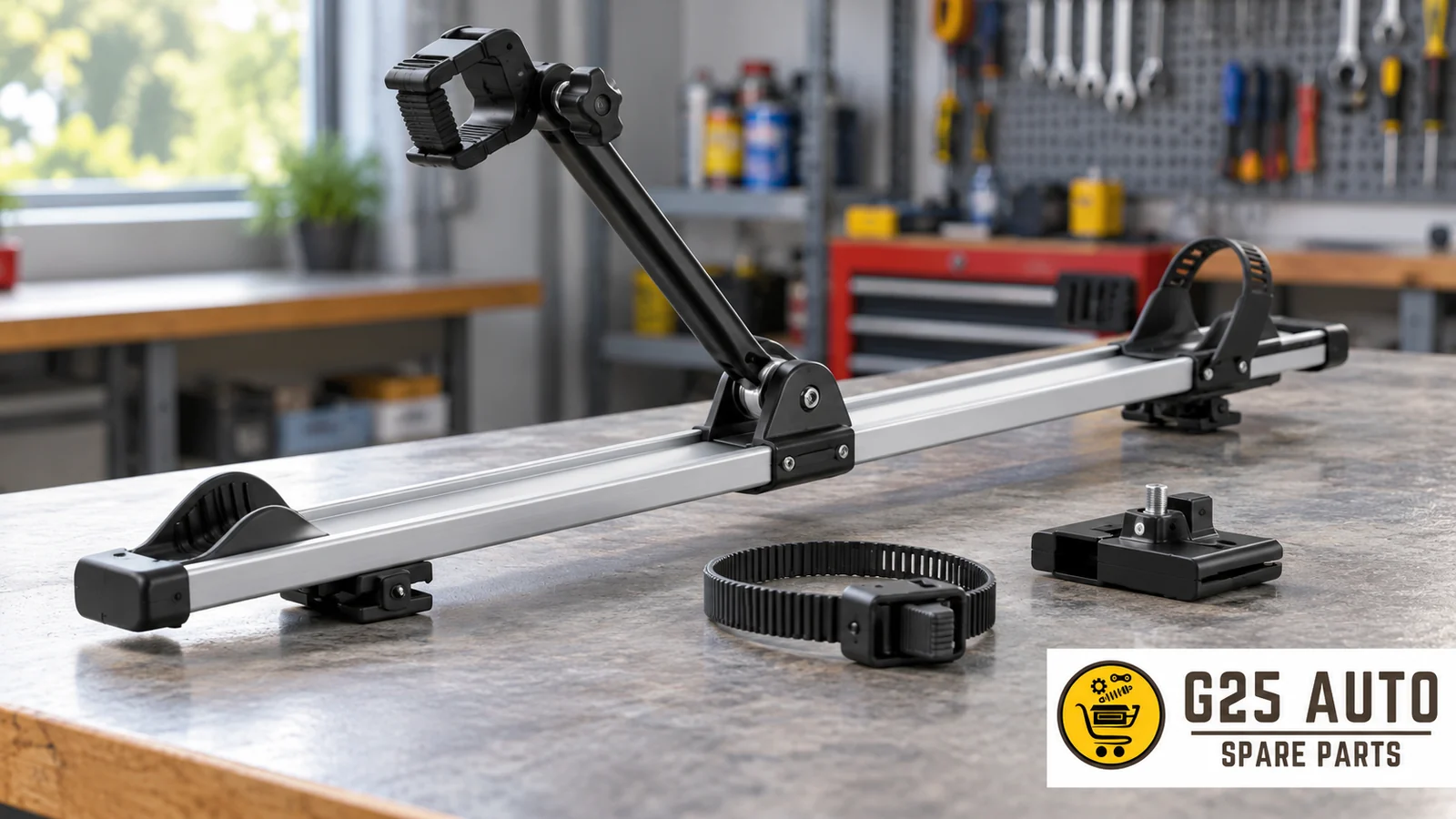
Short answer: When choosing a roof bike carrier, check the carrier reference, which part of the bike it holds, and the application description for your existing roof bar together. Request written quotation scope for frame, wheel straps, adapters and locks. A photo showing the bike on a vehicle does not alone prove the same parts suit your vehicle and bike.
Describe the carrier type more clearly than the product name
The term bicycle carrier can cover products used in different locations. Specify at the beginning of the conversation that the product you are looking for is offered for use on the roof. Do not consider a product attached to a tow hitch or promoted for another location as equivalent just because it is sold for the same purpose. Record the full name and product code of the quotation. If the title and photo describe a different carrier, do not make a selection without requesting clarification.
Ask the seller which part of the bike the carrier is associated with. Do not conclude suitability for all frames from the appearance of the holder arm in the listing. Prepare manufacturer information about your bike; do not write estimates on the form for measurements or materials you do not know. Keeping vehicle information and bike information separate makes it easier to understand which application question the seller is answering.
What does the official promotion example show?
The Volvo Cars official accessories page introduces an example of a roof bike carrier that holds the frame. The promotion mentions adjustable wheel straps and connection adapters. Do not read these features as standard equipment for all carriers. Separately verify whether the product to be purchased is the same reference and which parts the selected quotation covers.
A general promotion can help understand a product family; however, it does not provide a definitive application answer for your bike’s frame structure. If no reference link is established between the example described in the source and the product the seller offers, leave this unclear. Before transferring capacity or measurements from the source, request detailed documentation for the product you have selected. Do not fill in missing fields from another carrier’s description.
Do not complete frame information with estimates
Transmit your bike’s model and manufacturer documentation you have on hand to the seller. When a feature about the frame is asked, answer by checking its source. Do not identify material or measurements from visuals. Request that the relationship of the carrier’s holder structure with your bike be explained based on the relevant product instructions. Do not keep the seller’s brief affirmative response like a general approval where it is unclear for which bike it is given.
If an accessory or protective part is recommended, ask its name and reference separately. Clarify whether the recommended part is included in the package. This article does not recommend any pressure, clamping or assembly values for any frame. Evaluation of how the carrier should be used must be based on the product’s and bike’s own instructions. A photo of a similar bike does not substitute for technical evidence about your bike.
Request straps, locks and adapters as separate line items
Clearly show in the product list which part the straps to be sent are associated with. Do not assume every small part visible in the photo comes with the same package. Also ask separately about lock and key coverage. If two different quotations use the same main visual, instead of trying to understand the difference only from the title, ask the seller to write the contents of each quotation.
If an adapter is recommended, record for which bar and carrier reference it is recommended. Familiarity with a connection name does not show that all adapters are interchangeable. Before matching a part left over from an old carrier with a new carrier, request the relevant explanation. Do not generate codes by looking at the part’s shape. Do not create an installation plan by combining existing parts with the new product before the scope is clarified.
How to compare two quotations
| Record | First quotation | Second quotation |
|---|---|---|
| Full carrier reference | Label or document | Label or document |
| Bar application | Reference-based response | Reference-based response |
| Bike application | Document-based explanation | Document-based explanation |
| Strap and adapter coverage | Parts to be sent | Parts to be sent |
| Lock and key | Included or excluded | Included or excluded |
Link each column to separate correspondence. Do not assume a feature explained in one quotation is also valid for the other quotation. If different references are offered under the same product name, specify which reference is subject to the order. Leave fields awaiting response visible. Simply having more photos does not show the package is more comprehensive. Compare not the number of photos but the written product and part description.
Make your order message concrete
- Can you share the full reference of the carrier and a label image?
- Which application document are you using for the existing bar reference?
- What record is required for the application of the bike model I shared?
- Can you write separately the straps, adapters, locks and keys to be sent?
- Does the product usage document cover the reference I selected?
Save the answers to these questions together with links and dates. When the seller recommends another product, do not transfer the previous answer to the new product. Open a new record with the new code. If a catalog or document name is shared, note which product it is valid for. Instead of completing ambiguity with your own interpretation, clearly tell the seller which question has not been answered.
Establish the relationship between document and package at delivery
When the product arrives, compare the label with the reference in the order. Check whether the straps, adapters and keys match the quotation list. If there is a difference, photograph the parts and request an explanation from the seller. At this stage, resolve the scope difference instead of attempting forced assembly to the vehicle or bike. This article is not an installation guide or technical suitability approval for bikes.
Frequently asked questions
Do all roof bike carriers hold the same way?
Check the product’s holder structure from the description belonging to its own reference. A single example does not show the structure of all products.
Is the adapter in the photo included in the package?
Request a written answer in the package list of the selected quotation. Do not interpret the photo as a shipping commitment.
Can my existing old strap be used?
Do not decide from appearance. Request manufacturer explanation for the relevant part and carrier references.
If the seller recommends a different code, is the previous conversation sufficient?
Re-verify bar application, bike information and package scope for the new reference. Clearly mark the changed code in the order record. Do not assume positive answers for the previous product are automatically valid for the new product. Save which document belongs to which quotation in date order. The final reference in the order confirmation and the reference at the end of the conversation should be the same. If the match is unclear, ask this before the purchase decision instead of postponing it as a detail to be clarified during delivery.
If a document image is sent, save its title and relevant reference line together. If it is unclear which product an image taken from a single page belongs to, ask the document’s name. Do not consider unreadable fields as completed. In the comparison note, keep both confirmed answers and pending questions under the same order link.
Source: Volvo Cars — Bicycle Carrier, Rooftop. Verification: October 31, 2026. Manufacturer promotion has been used only in the context of an example product.