
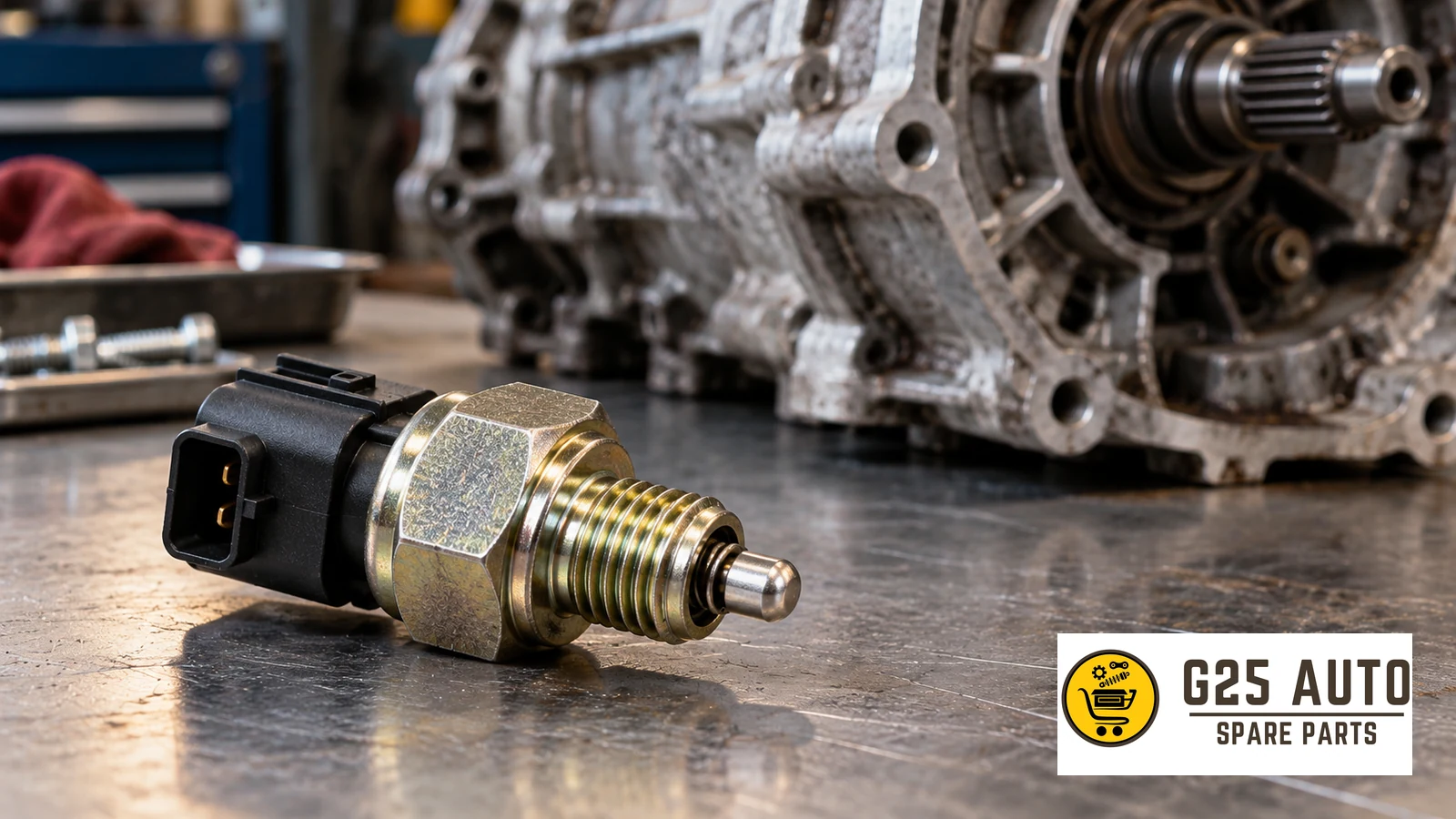
What Is a Reverse Light Switch and What Does It Do?
The reverse light switch is associated with reverse selection at the gearbox. Its electrical function must be distinguished from the mechanisms that engage the gears. Difficulty selecting reverse alone does not establish a switch fault.
Drivers may initially suspect the clutch or gearbox when reverse-related problems arise. A smaller replaceable component may also require attention, depending on the symptom. This guide covers diagnosis, part selection and replacement considerations.
Reverse Light Switch Fault Symptoms
Record reverse-related symptoms early, while distinguishing electrical faults from mechanical selection problems:
Common Symptoms to Record
- Difficult Engagement: Reverse is difficult or impossible to select; investigate the selection system.
- Noise: Unusual grinding or squeaking during engagement requires mechanical diagnosis.
- Jumping Out of Gear: Reverse disengages unexpectedly; do not assume the switch is responsible.
- Vibration: Unusual gear-lever vibration needs separate assessment.
- Lever Resistance: Excessive resistance warrants investigation of the selection mechanism.
- Reverse Lights Not Working: Check the reverse-light function and establish the cause before replacing parts.
Symptoms Versus a Confirmed Diagnosis
Professional inspection is needed to identify the fault. Mechanical engagement symptoms can involve:
- Clutch adjustment or faults
- Gear linkage and connection problems
- Internal gearbox faults
- Gearbox oil level or condition
- Selector mechanism wear
Arrange a detailed diagnosis. Replacing a switch on symptoms alone may leave the underlying problem unresolved and create unnecessary expense.
Reverse Light Switch Checklist
Before ordering a replacement, review these checks with the workshop:
Inspection Stages
- Have reverse selection assessed with the engine running and stopped, following safe workshop procedures.
- Check full clutch operation and pedal travel.
- Check reverse-light operation.
- Have gearbox oil level and condition checked.
- Inspect linkage for looseness or wear.
- Record whether symptoms occur cold or warm.
- Use a qualified workshop for diagnosis.
How to Select the Correct Reverse Light Switch
Correct selection matters: an unsuitable part can cause installation difficulties, premature failure or functional problems.
Verification by OEM or Part Reference
Use the manufacturer’s part reference to identify the required component. Depending on the vehicle, useful sources include:
- Vehicle and service documentation, where listed
- Authorised workshop records
- Markings on the existing component
- Manufacturer parts catalogues
- Professional parts suppliers
Checking Fitment by VIN
Switches may differ by production year, engine or specification within one model range. Supply the VIN for catalogue verification. Depending on the vehicle, it may be found:
- Near a lower windscreen corner
- On the driver’s door frame
- In the engine compartment
- In registration documents
Why Engine Code and Production Date Matter
Different engines may use different gearboxes. Production changes can also affect the required part. Provide accurate identification details:
- Find the engine code in vehicle documentation or on the engine, where marked.
- Confirm the production date; first registration is not necessarily the build date.
- Give the supplier the available identification information.
Genuine Versus Aftermarket Reverse Light Switches
Both genuine and aftermarket parts require application checks. Consider the following points when comparing options.
| Feature | Genuine Part | Aftermarket Part |
|---|---|---|
| Fitment | Confirm the correct vehicle application. | Verify the application and cross-reference. |
| Price | Assess the specific quotation. | Compare the specific quotation. |
| Availability | Confirm with the supplier. | Confirm with the supplier. |
| Warranty | Check applicable terms. | Check the supplier’s terms. |
| Quality | Check the specified product. | Assess the manufacturer and product documentation. |
| Choice | Manufacturer catalogue options. | Different brands may be available. |
Points to Check When Choosing Aftermarket Parts
For an aftermarket switch, consider:
- Manufacturer: Choose an established, traceable supplier.
- Documentation: Check relevant product and quality documentation.
- Warranty: Review scope and duration.
- Technical Fitment: Verify references and the exact application.
- Installation: Choose the specified part without improvised modifications.
When to Consider a Genuine Part
Factors in the decision can include:
- The vehicle’s warranty terms
- A new or low-mileage vehicle
- Safety-related requirements
- Previous unsatisfactory aftermarket experience
- Vehicle value considerations
Aftermarket Sourcing and Reliable Purchasing
Obtain reverse light switches from reliable, traceable sources. Assess the offered product rather than relying on a broad catalogue description.
For European and Balkan B2B sourcing through G25Auto, provide vehicle details and part references. Verify quality and fitment regardless of the purchasing channel.
Installation and Replacement
Replacement requires access to the relevant gearbox component. Difficulty and working time depend on vehicle design.
Preparation Before Installation
- Confirm the replacement part.
- Check that required tools are available.
- Consult vehicle service instructions.
- Use professional assistance if experience is insufficient.
Professional Installation
Workshop experience matters because:
- Other components may need removal for access.
- Installation sequence and specified tightening torques matter.
- Incorrect installation can damage components.
- Required checks and tests must follow the work.
Frequently Asked Questions
How long does a reverse light switch last?
Service life varies with the vehicle and operating conditions. There is no universal replacement interval.
Can a fault affect driving safety?
Reverse-related faults deserve prompt attention. Have failed reverse lights or engagement problems assessed before relying on the vehicle for manoeuvres.
Is only the switch replaced?
Diagnosis determines the repair. Related linkage, gaskets and seals may also need inspection, with replacement only where necessary.
Can an aftermarket switch provide suitable performance?
A suitable replacement must meet the required application. Verify the manufacturer, documentation and fitment rather than assuming equivalence.
Is adjustment needed after replacement?
Follow vehicle-specific instructions and verify operation afterwards. Separate linkage problems may require their own adjustment.
Preventive Maintenance and Service Life
General care of the reverse-selection system includes:
- Gentle Operation: Avoid forcing reverse engagement.
- Clutch Care: Have operation checked and depress the pedal fully as required.
- Gearbox Oil: Follow the manufacturer’s maintenance schedule.
- Cold Operation: Follow vehicle instructions and avoid forcing stiff controls.
- Regular Inspection: Investigate abnormal noise or behaviour promptly.
Conclusion
The reverse light switch is a small component requiring correct identification. Early assessment and accurate diagnosis help avoid unnecessary replacement.
Use part references, VIN, engine details and production information to verify the application. Symptoms or generic descriptions alone cannot establish fitment.
Compare genuine and aftermarket options against vehicle requirements, budget and documented product quality. Use reliable suppliers.
Installation requires technical knowledge. Professional assistance is appropriate where the necessary experience or equipment is unavailable.
Careful identification and informed purchasing support reliable repairs and help control avoidable costs.