
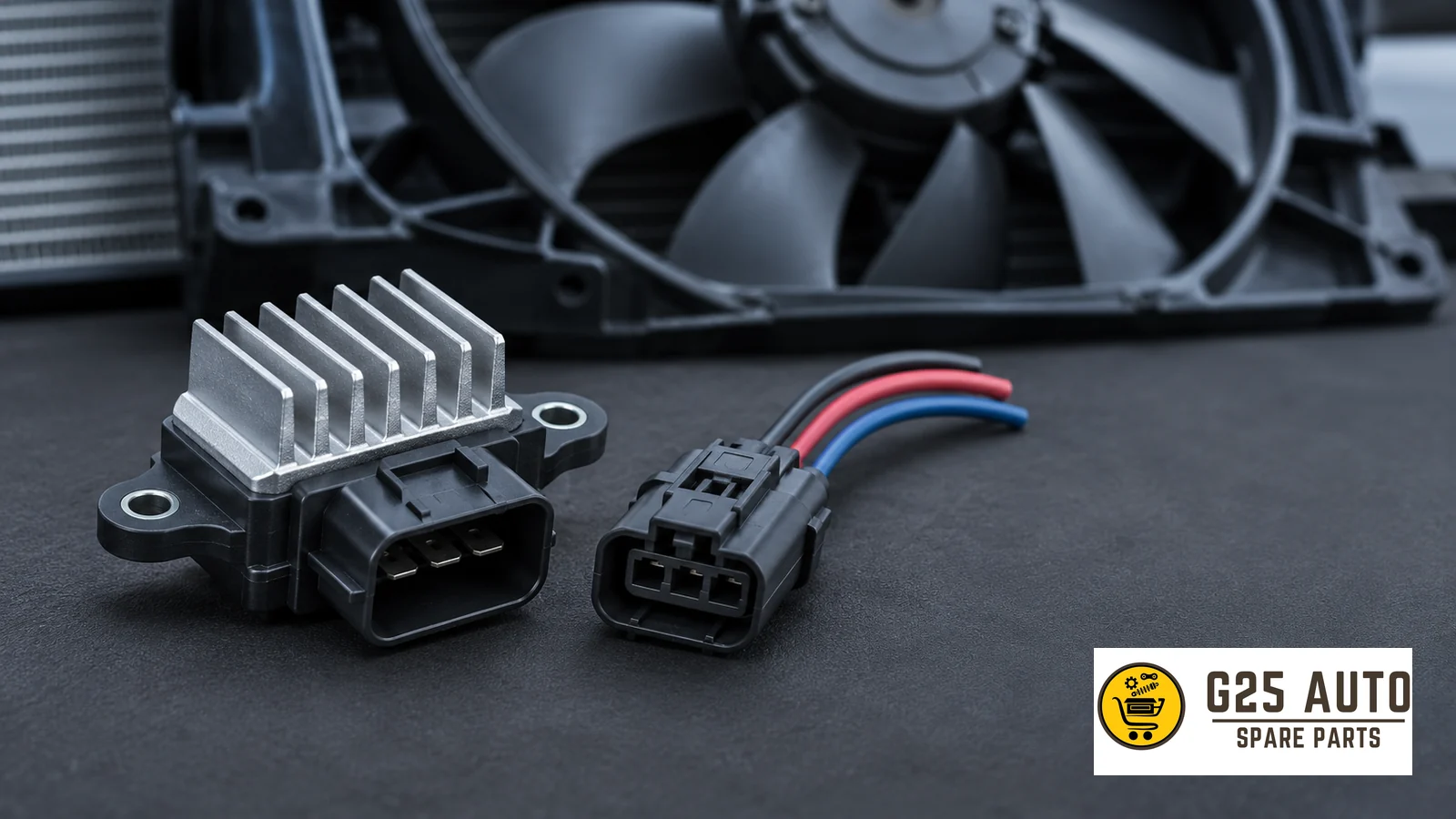
The radiator fan resistor module and its electrical connector help the cooling fan run at the required speed. A fault in either part can make the fan run at full speed, cut in and out, or stop altogether. A damaged connector can also interrupt the circuit or show signs of overheating.
What Does a Radiator Fan Resistor Module Do?
The module lets the cooling fan run at different speeds as cooling demand changes. Depending on the vehicle, it may sit near the fan motor or be mounted on the radiator assembly. The way it receives a speed command depends on the vehicle’s fan control circuit.
How the Fan Resistor Works
In a resistor-controlled circuit, resistance limits the current flowing to the fan motor to provide a lower fan speed. The available speed settings and the conditions that trigger them depend on the vehicle.
Symptoms of a Faulty Radiator Fan Resistor Module
Possible symptoms include:
- The fan runs loudly at full speed for unusually long periods.
- The fan fails to start when cooling is needed, and the engine temperature rises.
- Only one fan speed works on a system with multiple speeds.
- The fan cuts in and out unexpectedly.
- The engine temperature warning appears on the dashboard.
- The fan fails to respond as expected when the air conditioning is running.
Other Faults That Can Cause Similar Symptoms
These symptoms can also point to a fault elsewhere in the cooling system or fan circuit:
- A faulty thermostat or temperature sensor
- A failing fan motor
- A poor connection at the electrical connector
- A blown fuse or faulty relay
Check the circuit and the rest of the cooling system before replacing the module.
Electrical Connector Problems
The electrical connector in the fan circuit is exposed to heat, vibration and moisture. Look for:
- Melted or distorted plastic
- Corroded metal terminals
- Wear from vibration or damage from forcing the connector into place
- Damaged wire insulation
Symptoms of a Faulty Electrical Connector
- The fan cuts in and out as the vehicle moves.
- A burnt smell comes from the connector.
- The connector shows dark discolouration or melting.
- The wiring shows discolouration or other signs of overheating.
- The fan stops because the connector terminals have lost contact.
How to Diagnose the Fault
Confirming a fault in the resistor module or connector requires electrical testing. A technician can use the following checks to narrow down the cause.
Diagnostic Checklist
- Visual inspection. Check the connector, wiring and module for damage, burning, melting or corrosion.
- Electrical measurements. Test resistance, voltage or current as specified in the vehicle’s service procedure.
- Terminal contact. Check whether the terminals are loose or worn.
- Fuses and relays. Test the relevant fuse and relay if fitted.
- Fan motor. Check motor operation using the vehicle manufacturer’s test procedure.
- Diagnostic codes. Read the stored codes with a suitable diagnostic tool.
- Temperature sensor. Check whether its readings are plausible.
- Thermostat. Check how the thermostat is operating as part of the overall cooling system diagnosis.
Choosing a Replacement Part
Match the replacement resistor module or connector to the vehicle’s cooling fan circuit. Similar-looking parts can differ in their electrical specifications or mounting points.
Checking Part Numbers and Vehicle Details
Have these details available when checking fitment:
- Original part number. Read the code on the removed part if it is legible.
- Vehicle identification number (VIN). Use it to identify the vehicle in the parts catalogue.
- Engine code. Check the exact engine variant.
- Production date. Check the month and year where the catalogue lists a production split.
- Equipment. Check the relevant engine and air-conditioning configuration.
Original Equipment and Aftermarket Parts
| Check | Original equipment part | Aftermarket part |
|---|---|---|
| Fitment | Verify the part number against the vehicle. | Verify the stated vehicle application and the original part number it replaces. |
| Specifications | Check the part listed for the fan circuit. | Confirm the published electrical and mounting specifications match the application. |
What to Check on an Aftermarket Part
- Compare the connector pin count and layout with the original.
- Verify that the resistance and power rating suit the application where those specifications are provided.
- Check the mounting points and physical dimensions.
- Check the seller’s published return and warranty terms.
Fitting and Replacement
Replacing the module or connector requires electrical work. Incorrect connections can damage the fan circuit. Follow the vehicle-specific service procedure.
Before Fitting
- Switch off the ignition and follow the vehicle’s procedure for isolating the fan circuit.
- Confirm that the replacement matches the original application.
- Check the connection points and terminals.
- Make sure the required screws and clips are available and the work area is clean and dry.
Checks After Fitting
- Confirm that the module is secure and the connector is fully seated.
- Verify the applicable fan speeds under the conditions specified for the vehicle.
- Recheck fault codes using the service procedure.
- Where applicable, confirm the expected fan response to air-conditioning demand.
- Confirm normal cooling system operation before returning the vehicle to service.
Preventive Maintenance
- Keep the area around the fan wiring free of dirt and oil buildup.
- Service the cooling system and replace the coolant at the vehicle manufacturer’s intervals.
- Check the connector and wiring during cooling system inspections.
- Address fluid leaks and have the thermostat checked if cooling symptoms persist.
Frequently Asked Questions
How quickly can a fan resistor fault appear?
Symptoms can appear suddenly or develop gradually. Heat, moisture and other electrical faults can affect the module and its connector.
Is a burnt electrical connector dangerous?
Yes. A burnt connector can indicate an electrical fault. If you notice a burnt smell or melting, stop using the vehicle and have the circuit inspected.
Is it normal for the fan to run continuously at high speed?
Fan behaviour depends on the vehicle and operating conditions. If it stays at high speed when that behaviour is unexpected, have the fan control circuit and cooling system checked.
Is replacing the connector alone enough?
It can be enough if the fault is confined to the connector. Inspect both the connector and the module before deciding which parts need replacing.
Can I drive if the radiator fan has stopped working?
A failed fan can let the engine overheat, especially in slow traffic or hot weather. Have the fault checked before driving the vehicle.
Conclusion
The fan resistor module and electrical connector are part of a cooling system that also includes the thermostat, water pump, radiator, hoses and temperature sensor. Diagnose the cause before replacing a part, then confirm the replacement against the VIN, engine code and original part number.