
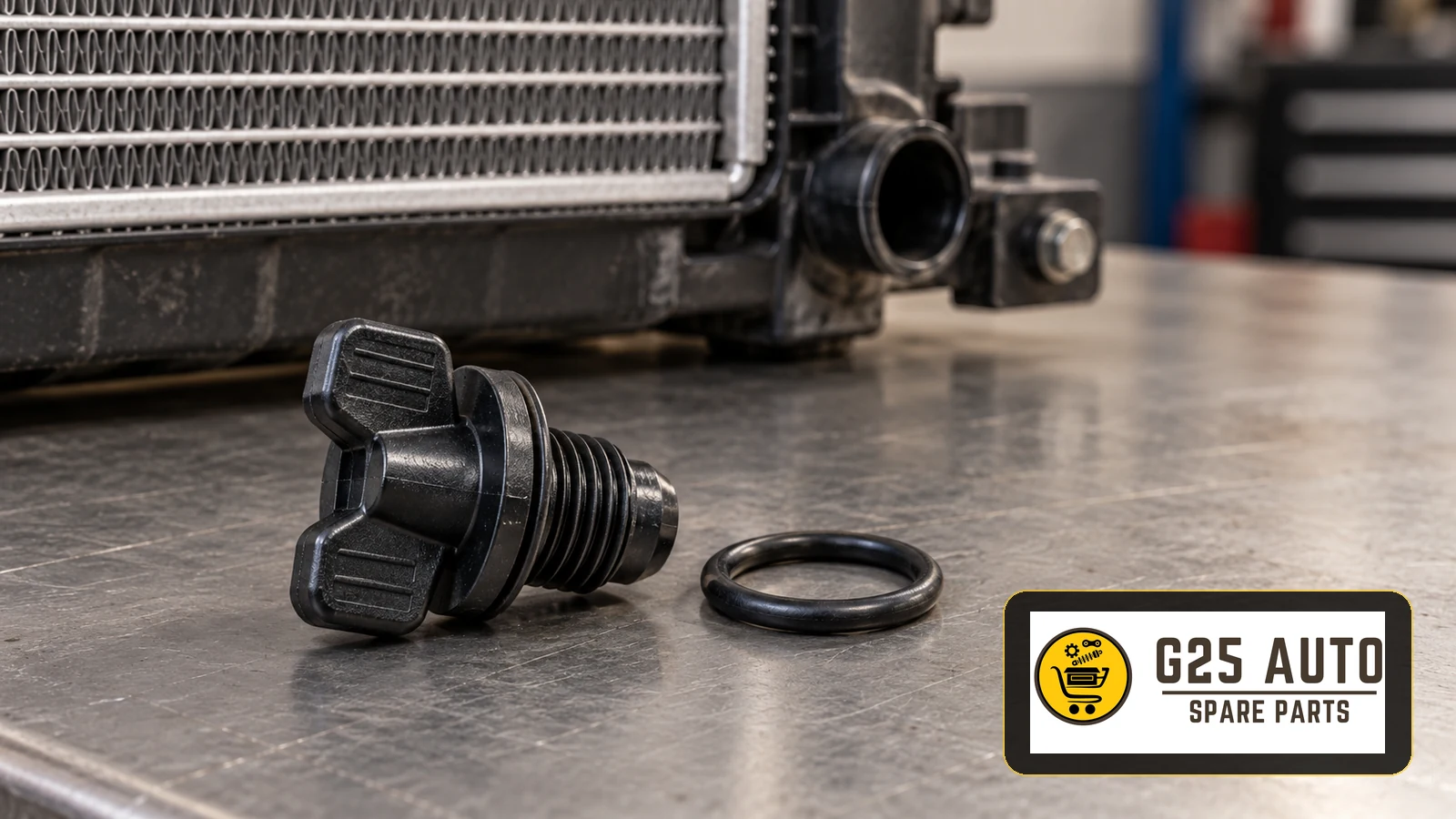
The radiator drain plug and O-ring are small but important parts that help keep coolant inside a vehicle’s cooling system. The drain plug provides a controlled outlet for draining the radiator, while its O-ring seals the joint. A fault in either component can cause coolant loss, overheating and potentially serious engine damage.
What Are a Radiator Drain Plug and O-Ring?
A radiator drain plug is a drain fitting usually located near a lower corner of the radiator. Depending on the design, it may have a plastic or metal body. It allows coolant to be drained in a controlled way during cooling-system maintenance. The O-ring is an elastomer sealing ring fitted between the plug and radiator body.
Although these components look simple, they contribute to the integrity of the cooling system. They deserve particular attention during routine maintenance and coolant changes.
What Do the Drain Plug and O-Ring Do?
The drain plug’s main function is to provide controlled drainage from the cooling system. During maintenance, coolant replacement or system cleaning, the plug is opened to drain coolant. When it is closed, the O-ring helps prevent leakage at the joint under system pressure.
The cooling system may operate under pressure. The pressure depends on the vehicle and system design, so the vehicle manufacturer’s service information must guide checks and parts selection. An undamaged O-ring is important for sealing.
Fault Symptoms: When Is There a Problem?
Possible signs of a radiator drain plug or O-ring problem include:
- Coolant pooling beneath the radiator: A coloured puddle beneath the engine area after parking can indicate coolant leakage. The leak must be traced before attributing it to the drain plug.
- A continually falling coolant level: Repeated loss from the expansion tank without an obvious explanation calls for a system leak check.
- An increased temperature reading: Coolant loss can cause engine temperature to rise above its normal operating range.
- Visible drain plug damage: The plug may be cracked, broken or distorted.
- A hardened or cracked O-ring: The seal can lose elasticity, harden or crack with age.
- Steam near the drain plug while the engine is running: Escaping coolant can evaporate on hot surfaces and become visible.
Important: These symptoms do not necessarily identify a faulty drain plug or O-ring. Hose connections, radiator cracks and water-pump problems can produce similar symptoms. A professional inspection is needed to establish the cause.
How Is the Fault Confirmed?
Symptoms suggest a problem, but confirming the cause requires a systematic inspection:
Visual Inspection
With the engine cold, clean and carefully inspect the drain plug area at the bottom of the radiator. Wet marks, coolant residue or discolouration can indicate a leak.
Pressure Testing
A workshop can use cooling-system pressure-testing equipment. The closed system is tested according to the vehicle manufacturer’s service information and monitored for pressure loss. This can help reveal leakage around the drain plug.
O-Ring Inspection
When the drain plug is removed, inspect the O-ring physically. Hardening, cracks, distortion or loss of elasticity are reasons to replace it. Check the seal’s condition and surface against the requirements for the specified component.
Original and Aftermarket Parts Compared
| Feature | Original part | Aftermarket part |
|---|---|---|
| Manufacturer | Vehicle manufacturer or its original-equipment supplier | Independent manufacturer |
| Quality and warranty | Check the specific product specification and warranty terms | Check the manufacturer’s specification and warranty terms |
| Compatibility | Verify the manufacturer’s part number and vehicle information | Verify the application and part reference before selection |
| Availability | Confirm current availability with the supplier | Confirm current availability with the supplier |
| Cost | Check the current quotation | Check the current quotation |
| Range | Check the options specified for the application | Check available specifications and applications |
Both options need to be assessed for the particular application. The original or aftermarket label alone does not establish performance or compatibility. Source parts from a reliable supplier and verify that the selected component meets the vehicle’s requirements.
What Matters When Selecting the Correct Part?
An incorrect radiator drain plug or O-ring can lead to an early repeat failure or leakage. Check the following information when selecting a replacement:
Verification by OEM Reference or Part Number
Manufacturer part references help identify the specified component and its application. Check the relevant reference against the vehicle and radiator information before ordering.
Vehicle Identification Number Check
Different production years or equipment versions of the same vehicle model may use different cooling-system components. The vehicle identification number (VIN) helps identify the vehicle specification and should be checked against the applicable parts information.
Engine Type and Code
Different engines in the same vehicle model may require different radiators and drain plugs. Consider the engine code, displacement and fuel type when verifying the application.
Production Date
Vehicle manufacturers may change designs over time. Parts can differ within the same model according to production date, so confirm the vehicle’s manufacturing information.
Drain Plug and O-Ring Replacement Checklist
Use this checklist when reviewing the work with a workshop or planning maintenance, together with the vehicle manufacturer’s service instructions:
- The engine and cooling system are completely cold; elapsed time alone has not been relied on.
- The vehicle is parked on level ground with the parking brake applied.
- A suitable container is ready to collect the old coolant.
- The replacement drain plug and O-ring have been checked against the vehicle specification.
- With the system completely cold, pressure has been released using the manufacturer’s specified cap-opening procedure.
- The drain plug has been loosened carefully so coolant drains in a controlled way.
- The old O-ring has been fully removed and its seat cleaned.
- The O-ring has been installed according to the manufacturer’s instructions; a compatible assembly product has been used only if specified.
- The O-ring is correctly seated in its groove.
- The drain plug has been tightened by the specified method and torque where provided, without excessive force.
- The system has been refilled with the specified fresh coolant.
- Air has been removed using the vehicle’s specified bleeding procedure, including engine operation only as directed.
- The drain plug area has been checked for leakage during the specified operating-temperature check, without opening the hot system.
- The coolant level has received its final check under the specified conditions.
Parts Supply and Choosing a Reliable Source
Reliable suppliers matter when sourcing components such as radiator drain plugs and O-rings. Poor-quality or incompatible parts can fail and contribute to more extensive damage. Provide accurate vehicle information and check the component specification before selecting a part.
Maintenance and Preventive Measures
The following checks help manage the condition of the radiator drain plug and O-ring:
Regular Coolant Replacement
Replace coolant at the intervals recommended by the vehicle manufacturer. Old or contaminated coolant can contribute to seal deterioration.
Using the Specified Coolant
Use coolant that meets the vehicle manufacturer’s specification. Compatibility matters for cooling-system components; a generic quality claim does not establish suitability.
Periodic Visual Checks
Regular visual inspection of cooling-system components can help identify small problems before they become more serious.
Careful Installation
Excessive tightening can damage the plug, O-ring or radiator seat. Follow the method and any torque value provided in the manufacturer’s service instructions.
Frequently Asked Questions
How often should a radiator drain plug be replaced?
No fixed replacement interval applies to every vehicle. Inspect the plug and O-ring during maintenance and replace them when damaged, hardened, distorted or leaking, and as required by the manufacturer’s service instructions.
Can I replace only the O-ring?
Where the specified O-ring is available separately and the design permits it, it can be replaced on its own. A damaged or cracked plug also needs attention; replacing only the seal will not repair plug damage.
Should the drain plug be plastic or metal?
Both types are used. Select the material and design specified for the radiator rather than choosing solely by material. Many vehicle designs use plastic drain plugs.
Should I tighten the drain plug harder to stop a leak?
No. Excessive tightening can damage the plug, O-ring or radiator seat. Follow the specified tightening method and torque where given. If leakage continues, have the system professionally inspected.
Can I use a different brand of O-ring?
The seal’s specified dimensions and material properties matter more than its brand. Verify the diameter, cross-section and material against the requirements for the application.
Can I open the drain plug while the engine is hot?
No. A hot cooling system can be pressurised, and opening the drain plug can cause serious burns. Allow the system to cool completely before working on it.
Conclusion
The radiator drain plug and O-ring may be small, simple components, but they contribute to reliable cooling-system operation. Regular checks, timely attention and correct parts selection help manage their condition.
Recognising a leak early can reduce the risk of overheating and further damage. Distinguishing symptoms from a confirmed diagnosis also helps avoid unnecessary replacement. A professional inspection should guide the repair decision.
Use the part reference, VIN, engine information and production date to verify the correct application. Whether choosing an original or aftermarket component, reliable sourcing and a confirmed specification are essential. Attention to these small components supports the condition of the wider cooling system.