
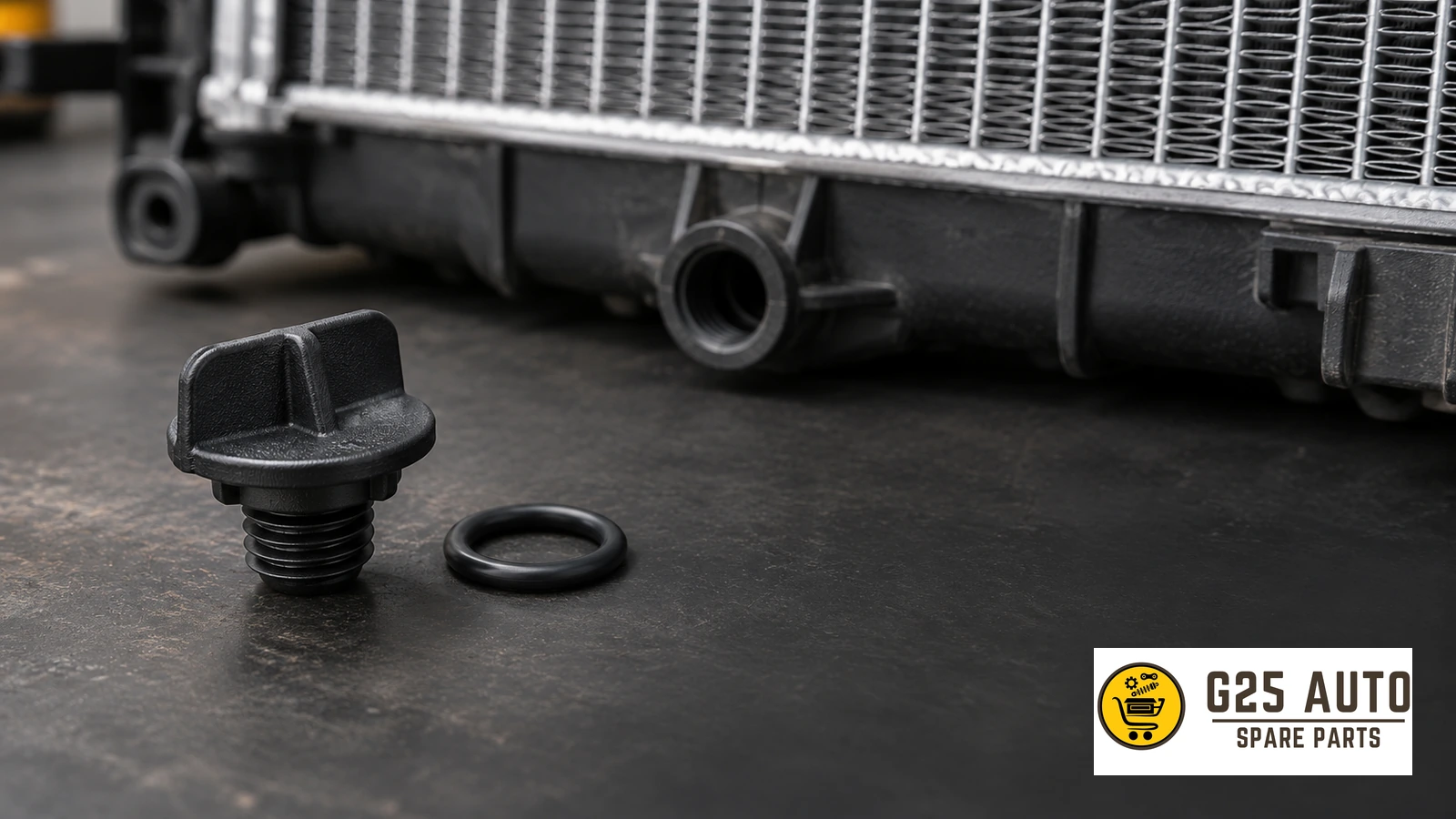
The radiator drain plug and its seal are small parts that play an important role during cooling system maintenance and repair. Inspect them during servicing and replace them when needed. A leak at the plug or seal can cause coolant loss, overheating and serious engine damage.
What Is a Radiator Drain Plug and How Does It Work?
On radiators equipped with a drain plug, the fitting is typically near the bottom or on the side. Depending on the radiator design, the plug may be plastic or metal and may use a separate seal. It provides a controlled outlet for coolant during maintenance and repairs.
When the plug is closed, the seal helps it seat against the radiator and prevents coolant from escaping at the joint.
What Signs of a Fault Should You Look For?
The following signs can point to a coolant leak. Finding where the leak starts helps determine whether the plug or its seal is responsible.
Visible Signs
- Coolant pooling beneath the radiator or around the plug
- Dried or crusty coolant residue around the plug
- Cracks, breaks or distortion in the plug
- A seal that has hardened, flattened or worn
- Unusual wetness around the radiator or in the engine bay
Operating Symptoms
- A falling coolant level, including a rapid drop in the reservoir
- A temperature gauge reading higher than normal
- An engine overheating warning
- A sweet smell coming from the engine bay
How Is a Drain Plug Leak Diagnosed?
These symptoms are a starting point for inspection. A technician can trace the leak to its source.
Professional Inspection
Visual inspection. With the cooling system cold, a technician checks the drain plug and surrounding area for evidence of leakage. The inspection includes the condition and seating of the plug and, where accessible, the condition of its seal.
Pressure test. A technician can use a cooling system pressure tester following the vehicle manufacturer’s procedure. Checking the drain joint while the system is under test can reveal leakage from the plug or seal.
Choosing Between Original and Aftermarket Parts
When the radiator drain plug or seal needs replacing, compare original and aftermarket parts against the requirements for the radiator fitted to the vehicle.
Original Parts
Use the vehicle manufacturer’s parts catalogue to identify the original replacement. Check that the listed part number matches the application, including any applicable part number revisions.
Aftermarket Parts
Independent manufacturers offer replacement plugs and seals. Check the supplier’s fitment information and compare the replacement against the original part reference. Check the specifications of the individual part before ordering.
How to Select and Verify the Correct Part
The replacement plug and seal need to fit the radiator correctly. A plug or seal that seats poorly can leak.
Original Part References
Check the original equipment part number against the replacement listing. If a number is visible on the existing part, use it as a reference and confirm it against a parts catalogue. The same vehicle model may use different drain fittings across production years and engine variants.
Checking by VIN
Provide the vehicle identification number (VIN) when asking a parts supplier to check fitment. The VIN helps narrow down the application. Confirm the result against the radiator or part reference when possible.
Engine Type and Production Date
Check the engine type or code and the vehicle’s production date. Cooling system components can vary with the engine and change during a model’s production run.
Radiator Drain Plug and Seal Checklist
Before Buying
- Have the VIN ready.
- Note the original part number if available.
- Identify the engine type and code.
- Check the vehicle’s production year and month.
- Identify the radiator fitted to the vehicle.
- Confirm the seal is specified for the coolant and application.
- Check the supplier’s fitment information and return or warranty terms.
Before Fitting
- Check the replacement for damage when unpacking it.
- Inspect the plug for cracks or distortion.
- Check the seal and its contact surface for damage.
- Clean the drain opening as directed in the service procedure.
- Check the specified tightening method and have the required tool ready.
- Have the specified coolant ready.
Original and Aftermarket Parts Compared
| What to check | Original part | Aftermarket part |
|---|---|---|
| Fitment | Confirm the part number in the vehicle manufacturer’s catalogue. | Check the cross-reference and confirm the exact radiator application. |
| Specifications | Check the catalogue listing for the plug and seal. | Check the supplier’s specification for both components. |
| Availability | Check with the parts outlet. | Check with the supplier for the specific replacement. |
| Warranty terms | Check the terms that apply to the part. | Check the seller’s or manufacturer’s terms. |
Maintenance and When to Replace the Plug or Seal
Routine Service Checks
Inspect the drain plug and its seal when changing the coolant. Follow the vehicle’s service schedule for coolant changes and check the service procedure for any requirement to renew the seal after opening the plug.
A seal can harden, flatten or crack over time. Inspect the plug for signs of damage as well. Replace damaged parts in accordance with the vehicle’s service instructions.
Frequently Asked Questions
How often should I replace the radiator drain plug seal?
Check the vehicle’s service instructions when the plug is opened. Inspect the seal during coolant service and replace it if it has deteriorated or the procedure calls for a new one.
How serious is a leak from the drain plug?
Even a small leak can lower the coolant level and lead to overheating. Have the source of the leak inspected promptly.
What is the difference between plastic and metal drain plugs?
The plug material is part of the radiator’s design. Use the type specified for the radiator fitted to your vehicle.
Can I replace the drain plug myself?
The job requires the vehicle-specific procedure for fitting the plug and bleeding the cooling system. If you are unsure how to carry out those steps, have a technician do the work.
Can I use an aftermarket seal?
Confirm that the seal is specified for the plug and radiator application. Use the original part reference to check fitment and verify the seal’s dimensions and material against the applicable specification.
How tight should the radiator drain plug be?
Follow the manufacturer’s tightening procedure for the specific plug. Overtightening can break the plug or damage the radiator housing.
Conclusion and Recommendations
A sound drain plug and seal help keep coolant in the radiator. Inspect both during coolant service and have any signs of leakage checked.
Whether you choose an original or aftermarket part, confirm its fitment using the part reference, VIN, engine type and production date. Replace a damaged plug or seal as required by the service procedure.