
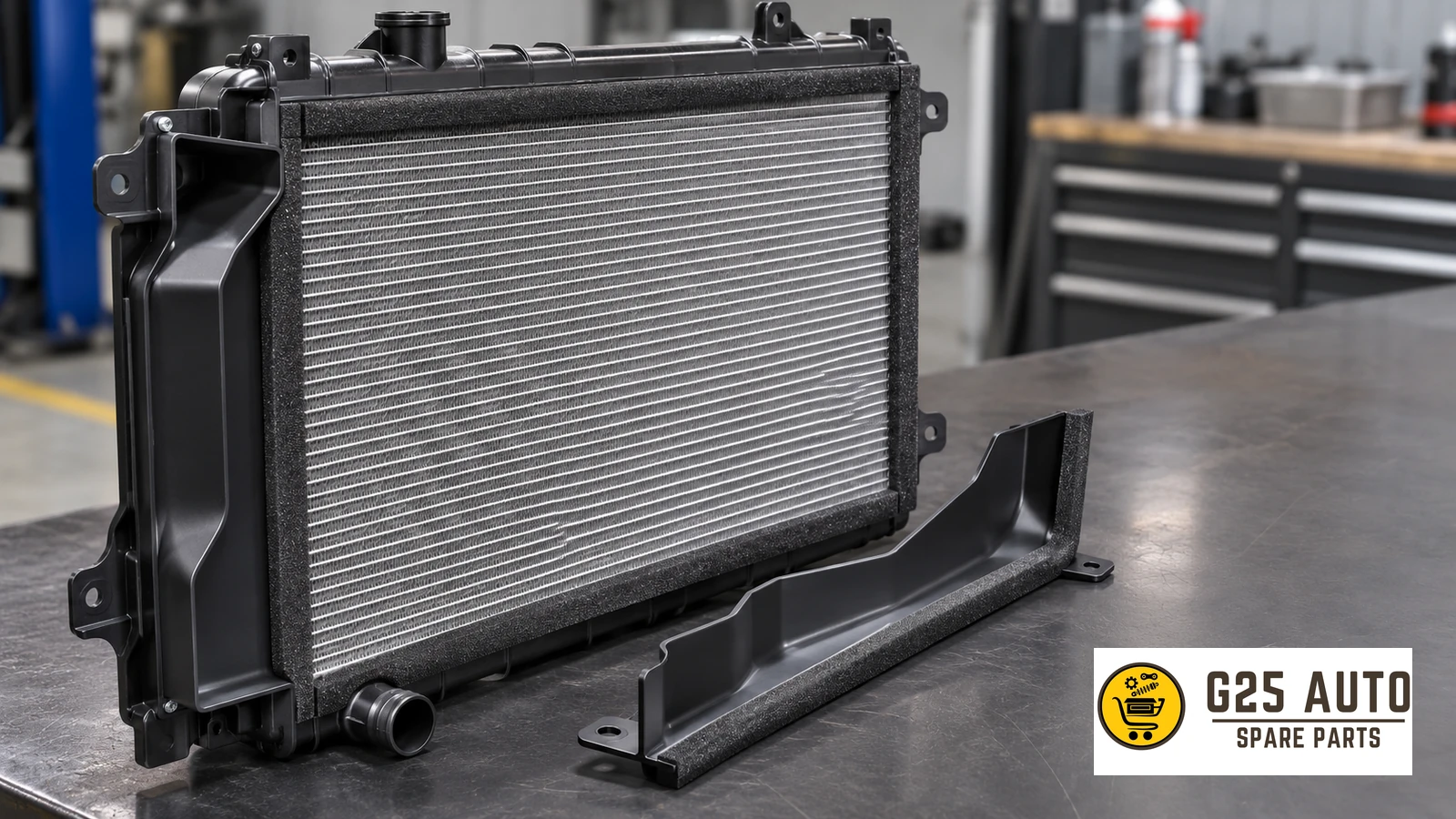
Radiator air guide foam seals and side panels channel incoming air through the radiator core. Damaged or missing guides can let air bypass the core and reduce cooling performance.
How the Radiator Air Guides Work
The air guides around the radiator help direct air entering the front of the vehicle towards the cooling surfaces.
What the Foam Seals Do
The foam seals close gaps between the radiator frame and adjacent front-end components. They help keep incoming air moving through the radiator core.
Why the Side Panels Matter
The side panels complete the air path along the edges of the radiator.
- They limit airflow around the sides of the core.
- They help channel air through the radiator when the fan draws air through the cooling assembly.
Signs of Damaged or Missing Air Guides
Foam seals and side panels can deteriorate gradually. Temperature changes or unusual noises warrant an inspection, since several cooling system faults can produce similar symptoms.
Early Signs
- The temperature gauge reads higher than usual, including when the air conditioning is running.
- Cooling performance falls at low speeds or in stop-and-go traffic.
- Loose parts rattle near the radiator or in the engine bay.
Signs of a More Serious Cooling Problem
- The engine overheating warning comes on.
- The radiator fan runs continuously.
- The coolant temperature rises well above its normal range.
- The radiator shows physical damage or distortion, or nearby plastic parts show signs of heat damage.
Diagnosis and Inspection Points
A workshop can establish the cause. Start with a visual inspection of the area around the radiator.
Visual Inspection Checklist
- With the engine cold, open the bonnet and inspect the area around the radiator.
- Look for crushed, crumbling or worn foam.
- Check side panels for cracks, broken sections and missing retaining clips.
- Look for gaps between the radiator and surrounding components.
- Check the radiator face for debris and look for signs of leakage around the cooling assembly.
Functional Tests
Depending on the symptoms, a technician may carry out the following checks.
- Pressure-test the cooling system to look for leaks.
- Check the direction and flow of air through the radiator.
- Use thermal imaging to inspect temperature distribution.
- Assess cooling performance under different operating conditions.
- Check how the radiator fan cycles.
Choosing Original or Aftermarket Parts
Both original and aftermarket guides may be available. Check the part against the vehicle application before ordering.
Original Equipment Parts
Use the vehicle manufacturer’s catalogue to identify the original guide or seal and confirm its fitment.
Aftermarket Parts
Aftermarket suppliers offer alternatives. Check the listed application, material and mounting points with the supplier.
Parts Comparison
| What to check | Original part | Aftermarket part |
|---|---|---|
| Fitment | Confirm the part reference against the vehicle details. | Check the listed application and original part reference. |
| Specification | Check the vehicle manufacturer’s specification. | Check the supplier’s specification for the selected part. |
| Installation | Confirm the mounting arrangement. | Compare the shape and mounting points with the original. |
Information You Need to Identify the Right Part
Identify the foam seal or side panel for the radiator fitted to the vehicle. A guide with a different profile or mounting arrangement may leave gaps or fail to clip into place.
Check the Original Part Number
Use the original part number, where available, as a catalogue reference. Check whether the reference changes with the model year or equipment level.
Why the VIN Matters
Vehicles sold under the same model name and year can use different parts. Use the vehicle identification number to narrow down the catalogue application.
Engine Code and Production Date
Different engine options can use different radiator assemblies. Check the engine code and build date where the catalogue lists alternatives or a production change.
Pre-Order Checklist
- Have the VIN, engine code and production date to hand.
- Check the original part number if it is marked on the existing part.
- Confirm the full model and equipment level.
- Read the supplier’s application notes and returns terms.
- Find out whether clips, screws or other fittings are needed.
- Check the applicable warranty terms and whether the job calls for workshop fitting.
Installation and Maintenance
Once you have identified the correct part, check the surrounding components before fitting it.
Installation Tips
- Clean and dry the mating surfaces and remove remnants of the old foam.
- Check that the panel mounting points are intact.
- Seat the clips without forcing them.
- Confirm the radiator is seated correctly in its mounts and check for unusual noise or vibration after fitting.
Routine Inspection
- Inspect the radiator perimeter during routine servicing.
- Look for hardened or cracked foam and brittle or damaged side panels.
- Have noticeable changes in cooling performance investigated.
Frequently Asked Questions
When Should the Radiator Foam Seals Be Replaced?
Inspect the seals for wear or damage and replace them when they can no longer close the intended gaps.
What Happens If a Side Panel Is Missing?
Air can bypass the radiator, reducing cooling performance. Replace the missing panel and have any overheating investigated.
Can Damaged Air Guides Lead to Engine Damage?
Reduced airflow can contribute to overheating. Severe overheating can damage the head gasket or distort the cylinder head.
What Matters Most When Choosing an Aftermarket Guide?
Check fitment using the VIN and original part reference before ordering.
Can I Replace These Parts Myself?
Access depends on the vehicle. If replacement requires removing the radiator, have a workshop assess the job. Work on the cooling system only when the engine is completely cold.
What If the Original Part Is Unavailable?
Ask a supplier for the specification and fitment details of a suitable aftermarket option.
Conclusion
Radiator foam seals and side panels direct air through the radiator. Inspect them for damage, loose clips and gaps, especially when investigating a change in cooling performance. When replacing them, use the original part reference and vehicle details to check the application.