
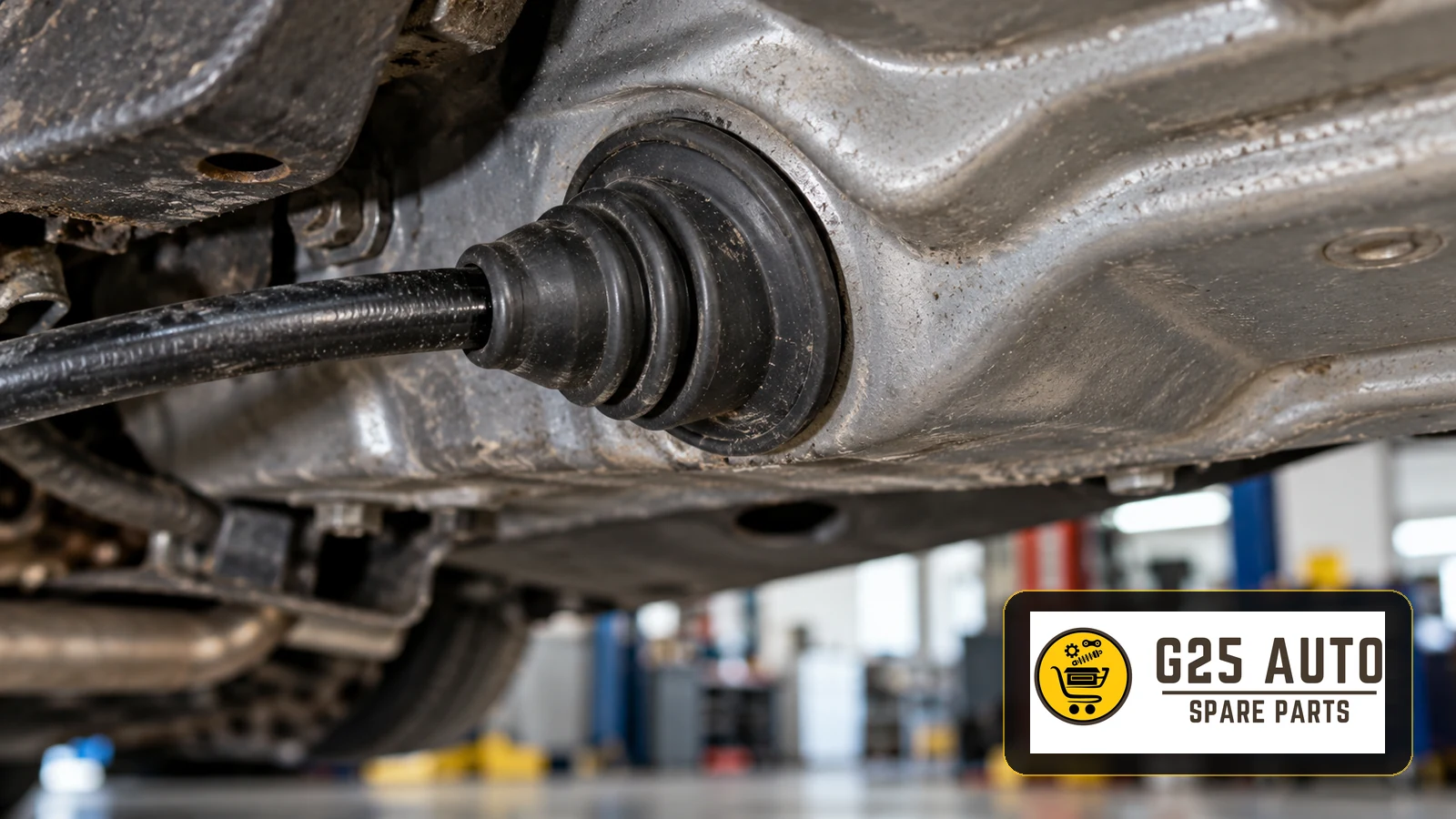
The parking brake cable body pass-through boot is a rubber seal protecting the cable where it passes from the cabin through the vehicle body. When the boot deteriorates, moisture, dust and dirt can reach the cable, encouraging corrosion and impaired parking brake operation.
What Does the Body Pass-Through Boot Do?
In cable-operated parking brakes, mechanical cables connect the cabin control to the rear brakes. Their passage through the cabin floor and vehicle body needs sealing and protection. The body pass-through boot serves this purpose.
A flexible rubber or thermoplastic boot helps:
- Protect against water, dust, mud and road salt.
- Reduce road noise entering through the opening.
- Limit draughts and heat loss.
- Restrict outside odours entering through this passage.
- Support cabin sealing against moisture.
Why Do These Boots Fail?
Several factors can damage the boot:
Ageing and Material Fatigue
Rubber and plastic deteriorate with environmental exposure and temperature changes. Heat around the installation can contribute to hardening and cracking.
Mechanical Wear
Cable movement and contact can wear the boot, particularly with frequent operation.
Chemical Exposure
Road salt, oils, brake fluid and other contaminants may degrade unsuitable materials.
Installation Errors
Incorrect fitting or an unsuitable part can cause premature damage or displacement.
Symptoms of a Damaged Boot
These signs warrant inspection; they do not establish the cause alone.
Visible Signs
- Cracks or tears.
- Hardening and lost flexibility.
- Loose or detached mounting edges.
- Discolouration or swelling.
- Mud or water around the body passage.
Signs During Use
- Unusual squeaking or rubbing.
- A stiff parking brake lever.
- Reduced holding ability, with several possible causes.
- Increased road noise inside.
- New outside or exhaust odours requiring investigation.
- Dampness or water marks on the cabin floor.
How Is the Fault Diagnosed?
A workshop can inspect the boot and related components.
Visual Inspection
A technician checks accessible cabin and underside surfaces for cracks, tears, deformation and seating problems. Adequate lighting and safe access are essential, including appropriate vehicle support where lifting is needed.
Material Inspection
Assess the material’s flexibility, hardness and integrity by touch. Brittle, hardened or abnormally soft material may need replacement.
Functional Check
Observe cable operation using the appropriate procedure. Investigate binding, rubbing and contamination.
Water Sealing Check
Where appropriate, a workshop may use a controlled water check to locate ingress.
Original and Aftermarket Parts Compared
| Factor | Original Part | Aftermarket Part |
|---|---|---|
| Manufacturer | Vehicle-brand supply channel | Independent component supplier |
| Fitment | Check the specified application | Check the listed application |
| Branding | May carry vehicle-brand identification | May carry supplier identification |
| Availability | Confirm with the supplier | Confirm with the supplier |
| Quality | Review application specifications | Review application specifications and documentation |
| Warranty | Check contractual terms | Check contractual terms |
Checklist for Selecting the Correct Part
Check the following before ordering:
Part Selection Checklist
- Identify make, model and year.
- Have the VIN available.
- Check engine code where relevant.
- Confirm production date and model revisions.
- Record any existing part reference.
- Specify transmission where the catalogue requires it.
- Check relevant equipment variants.
- Review return and warranty terms.
- Compare product photographs with the existing boot.
- Ask the supplier to resolve application uncertainty.
Why Reference and VIN Checks Matter
Incorrect part orders are a recurring concern in automotive supply. Body pass-through boots can vary between models, years and production versions, making identification particularly useful.
What Is an OEM Reference?
An OEM (Original Equipment Manufacturer) reference identifies an original component in the relevant parts system. Cross-checking this reference supports:
- Checking the required application.
- Distinguishing production revisions.
- Reviewing aftermarket cross-references.
- Reducing ordering errors.
VIN Verification
A VIN-based catalogue lookup may help establish vehicle details such as:
- Manufacturer and production information.
- Model year.
- Engine specification.
- Body configuration.
- Vehicle identification sequence.
Available detail varies. Suppliers should cross-check catalogue information, references and the actual component, especially across model revisions.
Engine Code and Production Date
Parking brake configurations may vary by engine specification or production date. A model revision can also change the required component. Check catalogue distinctions instead of assuming that every version uses the same boot.
Replacement and Installation Notes
Follow the vehicle procedure, using qualified assistance where access or brake work requires it.
Preparation
- Provide a clean, well-lit workspace.
- Photograph the original installation.
- Clean the pass-through area.
- Inspect cable condition.
During Installation
- Fit the boot without excessive stretching.
- Secure retainers as specified without damaging the material.
- Check seating at the specified interfaces.
- Confirm unrestricted cable operation.
After Installation
- Apply and release the control as prescribed.
- Inspect the boot visually.
- Investigate abnormal noise or odour ingress.
- Verify parking brake operation using the specified workshop procedure.
What to Check in an Aftermarket Boot
An aftermarket part may be a practical purchasing option. Evaluate the specific product and supplier against the application, budget and purchasing requirements.
Manufacturer Reliability
Review the manufacturer’s track record, supplier traceability and relevant quality documentation. Price or a general certificate alone does not establish suitability.
Material Quality
Check suitability for operating temperatures, flexibility and expected chemical exposure.
Application Tables
Look for detailed application information covering model, year and relevant engine or production distinctions. Resolve missing information with the supplier before ordering.
Warranty and Returns
Confirm the written conditions before a European or Balkan B2B order.
Frequently Asked Questions
How long does a cable boot last?
Life varies with conditions, climate and material. Replace according to condition rather than an assumed interval.
Can boot damage affect parking brake performance?
Indirectly: moisture and dirt can contribute to cable corrosion and stiffness. Other causes also need checking.
Does replacement affect brake adjustment?
This depends on the procedure and any cable disconnection. Check operation and adjust where specified.
Do all vehicles use the same boot?
No. Check application, VIN-based catalogue information and references.
Can I replace it myself?
Assess the required tools, safe access and procedure. Use professional assistance where needed.
Do aftermarket boots have a shorter life?
Service life depends on the specific material, application and installation; branding alone cannot establish equivalence.
Conclusion
This small seal supports cable protection, cabin comfort and control of moisture ingress. Recognising damage early can reveal problems before contamination worsens.
Cross-check the VIN, relevant engine details and existing part reference before choosing an original or aftermarket boot suited to the application and purchasing requirements.
Review supplier documentation, fitment and purchasing terms, and follow the correct installation procedure.
Include the boot and parking brake cable in routine condition checks.