
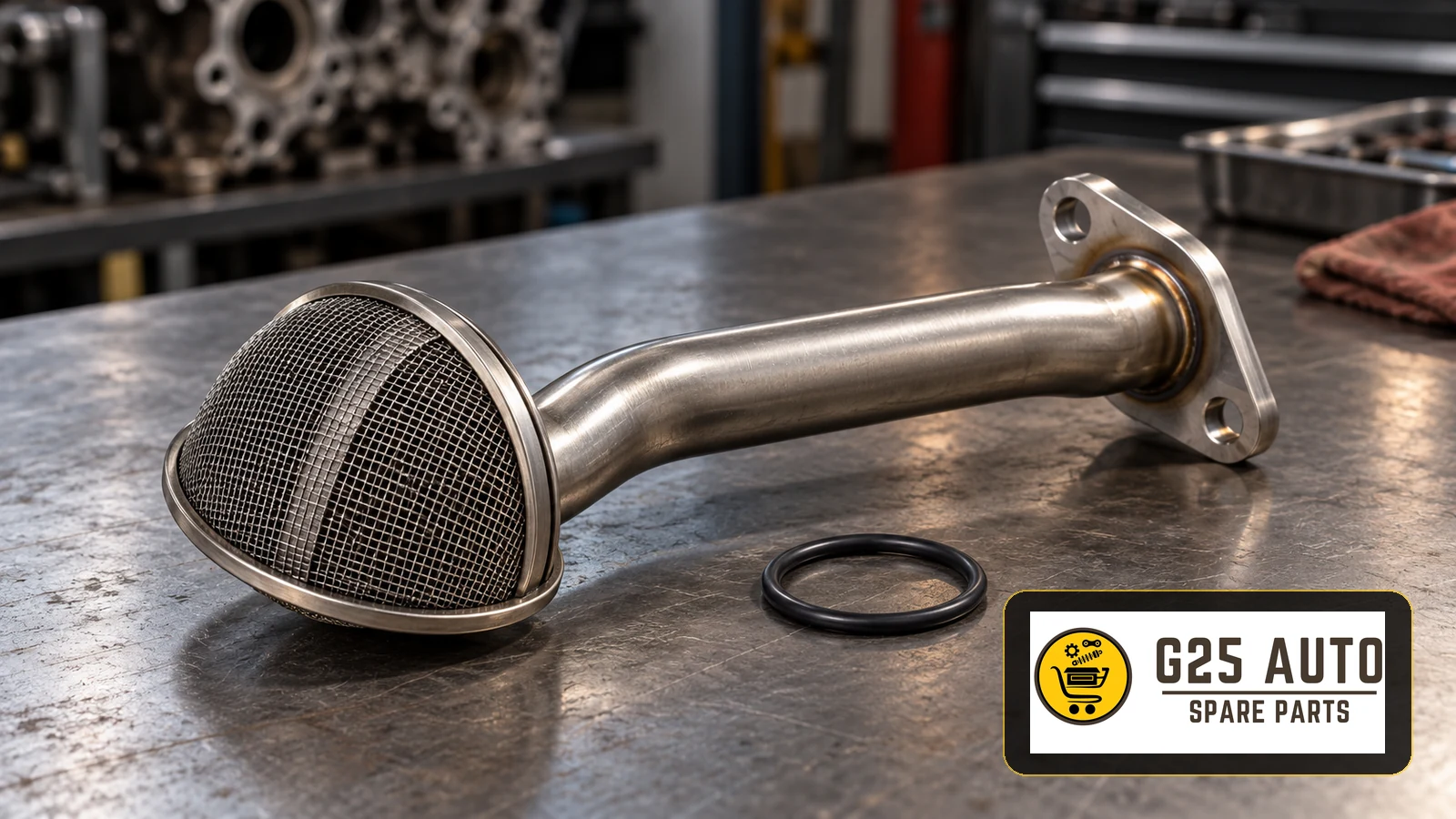
The engine oil pump pickup strainer and its connection seal are critical components of the lubrication system. The strainer screens oil in the sump before it enters the pump, while the seal closes the connection. Damage or blockage can cause serious lubrication problems.
What Is an Engine Oil Pump Pickup Strainer and Why Does It Matter?
The pickup strainer sits near the bottom of the oil sump and screens particles and debris from the oil. Its mesh or grille and supporting body vary with the engine design.
Its purpose is to intercept debris before oil is drawn into the pump and distributed around the engine. A blocked or damaged strainer can prevent the pump from drawing enough oil. Inadequate lubrication can then cause wear to critical engine components.
How the Pickup Strainer Works
When the engine runs, the oil pump draws oil from the sump through the pickup strainer. The screen retains debris that its openings can intercept. This process continues while the engine operates; the screen does not remove every contaminant from the oil.
Dirt can gradually obstruct the mesh. Inspecting the strainer during an engine overhaul and replacing it when necessary is therefore important.
The Connection Seal and the Importance of Sealing
Seals at the pickup connection to the pump or engine assembly maintain a sealed oil path. Depending on the design, this helps prevent leakage or air entering the suction side. The specified seal material and form depend on the application.
A damaged or hardened seal can compromise the connection. Air drawn through an unsealed pickup connection can interfere with effective oil delivery. Whether leakage is externally visible depends on the location and design.
Seal Materials and Their Properties
Connection seals are made from different materials, with resistance to heat, oil and ageing varying between compounds. Some applications use reinforced or layered gaskets. Material names alone do not establish that a seal is suitable for a particular engine.
When selecting a seal, consider the engine operating conditions, specified oil and manufacturer recommendations.
Symptoms of a Fault
Problems involving the pickup strainer and connection seal may accompany several symptoms. Recognising these signs supports prompt investigation, but none identifies these components as the cause on its own.
General Warning Signs
- Low oil pressure warning: The dashboard oil pressure light may illuminate or the gauge may show a lower than expected reading.
- Engine noise: Unusual ticking or knocking may be heard, including at idle or during a cold start.
- Reduced performance: Poor lubrication can accompany loss of power or increased vibration; these symptoms also have other causes.
- Oil leakage: Oil may collect beneath the engine, although the source must be traced separately.
- Excessive oil consumption: An oil level falling faster than expected requires investigation rather than an assumption of pickup failure.
- Engine temperature: Inadequate lubrication can contribute to higher operating temperatures.
Signs Associated with a Blocked Pickup Strainer
A restricted strainer can limit the oil available to the pump. The symptoms may vary with engine speed, temperature and oil condition. Reduced oil flow in cold conditions can also make a restriction significant; operating conditions alone do not confirm a blockage.
Signs Associated with Seal Damage
A damaged or hardened pickup seal may allow air into the oil path and disturb oil delivery. Irregular oil pressure or changing engine noises can accompany this condition. An external oil stain is not a reliable indicator of an internal pickup seal leak.
Methods for Confirming the Diagnosis
Symptoms can indicate a problem, but professional inspection is needed to establish its cause. Warning signs and a confirmed diagnosis must be kept separate.
Professional Inspection Steps
Depending on the engine and findings, professional checks may include:
- Oil pressure measurement: Record pressure using the specified test method, at the engine speeds and conditions required by the service information.
- Sump inspection: Where removal is required and authorised by the repair procedure, inspect the pickup strainer visually.
- Restriction checks: Examine the screen for dirt, sludge and obstructions using an appropriate inspection method.
- Seal inspection: Check sealing surfaces and seals for cracks, hardening, crushing or deformation.
- Oil pump assessment: Assess pressure and delivery performance using the applicable service procedure.
- Oil analysis: Laboratory analysis can help assess metal particles, contamination and oil condition when relevant.
Comparing Original and Aftermarket Parts
When selecting a pickup strainer and connection seal, original and aftermarket options may be available. Each option needs to be evaluated against the particular engine application and documented product information.
Comparison Table
| Feature | Original Part | Aftermarket Part |
|---|---|---|
| Compatibility | Confirm the correct vehicle manufacturer reference and revision. | Confirm documented application coverage and cross-reference details. |
| Quality standards | Check the specified part and application. | Review relevant product evidence; a general certificate alone does not prove suitability. |
| Warranty coverage | Check the applicable vehicle and part warranty terms. | Check part warranty terms and any relevant vehicle warranty conditions. |
| Cost | Obtain a current quotation for the correct reference. | Compare current quotations for verified suitable options. |
| Supply time | Confirm availability for the required model and revision. | Confirm actual availability with the supplier. |
| Range | Choose the specification listed for the application. | Check the specifications of each offered option. |
A Balanced Assessment
An original part must still be matched to the correct engine and revision. Its price, availability and warranty treatment should be checked rather than assumed, particularly for older vehicles.
An aftermarket part may be an option when its application and specifications are supported by reliable documentation. Neither equivalent performance nor a price or availability advantage follows automatically from the aftermarket label.
Review the manufacturer’s evidence, references and warranty conditions when comparing replacement parts.
Checklist for Selecting the Correct Part
Use the following checklist to reduce selection errors when ordering a pickup strainer or connection seal:
- Part reference: Record any original reference on the existing part and verify its current application and revisions.
- VIN verification: Check compatibility using the vehicle identification number. Different variants can exist within the same model.
- Engine code: Confirm the engine code from the vehicle’s identification information or records.
- Production date: Check the build date, since revisions may change the required part.
- Quality documentation: Review relevant certificates and their scope, without treating a management certificate as proof of fitment.
- Manufacturer references: Review the supplier’s documented manufacturing background and product references.
- Warranty conditions: Establish the duration, coverage and exclusions of the offered warranty.
- Technical specifications: Verify that material, dimensions and performance requirements match the application.
- Installation requirements: Establish whether special tools or procedures are required.
- Supplier reliability: Check the supplier’s identity, traceability and relevant customer feedback.
Installation and Maintenance Recommendations
Replacing the pickup strainer or connection seal often requires sump removal. Access and repair requirements vary, so the work should be undertaken by a professional workshop using the applicable service procedure.
Points to Check During Installation
The installation procedure should address the following points:
- Clean mating surfaces and remove old gasket residues using the specified method before installing the replacement seal.
- Position the seal correctly without crushing, folding or otherwise damaging it.
- Tighten fasteners to the manufacturer’s specified torque and sequence. Excessive tightening can damage the connection or seal.
- Preserve the specified pickup position and clearance from the sump. An incorrect position can restrict oil flow.
- Check the oil level after assembly and correct it according to the vehicle procedure.
- Complete the specified commissioning and oil pressure checks, and inspect for leakage.
Routine Maintenance Recommendations
To support the condition of the lubrication system:
- Follow the specified engine oil and filter replacement schedule.
- Use oil that meets the required vehicle specification.
- Investigate and address engine overheating.
- Have the pickup strainer inspected during an engine overhaul.
- Monitor changes in oil consumption and pressure.
Obtaining Parts from a Reliable Supplier
Reliable sourcing matters for critical lubrication components such as pickup strainers and connection seals. Assess quality and verified application coverage alongside price.
Compare the available options against the vehicle details and required part specification before ordering.
Points to Check During Procurement
When obtaining parts:
- Provide the exact vehicle model, engine code and production year.
- Where possible, share photographs of the existing part and its markings.
- Clarify whether the offered part is original or aftermarket.
- Check return and warranty conditions.
- Confirm delivery timing and shipping terms.
Frequently Asked Questions
How often should an oil pump pickup strainer be replaced?
There is no replacement interval established here. Inspect it during an overhaul and replace it when required by its condition or the applicable service instructions. High mileage or a poor maintenance history may warrant closer investigation.
Must the connection seal be replaced whenever the engine is opened?
Follow the engine-specific instructions for disturbed seals. Replace any seal specified for single use or found damaged; sump removal alone does not establish the same replacement rule for every engine design.
Can a blocked pickup strainer damage the engine?
Yes. If the pump cannot draw sufficient oil, inadequate lubrication can damage critical components and may ultimately lead to seizure. Suspected oil pressure problems require prompt professional attention.
How can the correct part be found without an original part code?
The VIN, engine code and production date can be used to identify the applicable reference in reliable parts information. A supplier can help cross-check these details before an order is placed.
Does an aftermarket part affect warranty coverage?
Check the applicable warranty conditions and obtain clarification where necessary. Warranty status and the suitability of the replacement part must be assessed separately; neither can be assumed from the part’s category alone.
Can the strainer be cleaned or must it be replaced?
Cleaning may be appropriate only where the service instructions permit it and the part remains serviceable. A deformed, cracked or heavily contaminated strainer needs assessment for replacement. Any permitted cleaning must avoid damaging the screen.
Conclusion
The pickup strainer and its connection seal have important roles in engine lubrication. Blockage or loss of sealing can contribute to serious engine damage if the resulting oil supply problem goes undetected.
Recognising symptoms is useful, but professional checks are essential for diagnosis. Low oil pressure, abnormal engine noise or oil leakage should be investigated promptly.
When replacement is necessary, compare original and aftermarket options using the correct reference, VIN, engine code and build date. Documented suitability matters more than assumptions about the part category or price.
Installation requires care and the applicable workshop procedure. Correct tightening, clean mating surfaces and the specified seals support a properly assembled connection.
Scheduled maintenance, correctly specified oil and relevant inspections support lubrication system condition. Addressing a small strainer or sealing problem promptly may help avoid a more extensive repair.
Understanding these components, verifying the replacement part and responding to faults are practical steps towards protecting the engine’s condition.