
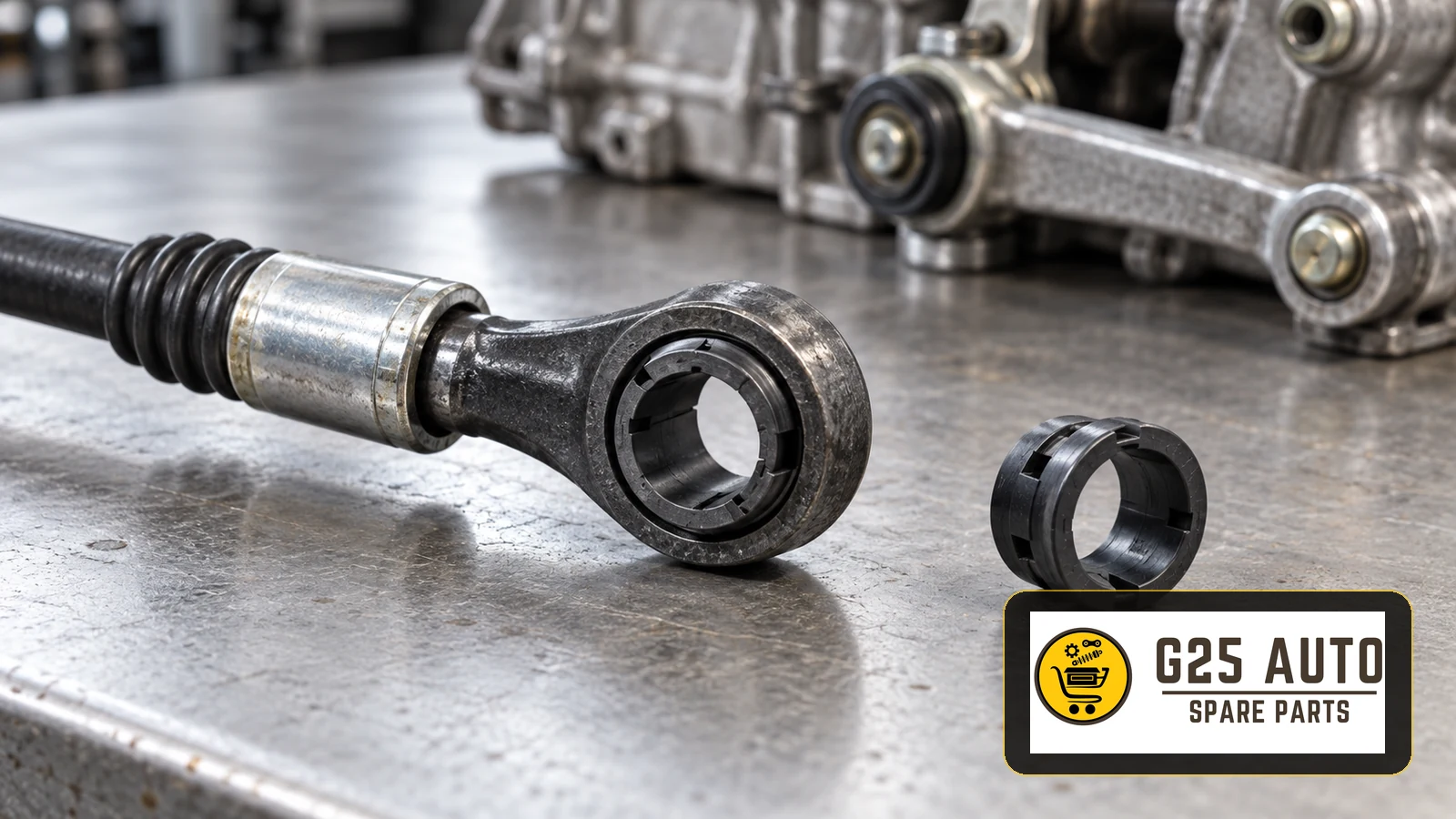
The manual gearshift cable end bushing is a small component in the system that transfers movement from the gear lever to the gearbox. It supports movement at the connection between linkage components. Wear can contribute to stiff shifts, noise or difficulty selecting gears; these symptoms require diagnosis rather than an assumption that the bushing is responsible.
What Is a Manual Gearshift Cable End Bushing?
End bushings in gearshift systems may use rubber or polymer materials, depending on the application. Fitted at the cable end connection, these small parts can perform the following functions according to their design:
- Support the transfer of mechanical movement from the gear lever
- Reduce direct rubbing between connected metal components
- Help isolate vibration and noise
- Limit unwanted play at connection points
- Allow the flexibility required for linkage movement
The component can affect gearshift feel and precision. Wear develops with use, so its condition should be assessed when inspecting the shift mechanism.
Fault Symptoms: When Is There a Problem?
Wear or damage to a cable end bushing may produce several symptoms. Evaluating them correctly helps determine whether intervention is needed:
Problems Felt During Gear Changes
- More play than usual at the gear lever
- Stiffness or sticking during shifts
- Squeaking or rattling while changing gear
- A loose or vibrating gear lever
- Difficulty selecting particular gears
- A change in the gear lever’s position
Signs While Driving
- A gear disengaging unexpectedly, which requires broader diagnosis
- Unusual noises when releasing a pedal, which may have another cause
- A change in lever position after removing your hand
- More difficult shifting in cold weather
Important: These symptoms can also indicate other faults. Professional inspection is needed to establish the cause.
Diagnosis: Professional Assessment
Even when symptoms are present, a detailed inspection is necessary before attributing the problem to the end bushing. Assessment includes the following stages:
Visual Inspection
A qualified technician accesses the gearshift cable system as appropriate for the vehicle and checks the bushing for cracks, splits or wear. Some wear may not be apparent from appearance alone.
Functional Testing
Movement at the connection points is assessed while the gear lever is operated under safe workshop conditions. Excessive play can indicate wear in the bushing or another connection. The test method must suit the vehicle and its service instructions.
Inspection of the Complete System
Other possible causes of similar symptoms should also be checked: cable adjustment where applicable, internal gearbox faults, clutch problems and the condition of other linkage components. This is why diagnosis requires experience.
Choosing the Correct Part: Checking Compatibility
The central requirement when selecting a manual gearshift cable end bushing is compatibility with the specific vehicle and linkage. An incorrect part can cause installation problems or premature failure.
How Can Compatibility Be Checked?
Original Part Reference: A reference identified on the original component or in the appropriate parts catalogue can help with matching. Check the applicable references and any replacement information; a code alone is not an unconditional fitment guarantee.
Vehicle Identification Number: The VIN can help a supplier identify the relevant vehicle configuration where suitable catalogue information is available. Confirm the resulting application rather than assuming every detail is covered.
Engine Code: Different versions of the same model can have different powertrains and shift systems. Include the engine identification where relevant to the catalogue match.
Production Date: Manufacturers can change components during a model year. The vehicle’s production date may therefore matter when selecting the replacement.
Without the relevant vehicle and component information, selection risks becoming a guess.
Original and Aftermarket Parts Compared
Replacement options may include original parts and aftermarket parts. Each option needs assessment against the requirements of the particular repair.
| Feature | Original Part | Aftermarket Part |
|---|---|---|
| Compatibility | Check the applicable original reference | Check the documented application |
| Quality Standard | Check the supplied part specification | Assess evidence from the manufacturer |
| Availability | Confirm with the supplier | Confirm with the supplier |
| Warranty Coverage | Check the applicable terms | Check the applicable terms |
| Cost | Obtain a current quotation | Obtain a current quotation |
| Options | Check the specified version | Check the available versions and materials |
Which Option Suits Your Repair?
Reasons to consider an original part: Review the vehicle’s warranty requirements and the specified application when deciding whether an original part is appropriate.
Reasons to consider an aftermarket part: Cost, vehicle age and documented evidence from a reliable manufacturer may inform the decision. Compatibility and suitability still need to be confirmed.
What to Consider During Replacement
Replacing a gearshift cable end bushing is a workshop task. Understanding the main checks helps explain how the repair should be assessed, although the vehicle-specific procedure remains essential.
Replacement Checklist
- If lifting is required, support and secure the vehicle correctly
- Record the cable and linkage position before removal, following the applicable procedure
- Clean connection points and inspect for corrosion
- Install the new bushing in the correct position and orientation
- Where fasteners are involved, use the specified tightening procedure
- Adjust or set the gearshift cable only as required by the vehicle instructions
- Check gear selection and unwanted play
- Verify operation with an appropriate, safely conducted final test
Checks After Installation
After replacement, check that shifts operate correctly, that there is no abnormal noise or vibration, and that the lever sits as intended. Pay attention to any recurring symptoms during subsequent use and have them investigated.
Maintenance and Service Life
The following considerations can help maintain the gearshift system and identify developing problems:
- Avoid applying excessive force to the gear lever
- Operate the gears gently, particularly if shifting feels stiff in cold conditions
- Include the gearshift system in appropriate vehicle inspections
- Have cable condition and adjustment checked as specified for the application
- Avoid demanding use beyond the vehicle’s intended operating conditions
- Check the condition of protective boots where fitted
- Arrange inspection when an abnormal symptom appears
Frequently Asked Questions
How Long Does a Manual Gearshift Cable End Bushing Last?
Service life depends on operating conditions, driving habits and the component. A universal mileage or time limit would be misleading; assess the actual condition rather than relying on a fixed lifespan.
Can the Vehicle Be Driven With a Faulty Bushing?
Do not assume continued driving is safe because wear appears slight. If gear selection or retention is unreliable, have the vehicle assessed before further use. The symptoms and the extent of the fault determine the appropriate response.
Should Only the Faulty Bushing Be Replaced, or the Whole System?
This depends on the condition of the system, the wear in other components and the available repair options. A technician can recommend a suitable approach after inspection. A separate bushing repair may be appropriate in some cases, while others may require cable replacement.
Does an Aftermarket Bushing Affect the Warranty?
Check the relevant warranty terms and consult the responsible service provider. Neither the original nor aftermarket label alone establishes compatibility or determines every warranty outcome.
Are a Gearshift Cable End Bushing and a Gearshift Cable the Same?
No. The cable is the main element that transfers movement from the gear lever to the gearbox. The end bushing is a smaller component at its connection, supporting the movement required by that design.
Conclusions and Recommendations
Despite its small size, a manual gearshift cable end bushing can influence shift feel and linkage operation. Stiff shifts, unusual noises or excessive play deserve timely diagnosis rather than automatic replacement of one suspected component.
When a replacement is needed, share the applicable original reference, VIN, engine identification and production date with the supplier. Use the relevant details to confirm the application instead of relying on visual similarity.
Original and aftermarket options should both be assessed on documented suitability and quality. A reliable supplier and professional installation support a properly considered repair, without guaranteeing an outcome solely from the part’s category.
Have the system inspected as appropriate, operate it without excessive force and investigate abnormal symptoms. Maintenance and timely attention help keep the shift mechanism in suitable working condition.
Use reliable sources of application information when selecting replacement components.