
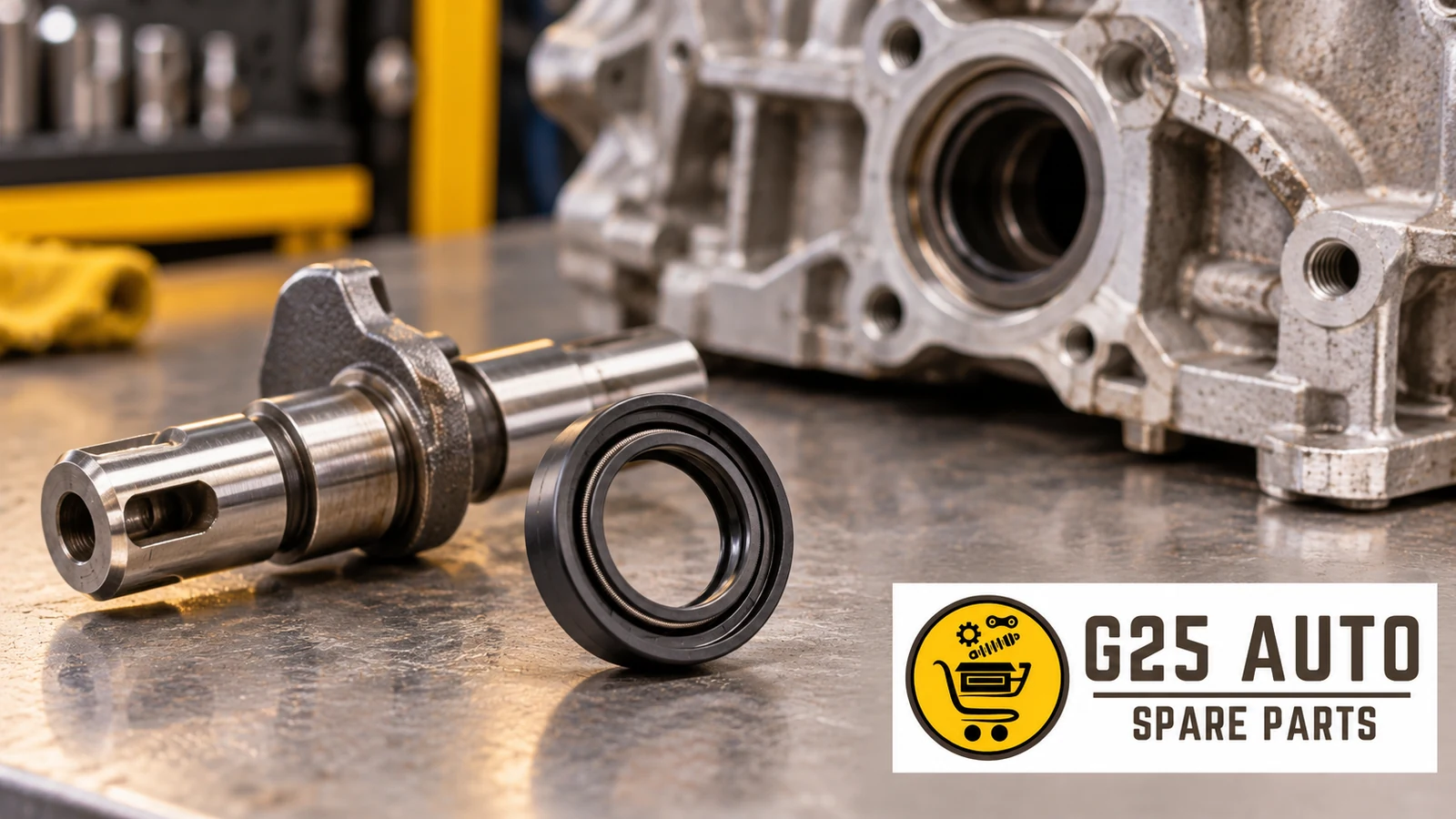
A manual gearbox selector shaft seal provides a seal between the shaft used by the gear selection mechanism and the gearbox housing. It helps retain gearbox oil and keep external dust, dirt and moisture out. A failed seal can allow oil to escape; continued oil loss can damage internal gearbox components.
What Is a Selector Shaft Seal and Why Does It Matter?
The selector shaft seal forms part of the gear selection arrangement on applicable manual gearboxes. Movement from the gear lever reaches the gearbox selectors through linkage components. Where a selector shaft passes through the housing, a seal around it provides oil retention.
The seal must accommodate the shaft’s intended movement while maintaining sealing contact. Over time, its material can harden, crack or otherwise deteriorate and lose its ability to seal.
Possible Symptoms of a Selector Shaft Seal Fault
A failed seal may be associated with several symptoms. Recognising them helps identify a leak before further damage develops:
- Oil traces beneath the gearbox: Oil may collect on the ground when the vehicle is parked. Colour alone does not identify the fluid or the source.
- Falling gearbox oil level: Checks carried out using the specified procedure may reveal a low level.
- Difficult gear selection: Leakage or problems around the selector shaft may accompany poor selection, but do not establish the cause.
- Oil around the gear lever area: Depending on the layout, leakage may be visible around the selector or lever housing.
- Unusual gearbox noises: Oil loss can reduce lubrication of internal components.
- Stiff gear lever movement: A damaged or swollen seal may affect shaft movement, although other causes must also be considered.
Symptoms Are Different from a Confirmed Diagnosis
These symptoms can suggest a selector shaft seal problem, but professional inspection is needed to confirm it. Similar complaints can have other causes:
- Gearbox oil may also leak from housing or cover gaskets.
- Difficult gear selection may arise from the clutch system or an internal gearbox fault.
- The fluid may be engine oil or differential oil rather than oil escaping at the selector shaft.
To establish the source, a technician should inspect the safely supported vehicle, clean the affected area and trace the leak. Any measurements should follow the relevant service information.
When Does a Selector Shaft Seal Need Replacement?
Replacement may be appropriate in the following circumstances, once the seal has been identified as the cause or the service procedure calls for renewal:
- A visible leak is traced to the seal.
- The gearbox oil level keeps falling and the loss is traced to this location.
- Gearbox rebuilding or major repairs provide a reason to assess the seal and renew it as specified.
- The sealing material is hardened, cracked or swollen.
- A high-mileage vehicle is being inspected for deterioration; mileage alone is not a universal replacement trigger.
Original and Aftermarket Selector Shaft Seals Compared
| Feature | Original part | Aftermarket part |
|---|---|---|
| Warranty | Check the applicable vehicle manufacturer or seller terms. | Check the part manufacturer or supplier terms. |
| Quality requirements | Verify the correct specification and reference. | Check documented specifications against the application. |
| Price | Obtain a current quotation. | Obtain a current quotation for the verified alternative. |
| Availability | Confirm actual availability and lead time. | Confirm actual availability and lead time. |
| Compatibility | Confirm the application, gearbox version and revision. | Confirm application details and the relevant cross-reference. |
| Choice | Check the available original replacement reference. | Assess the documented options from available manufacturers. |
Checklist for Selecting the Correct Selector Shaft Seal
Use the following checklist before buying a replacement:
- Have the vehicle identification number, or VIN, available.
- Identify the engine code and engine type.
- Establish the production year and month.
- Identify the gearbox type code from the gearbox identification or relevant vehicle documentation.
- Check the existing part’s original reference where available.
- Ask the supplier to confirm the application in writing.
- Check which components a seal kit contains.
- Ask whether additional fitting materials or fasteners are required by the service procedure; do not assume sealant is appropriate.
- Check return and exchange conditions.
- Clarify the warranty conditions that apply after installation.
Why OEM and Part References Matter
Original equipment manufacturer references help identify small but important components such as selector shaft seals. Manufacturers may specify different references for different models, versions and revisions.
Verification Using the VIN
The VIN helps identify the vehicle in the relevant manufacturer or parts catalogue. Subject to the information available, a catalogue lookup can help establish:
- The production date relevant to parts selection
- The manufacturing plant
- The original engine and gearbox configuration
- Applicable production changes and revisions
Even vehicles sharing a model name can use different seals according to production date or gearbox version. Use the vehicle identification alongside gearbox details rather than assuming that the model name alone establishes compatibility.
Engine Code and Production Date
The engine code matters when the same model has several engine options. Petrol and diesel versions, or versions with different outputs, may use different gearbox configurations.
Production dates also help identify technical changes. A design change during a model year can alter the gearbox components required. Check the relevant catalogue rather than relying solely on the registration year.
Aftermarket or Original? A Balanced View
Choosing between an original and an aftermarket selector shaft seal involves checking the available options against the vehicle’s requirements. The category alone does not establish suitability.
Reasons for Choosing an Original Part
An original part can be considered when manufacturer support or applicable warranty requirements are relevant. Confirm the correct reference, specifications and fitting instructions; the original label does not remove the need for accurate identification.
Considering an Aftermarket Part
An aftermarket part may provide another suitable option when its specifications and application are documented. Compare the actual quotation and supporting information. Do not assume that every alternative meets the original standard, uses improved materials or comes from the same factory as the original part.
The Selector Shaft Seal Replacement Process
The work requires an appropriately experienced technician. Access and the procedure vary by gearbox. The general sequence may include the following, subject to the vehicle’s service instructions:
- Raise and support the vehicle safely.
- Clean the underside of the gearbox and identify the exact leak location.
- Remove the necessary gear selection linkage components.
- Where the specified access procedure requires it, support the gearbox before releasing any mounting or support components.
- Remove the old seal carefully.
- Clean and inspect the shaft’s sealing surface.
- Install the correct new seal with the specified tool, orientation and position.
- Refit the connections in the prescribed sequence.
- Check the gearbox oil level and correct it using the specified oil and procedure if needed.
- Carry out the prescribed functional or road checks and inspect for leakage.
Frequently Asked Questions
Does a Selector Shaft Seal Fault Make the Vehicle Unsafe to Use?
Oil loss can damage the gearbox, and continued neglect can lead to selection problems or failure. The symptoms and extent of the leak require assessment before deciding whether the vehicle can continue to be used.
How Long Does Seal Replacement Take?
The time depends on the vehicle and gearbox. Some arrangements provide straightforward access, while others require additional work to support or reposition the gearbox. Obtain an estimate for the specific application rather than relying on a universal repair time.
Is Only the Seal Replaced, or Are Other Parts Needed?
A seal replacement may be sufficient, but a worn or scored shaft surface needs assessment against the repair instructions. Shaft repair or replacement may also be necessary. Some installations require renewal of specified fasteners or other fitting components.
How Long Should I Monitor for Oil Leaks After Replacement?
Check for leakage after the repair and arrange further checks as specified by the technician or service procedure. An initially dry area does not guarantee that a leak cannot recur; investigate any fresh oil traces.
Does Every Vehicle Have a Selector Shaft Seal?
The seal described here relates to applicable manual gearbox selector arrangements. Transmission designs differ, and the source’s manual gearbox example should not be treated as proof that other transmission types have no selector shaft seals. Identify the actual assembly before ordering.
Maintenance and Preventive Measures
The following measures help maintain the system and detect deterioration:
- Change gearbox oil at the intervals specified for the vehicle, where a change is required.
- Inspect the underside of the gearbox for early signs of leakage.
- Have abnormal gear lever movement checked promptly.
- Avoid using excessive force when changing gear.
- Include seal condition in assessments of high-mileage vehicles; replace according to condition and service requirements.
- Use gearbox oil that meets the specified requirements, including compatibility with the sealing system.
Conclusion
The manual gearbox selector shaft seal is a small component with an important oil-retention role. Recognising leakage and addressing a confirmed fault promptly can help limit further damage and repair work.
Compatibility is central to parts selection. Check the VIN, engine and gearbox identification, production date and relevant part references. Assess original and aftermarket options against the required specifications, budget and applicable support terms.
An aftermarket alternative needs documented suitability and correct installation. Verify part references and supplier information rather than assuming equivalent performance from the label or price alone.
Accurate diagnosis and professional installation matter alongside part selection. A qualified technician’s assessment supports both identifying the correct component and achieving a successful repair.