
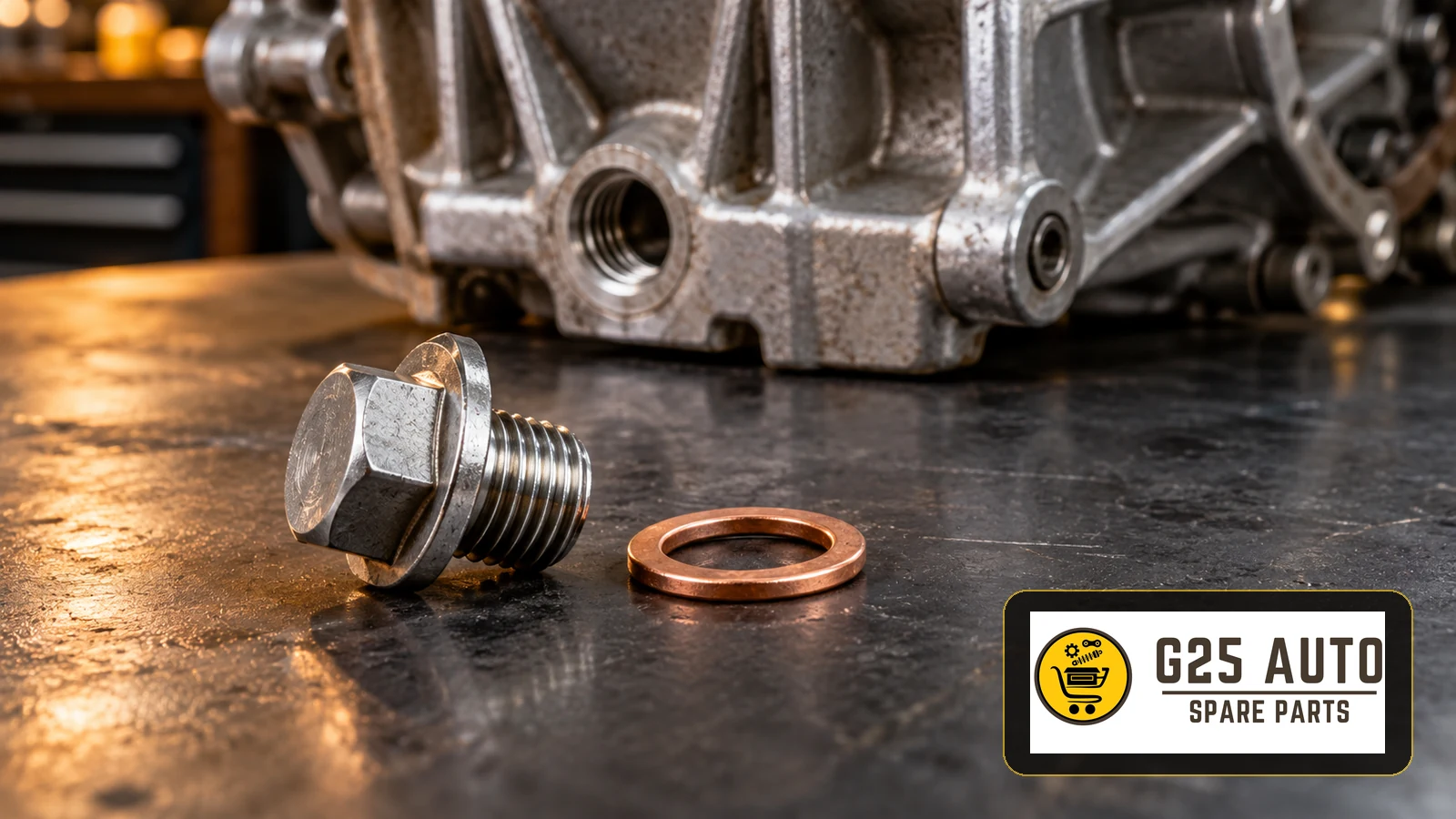
The manual gearbox oil level plug and its seal are small components that help keep the gearbox working correctly. The plug provides access for checking the oil level and, where the design permits, adding oil, while its seal helps prevent leakage at that opening. This guide explains their role, selection and maintenance.
What Is a Manual Gearbox Oil Level Plug and Why Does It Matter?
The oil level plug closes an opening in the gearbox housing and provides access for checking the lubricant level. It is often positioned on the side of the casing and may have a hexagonal or square drive, although its position and design depend on the gearbox.
Gearbox oil lubricates the gears, reduces friction and helps manage heat. The level opening allows checks and, where specified, topping up during maintenance. The plug must use the sealing arrangement specified for that gearbox; some designs use a separate sealing washer.
The Role of the Oil Level Plug Seal
A separate plug seal may be a small ring made from copper, aluminium or fibre, depending on the application. It forms a seal between the plug and the gearbox housing to contain the oil.
Compression, temperature changes and ageing can affect sealing performance. A damaged or unsuitable seal can allow leakage. Follow the gearbox manufacturer’s instructions on replacing the seal whenever the plug is removed.
Fault Symptoms: When Should You Pay Attention?
Possible signs of a problem around the oil level plug and seal include:
- Oil marks beneath the gearbox: Drops or patches may appear on the ground while the vehicle is parked.
- A wet gearbox casing: Oil may collect around the plug.
- Difficult gear changes: Low oil following a leak can contribute to stiff shifting.
- Unusual gearbox noises: Inadequate lubrication can be associated with whining or other abnormal sounds.
- A smell of overheated oil: A low oil level and increased friction may be associated with overheating or a burnt smell.
Important: These symptoms can also indicate other faults. A qualified workshop should investigate before identifying the plug as the cause. Leakage may come from a differential seal, a gearbox output shaft seal or another location.
Choosing Original and Aftermarket Parts
Original equipment and aftermarket plugs and seals are the two main options. Each needs to be assessed against the requirements of the particular gearbox.
Original Equipment Parts
Original parts are supplied through the vehicle manufacturer’s parts system for specified applications. Check that the reference applies to the actual gearbox and review any relevant warranty conditions. The original label alone does not establish that a particular item is correct for the vehicle.
Aftermarket Parts
Aftermarket parts are alternatives offered by other brands. Their specifications, quality and price vary. Use a supplier that can provide application information and technical details rather than assuming that every alternative matches the original part.
Which Option Suits Your Needs?
The choice depends on the vehicle, budget and applicable warranty terms. An original part or a documented aftermarket alternative may be considered, provided its suitability is verified. Correct fitment and the required sealing arrangement matter whichever supply route is used.
Checklist for Selecting the Correct Part
Before ordering an oil level plug and seal, review the following information:
- Record the vehicle make, model and year.
- Have the vehicle identification number, or VIN, available.
- Identify the engine code from the vehicle documentation or identification information.
- Check the production date, as changes may occur within a model year.
- Record the existing plug’s original part reference, if available.
- Identify the gearbox type and code; manual gearboxes can differ within a vehicle range.
- Where required, check the thread diameter and pitch against documented specifications; measurement alone does not confirm fitment.
- Identify the specified seal type, which may include copper, aluminium or fibre.
- Check the supplier’s return and exchange terms.
Why Original Part References and Verification Matter
Original part references help identify components and their listed applications. Different engines, production years or equipment versions within the same model range may use different parts, so a reference must be checked against the relevant catalogue information.
For example, two vehicles with the same body designation may have different gearboxes because of their engine configuration, and may therefore need different level plugs. Checking the original reference helps reduce the risk of ordering an incompatible part.
Verification Using the VIN
The VIN helps identify a vehicle’s production specification in parts systems that support it. This can help distinguish applications around model changes and equipment variations. It should be used with the available catalogue information rather than treated as a guarantee that every component will be identified automatically.
Engine Code and Production Date
The engine code identifies the engine version, which may be paired with a particular gearbox. The production date also matters because manufacturers may change designs during a model year. Catalogue notes such as “before” or “after” a stated production date therefore need attention.
Comparison: Original and Aftermarket Parts
| Feature | Original Equipment Part | Aftermarket Part |
|---|---|---|
| Fitment | Verify the original reference for the specific application. | Verify the manufacturer’s application listing and specifications. |
| Quality Standards | Check the documented part specification. | Specifications and supporting documentation vary by manufacturer. |
| Cost | Confirm the current quotation. | Compare the current quotation for a verified alternative. |
| Availability | Confirm with the supplier. | Confirm with the supplier. |
| Warranty Conditions | Review the applicable terms. | Review the applicable terms; do not infer coverage from the label. |
| Choice | Available through original parts supply channels. | Alternative brands may list suitable parts. |
Installation and Maintenance Advice
Replacing the plug and seal may appear straightforward, but the correct procedure is essential:
Preparation Before Installation
Clean around the plug before removal to reduce the risk of dirt entering the gearbox. Use the correct size and type of tool; an unsuitable tool can damage the drive or round the head.
Replacing the Seal
Remove the old seal and any remaining material without damaging the sealing surface. Follow the specified preparation instructions for the replacement seal rather than assuming it needs oil or another coating. Make sure it sits in its intended position.
Tightening Torque
Do not use excessive force. Follow the manufacturer’s torque specification and tightening instructions. Overtightening can damage the seal or threads, while insufficient tightening may allow leakage. Use an appropriate torque wrench where the procedure requires one.
Checks and Testing
After installation, check the oil level and top up if required using the specified oil and checking procedure. Complete any prescribed road test and inspect for leakage when safe. Follow-up checks can help reveal a continuing leak.
Frequently Asked Questions
Should the Oil Level Plug Seal Be Replaced at Every Service?
Follow the instructions for the particular gearbox. Seals specified as single-use should be renewed when the plug is removed, because a compressed seal may not seal correctly if reused.
Can an Oil Level Plug Be Used Without a Seal?
Do not omit a separate seal where the design requires one. The required sealing arrangement depends on the plug and gearbox, so check the application rather than assuming all plugs use the same type.
What Should I Do if the Plug Is Rounded or Stripped?
A damaged plug needs assessment and appropriate replacement. Improvised repairs can cause further damage. Use the correct removal method and seek professional assistance where necessary.
Can Seals from Different Brands Be Used?
Brand alone does not establish suitability. Verify the dimensions, material and application requirements of the replacement seal before fitting it.
Does an Aftermarket Seal Affect Warranty Coverage?
If the vehicle is under warranty, check the applicable warranty terms and the requirements for the repair. Do not assume that the use of an original or aftermarket label alone determines coverage.
Reliable Parts Sourcing
Once the correct part has been identified, choose a supplier that provides detailed technical information, application support and clear after-sales terms. These details help assess the item before ordering.
When Is Professional Help Needed?
Some plug and seal replacements may be within a competent technician’s scope, but professional assistance is particularly useful in the following situations:
- The plug is rounded, stripped or otherwise damaged.
- The threads in the gearbox housing are damaged.
- There is substantial leakage and its source is unclear.
- Special tools or equipment are needed.
- The gearbox requires internal inspection or maintenance.
An experienced technician can assess both the replacement and the wider condition of the gearbox, helping identify other issues that may need attention.
Conclusion
The manual gearbox oil level plug and its seal are small but important components. Maintenance and prompt investigation of leaks help protect the gearbox. Choosing a part verified for the actual application is central to a sound repair.
Use the original part reference, VIN, engine code and production date to reduce the risk of a mismatch. Original and aftermarket options both require verification of quality and suitability.
Follow the manufacturer’s installation instructions, use suitable tools and obtain professional support when needed. Periodic inspection and timely attention to faults support reliable operation.
For routine maintenance items such as level plugs and seals, accurate information and a suitable replacement part are the basis of a dependable repair.