
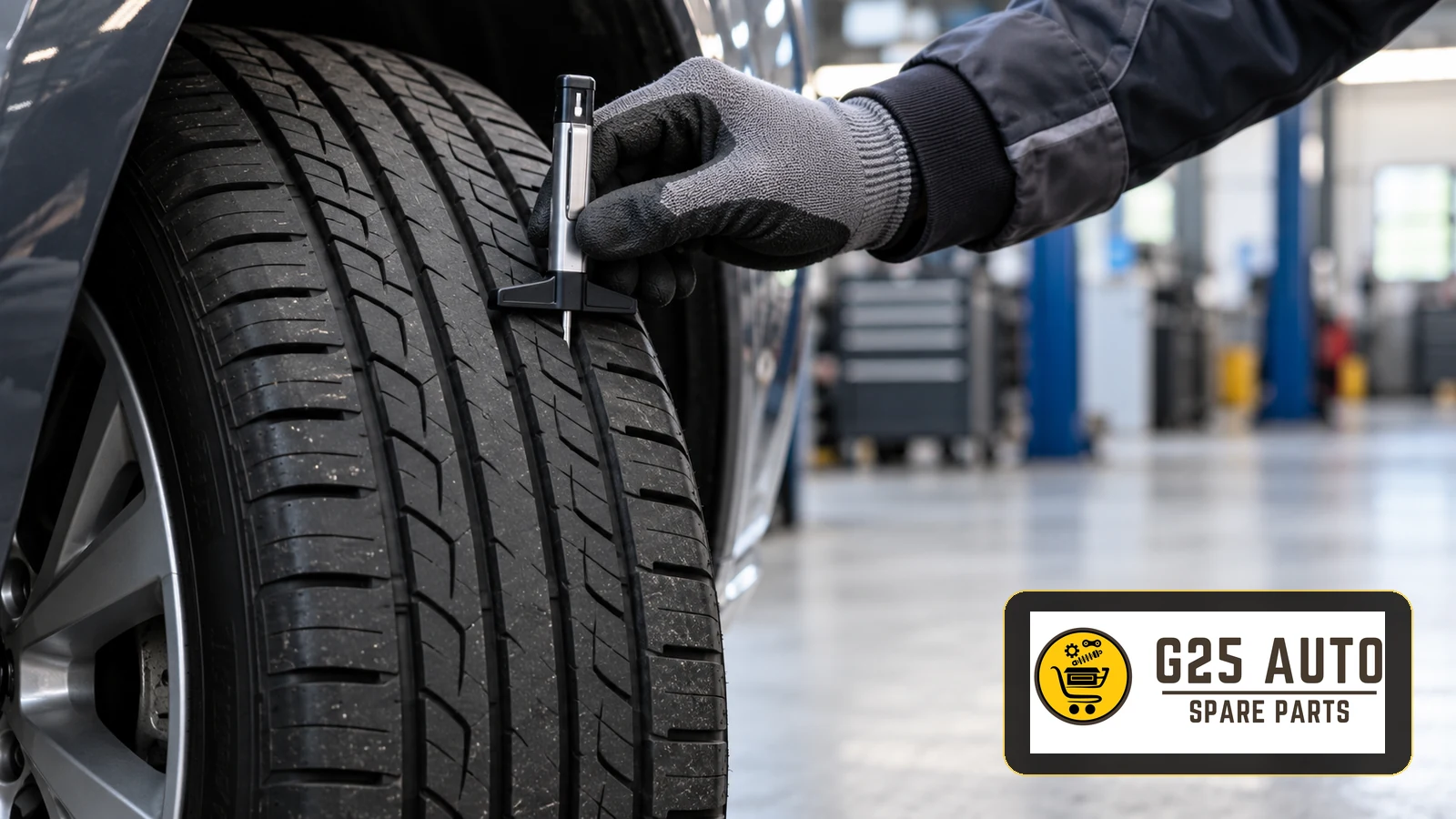
Is It Time to Replace Your Tyres?
Your vehicle’s tyres are an important part of safe driving. Tyres that remain in service when they need replacement can increase braking distances and reduce grip, contributing to accident risk. So, how can you tell when tyre replacement is due? The following signs and checks help you assess their condition rather than relying on appearance alone.
1. Check the Tread Depth
Check the legal tread requirements that apply to your vehicle and location, together with the tyre manufacturer’s advice. A legal minimum should not be treated as a guarantee of grip in every condition. As tread depth decreases, the tyre’s ability to clear water can decline, increasing the risk of losing grip on wet roads.
A coin check can offer a rough indication, but it should not replace an appropriate tread-depth measurement.
2. Look at the Manufacturing Date
Tyres can deteriorate with age, depending on their use, storage and condition. There is no single shelf-life or replacement age that can safely be applied to every tyre from its date alone.
Where a DOT date code is present, its final four digits indicate the manufacturing week and year. For example, “2220” identifies the 22nd week of 2020.
3. Use Tyres Suited to the Season
Choose tyres appropriate to the conditions in which the vehicle will be driven.
-
Winter tyres are designed for cold-weather conditions; actual grip depends on the tyre and road surface.
-
Summer tyres are intended for warmer conditions; their braking performance depends on the conditions and tyre specification.
Plan seasonal changes around local conditions and the manufacturer’s guidance, rather than treating a single temperature threshold as a universal switching rule.
4. Look for Visible Damage or Wear
-
Cracks in the sidewalls
-
Bulges or blisters
-
Severe uneven wear
-
Punctured or previously repaired areas
If you notice these signs, do not delay a professional assessment. Damage may require replacement; a previous repair alone does not establish that a tyre must be replaced. Continuing with an unsafe tyre can create a risk of failure or a breakdown.
5. Pay Attention to Increasing Vibration and Noise
If vibration remains after alignment and balancing have been checked, internal tyre damage is one possible cause. Further inspection is needed to establish the cause and whether tyre replacement is necessary.
Tyre Replacement Matters for Running Costs as Well as Safety
Tyre condition and suitability can affect fuel consumption and vehicle behaviour. Uneven wear may also call for checks of the suspension and steering. Replacing tyres when necessary supports safe operation and the vehicle’s overall condition, without guaranteeing a particular saving or resolving unrelated mechanical faults.
Equipment to Check During Tyre Replacement
Depending on the vehicle and the work involved, tyre replacement may also involve wheel fasteners, valves, balancing weights, wheel covers, a jack and a wheel wrench. Check that the equipment and any replacement items are suitable for the vehicle and the intended task.