
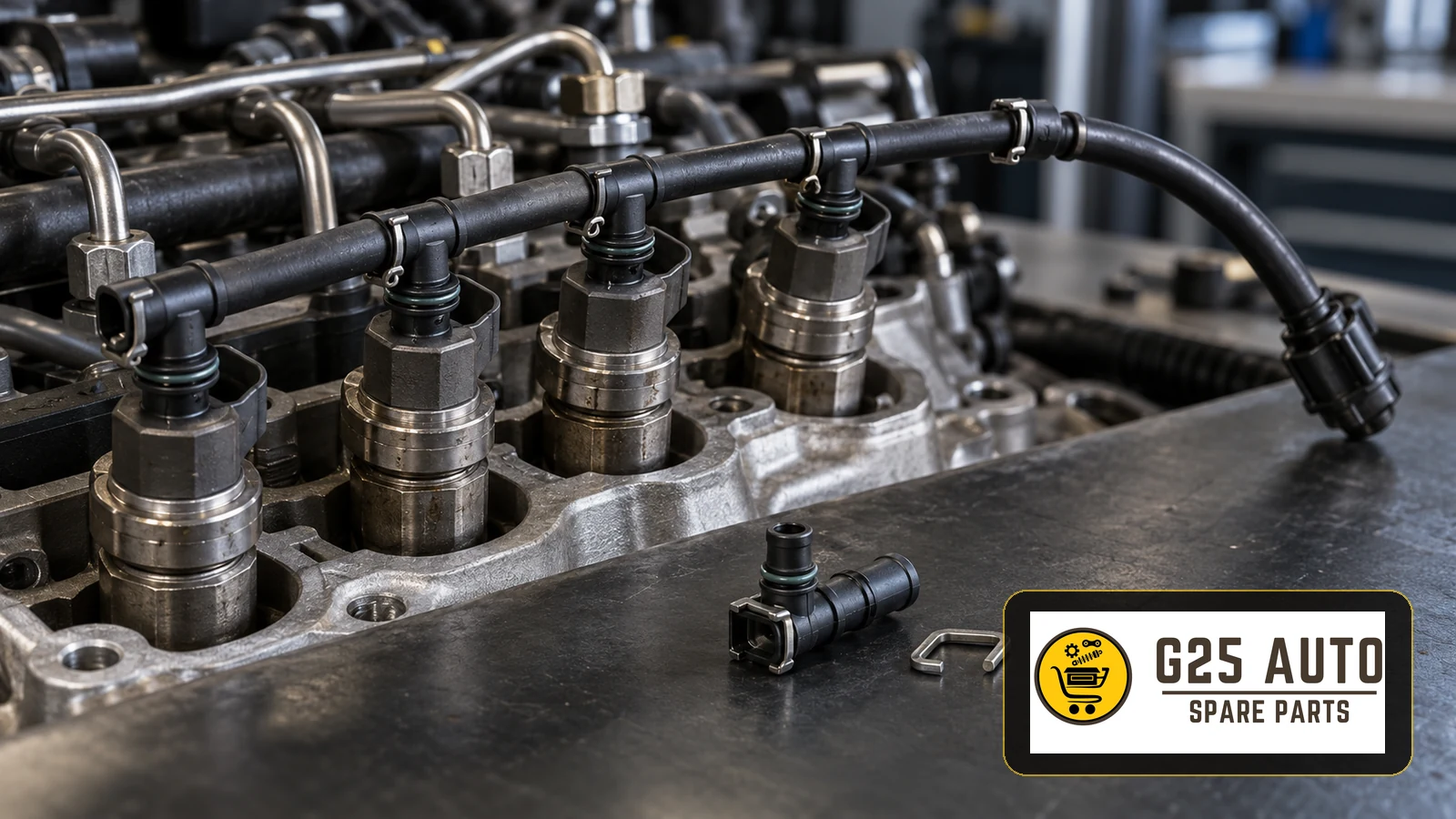
Injector return hoses and retaining clips are important fuel-system components on engines equipped with injector return circuits. The hose carries fuel not injected into the combustion chamber back towards the tank or low-pressure circuit, while clips retain the connections. This guide explains their functions, fault symptoms and replacement selection.
What Is an Injector Return System and How Does It Work?
In common-rail diesel systems, some fuel passes through the injectors without being injected. The return circuit collects this fuel and routes it according to the engine’s fuel-system design.
Return hoses connect the injector outlets to the return circuit. Correctly fitted connectors, seals and retaining clips help maintain secure, leak-free connections.
Functions of Injector Return Hoses and Clips
Main Functions of the Return Hose
- Carry return fuel away from injectors.
- Support the system’s designed fuel circulation.
- Carry warmed fuel through the return circuit.
- Support injector cooling where the design provides this.
- Allow return flow through the intended circuit; air handling depends on the system.
Why Retaining Clips Matter
- Keep connector and seal assemblies seated.
- Resist separation caused by engine vibration.
- Maintain the intended retention at connection points.
- Allow removal and installation using the specified method.
- Support reliable connections when correctly selected and fitted.
Fault Symptoms and Diagnosis
Common Symptoms
Possible symptoms include:
- A fuel smell around the engine.
- Fuel traces around injectors.
- Uneven idling.
- Poor running during cold starts.
- Increased fuel consumption.
- An engine warning light in some cases.
- Unusual exhaust smoke.
- Fuel staining under the bonnet.
Points to Check During Diagnosis
These symptoms also occur with other fuel-system faults. Professional inspection should include:
- Visual examination of hoses and clips.
- Identification of leak locations.
- Checks for broken or loose retainers.
- Checks for cracked, hardened or swollen hoses.
- Assessment using suitable diagnostic equipment.
An experienced technician should interpret the findings using the vehicle’s service procedure.
Essential Information for Correct Part Selection
OEM References and Part Numbers
Identify the application before ordering:
- OEM reference: a useful identification starting point, requiring application confirmation.
- VIN: helps establish vehicle production details.
- Engine code: different versions may require different components.
- Production date: parts can change within one vehicle model.
How to Verify a Replacement
- Record the VIN and distinguish first registration from production date.
- Identify the engine code from the relevant vehicle information.
- Record markings on existing hoses and clips.
- Ask a reliable parts supplier to check the application.
- Compare the proposed specification with the existing assembly and catalogue details.
Choosing Original or Aftermarket Parts
Comparison Table
| Factor | Original part | Aftermarket part |
|---|---|---|
| Quality | Check the specified application | Assess the manufacturer’s documented specification |
| Cost | Request a quotation | Compare equivalent specifications |
| Availability | Confirm with the supplier | Confirm with the supplier |
| Warranty | Check applicable terms | Check supplier terms |
| Fitment | Verify the exact reference | Verify the cross-reference and application |
Which Option Suits the Requirement?
Reasons to consider an original part:
- Applicable vehicle warranty requirements.
- Vehicle maintenance and value priorities.
- A documented reliability requirement.
- A purchasing budget that supports this option.
Reasons to consider an aftermarket part:
- Cost is an important purchasing factor.
- The vehicle is outside its warranty period.
- A confirmed supply requirement favours that option.
- A dependable supplier offers a suitably documented replacement.
European and Balkan B2B buyers should compare specifications, manufacturer documentation and supply terms before choosing.
Installation and Replacement
Pre-Replacement Checklist
- Correct replacement parts identified?
- Required clips and fittings available?
- Engine cooled as required?
- Work area clean and safe?
- Suitable tools available?
- Fuel-spill materials prepared?
- Fire precautions and ventilation arranged?
- Applicable service instructions available?
General Replacement Sequence
The exact procedure depends on the vehicle. For a qualified workshop, the general sequence is:
- Allow cooling and make the system safe as specified.
- Clean the work area and prepare absorbent materials.
- Remove old clips using the appropriate tools.
- Disconnect return hoses following the service instructions.
- Inspect and clean connection points as specified.
- Fit the correct replacement hoses.
- Seat retaining clips correctly.
- Check every connection and seal.
- Perform the specified priming and leak checks.
- Complete the prescribed functional check; road-test only when safe.
Important: fuel-system work requires appropriate knowledge, equipment and procedures. Use a qualified workshop where these are unavailable.
Maintenance and Prevention
Routine Checks
- Include hose inspection in the applicable servicing schedule.
- Keep the engine area suitably clean to reveal leaks.
- Check clip retention.
- Look for hose hardening, cracking or swelling.
- Use fuel meeting the vehicle’s specification.
Factors Supporting Hose and Clip Durability
- Suitable fuel.
- Correct engine maintenance.
- Investigation of excessive engine-compartment heat.
- Properly specified original or aftermarket components.
- Professional installation.
Frequently Asked Questions
When Should Injector Return Hoses Be Replaced?
Follow the applicable maintenance instructions. Replace damaged or leaking hoses; there is no universal mileage or age interval.
Can Clips Be Reused?
Some retainers are single-use or become damaged during removal. Reuse depends on their design, condition and the service instructions.
Must All Hoses Be Replaced If Only One Is Damaged?
An individual repair may be possible, but inspect similarly aged hoses. The assembly design and condition determine the replacement scope.
Does a Return-Hose Leak Make Driving Unsafe?
Fuel leakage presents a fire hazard. Stop using the vehicle and arrange repair when a leak is identified.
Which Vehicles Use This System?
Injector return circuits are common on diesel engines. Other injection systems differ; establish the actual layout for the application.
What Matters Most When Selecting Parts?
Confirm the application using the reference, VIN, engine code and production details before comparing price or brand.
Conclusion
Return hoses and clips support fuel circulation and secure connections. Recognising faults early, selecting appropriate replacements and arranging correct installation help prevent further problems.
Compare original and aftermarket options against the same application requirements. Use vehicle and part identification details, professional fitting and routine inspection to guide maintenance decisions.