
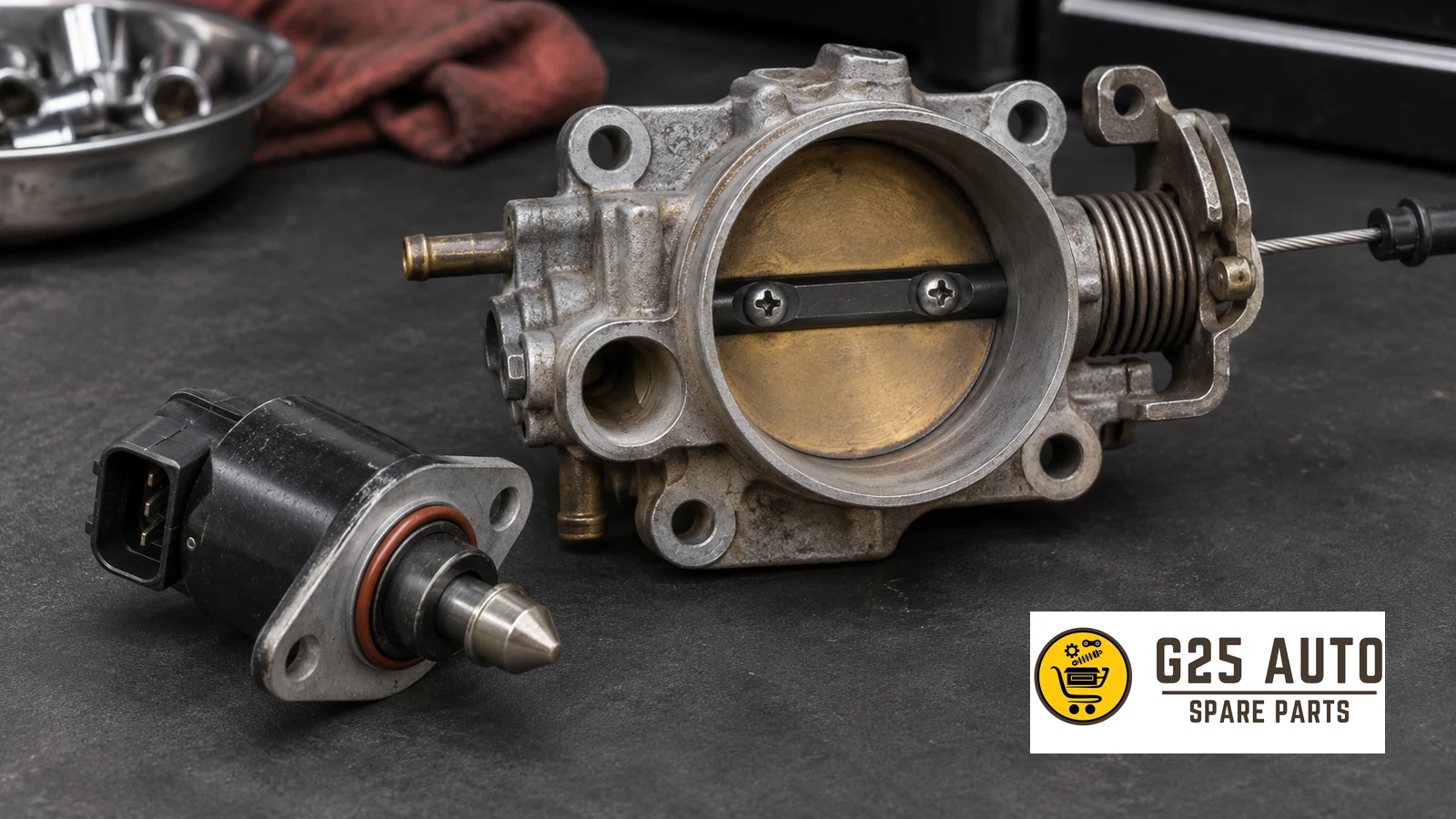
On engines equipped with a separate idle air control (IAC) valve, the valve meters air through a bypass passage when the throttle plate is closed. This helps keep the engine idling steadily. A sticking valve or a restricted bypass passage can cause an uneven idle, vibration or sudden stalling. Check the cause before replacing parts, then confirm fitment using the original part number, vehicle identification number (VIN) and engine code.
What Is an Idle Air Control Valve and How Does It Work?
The engine control unit (ECU) operates the valve to adjust bypass airflow. The amount needed varies with engine temperature and loads such as air conditioning or, where applicable, the power steering pump.
The bypass passage leads around the closed throttle plate into the intake manifold, allowing air to reach the engine without pressing the accelerator. Depending on the design, a stepper motor or solenoid varies how far the passage opens.
Main Components
- IAC valve: An electric actuator that regulates bypass airflow.
- Bypass air passage: The route air takes around the throttle plate.
- Gaskets and seals: Keep air from leaking at the mating surfaces.
- Sensors: Supply information such as engine temperature, speed and load.
- ECU software: Uses those inputs to control idle.
Symptoms of an Idle Air Control Problem
The following symptoms can occur when the valve or bypass passage has a problem. Several can also come from other faults.
- Fluctuating idle: Engine speed repeatedly rises and falls with the accelerator released.
- Vibration at a standstill: The engine runs unevenly when the vehicle is stopped.
- Sudden stalling: The engine cuts out at traffic lights or while manoeuvring at low speed.
- High idle: Engine speed remains above the expected idle speed.
- Rough cold idle: The engine runs unevenly after a cold start.
- Check-engine light: A scan may show P0505, P0506 or P0507.
- Idle drops with the air conditioning on: The engine struggles to maintain speed under the additional load.
- Stalling when the clutch is pressed: On a manual vehicle, the engine can cut out as it drops to idle.
How to Diagnose the Fault
Workshop Checks
- Scan for OBD-II codes. P0505 relates to the idle control system. P0506 and P0507 indicate idle speed below or above the expected value, respectively. Use these codes to guide the checks.
- Review live data. Look at engine speed, coolant temperature, airflow and any idle-control data available on the scan tool.
- Inspect the valve and passage. Check for deposits in the bypass passage and inspect the electrical connector and wiring.
- Test the actuator. Where the service procedure calls for a resistance check, compare the reading with the specification for that valve.
- Check for intake leaks. Inspect the bypass seals and intake system for air entering where it should be sealed.
Choosing the Correct Part
Different engines and production revisions of the same model can use different idle control valves. Confirm both the application and the part number before ordering.
Why the Original Part Number Matters
The original part number helps identify the valve design, including the electrical connection and actuator, mounting points and airflow characteristics. A valve that bolts into place can still have the wrong electrical or operating characteristics.
Check the VIN and Engine Code
Use the vehicle’s VIN, engine code and build date to check the catalogue. Manufacturers can revise a part during a model year, so the model year alone may leave more than one option. Cross-check the catalogue result against the number on the fitted part where it is readable.
Original and Aftermarket Valves
| Check | Original equipment | Aftermarket |
|---|---|---|
| Fitment | Confirm the original number against the vehicle catalogue. | Confirm the cross-reference and application with the supplier. |
| Specifications | Check the manufacturer’s specification for the engine. | Check the supplier’s stated electrical and mounting specifications. |
| Warranty and support | Check the terms with the seller or service network. | Check the terms and technical support with the supplier. |
For either option, check the catalogue and the valve’s mounting and connector before installation. For an aftermarket valve, verify the cross-reference to the original part number.
Cleaning the Bypass Air Passage
Inspect the passage for deposits before deciding that the valve needs replacement. The cleaning and removal procedure depends on the throttle body and valve design.
Cleaning Checklist
- Let the engine cool. Follow the vehicle procedure for battery disconnection, if required.
- Check the air filter and intake ducting.
- Remove the IAC valve or throttle body only as directed in the service manual. Note the position of hoses and connectors.
- Use the cleaner and method specified for the assembly when removing deposits from the passage.
- Inspect the mating surfaces, seals and electrical connections. Replace seals as specified.
- Reassemble to the manufacturer’s torque specifications and reconnect the wiring.
- Check idle operation and follow the applicable procedure for clearing codes and relearning idle.
Checks After Installation
The ECU may need to relearn idle after the valve is replaced. Some vehicles relearn automatically. Others require a model-specific procedure or a scan tool reset. Follow the service information for the vehicle and check that the idle settles correctly after installation.
Frequently Asked Questions
How long does an idle air control valve last?
Service life varies with the valve and its operating conditions. Check the valve and passage if symptoms develop.
How often should the bypass air passage be cleaned?
Follow the vehicle’s maintenance instructions. If idle becomes unstable, inspect for deposits during diagnosis.
Can you drive with an idle air control fault?
An engine that can stall unexpectedly poses a traffic hazard. Arrange an inspection before further driving if the vehicle stalls.
How does an aftermarket IAC valve differ from the original?
Applications and specifications vary by supplier. Confirm the original part-number cross-reference, connector and mounting design before fitting it.
Which codes are associated with idle control?
P0505, P0506 and P0507 relate to idle control or an idle speed outside the expected range. Lean-mixture codes such as P0171 or P0174 can also occur with an intake leak. Check the system before attributing a code to the valve.
Preventive Maintenance
Maintain the air filter and intake ducting according to the service schedule. If deposits recur, include the crankcase ventilation system in the inspection. Follow the vehicle procedure for any throttle body or bypass passage cleaning.
What to Have Ready When Ordering a Part
- VIN: Identifies the vehicle for the catalogue lookup.
- Engine code: Identifies the engine variant.
- Build date: Helps distinguish production changes.
- Original part number: Use the number on the fitted valve if it is legible.
- Equipment details: Check any options required by the catalogue.
Conclusion
Unstable idle, vibration and stalling can come from the valve, a restricted bypass passage or another intake or idle-control fault. Diagnose the system before buying parts. If the valve needs replacement, verify the fitment against the original part number, VIN and engine code.