
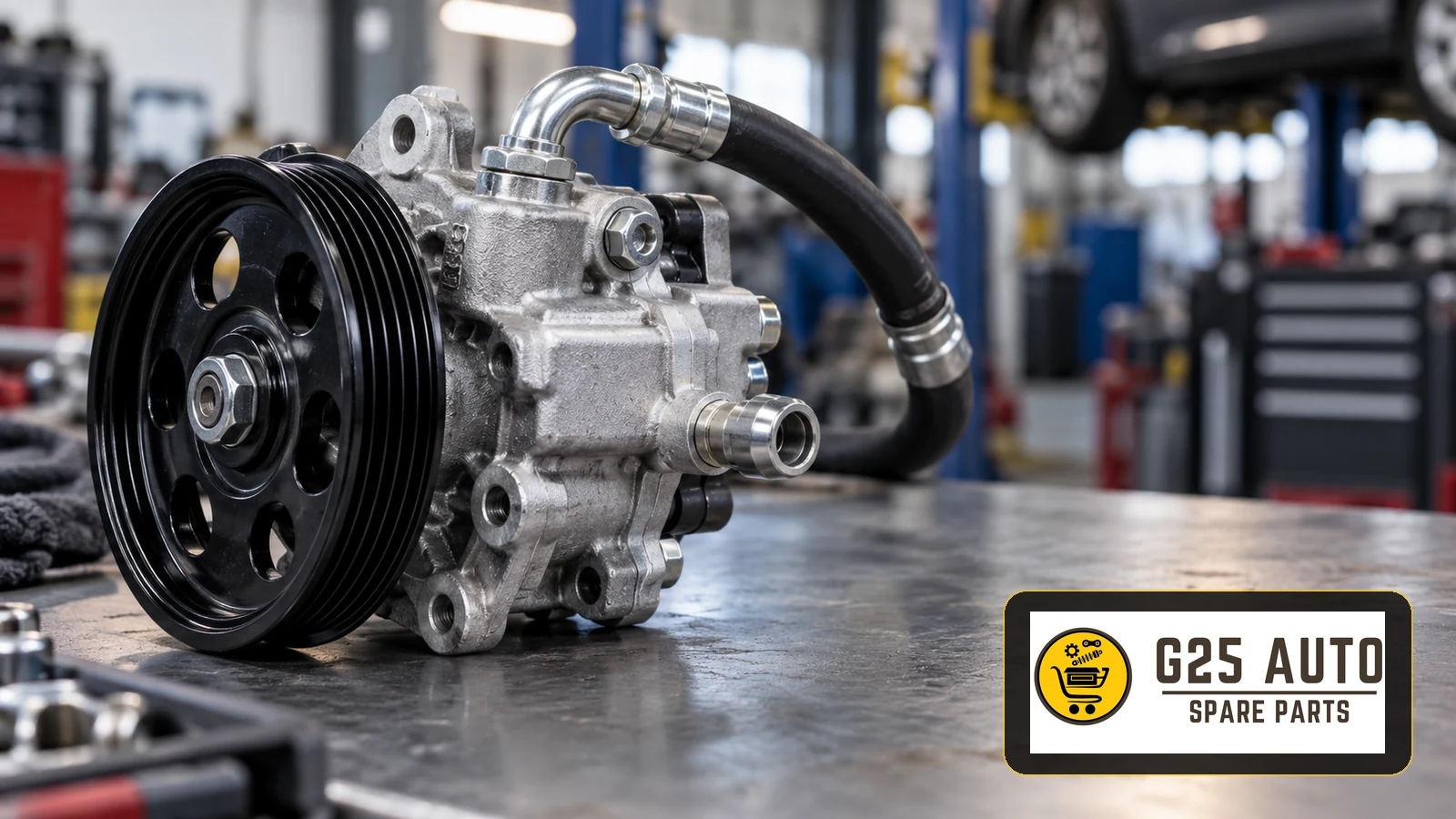
The hydraulic power steering pump is a key component that helps drivers turn the steering wheel with less effort. When it develops a fault, steering can become heavy, unusual noises may appear and driving comfort can suffer. This guide covers the pump’s function, fault symptoms, replacement part selection and the replacement process.
What Is a Hydraulic Power Steering Pump and How Does It Work?
A hydraulic power steering pump pressurises hydraulic fluid and delivers it to the steering gear. Depending on the system, it may be mechanically driven, usually by an engine belt, or electrically driven. The pressurised fluid provides assistance when the driver turns the wheel.
The system includes a pump, fluid reservoir, pressure hoses and steering gear. In a conventional belt-driven system, the pump circulates fluid while the engine runs. Hydraulic assistance significantly reduces the effort needed to turn the road wheels.
Hydraulic Power Steering Pump Fault Symptoms
Commonly reported symptoms include the following:
Unusual Sounds and Noise
Squealing, whining or humming while turning the steering wheel are common warning signs. They may be more noticeable in cold weather or just after starting the vehicle. Insufficient belt tension can also cause a squealing noise.
Heavy Steering
Steering may feel heavier than usual, particularly at low speeds or during parking manoeuvres. Insufficient pump pressure is one possible cause, but this symptom does not identify the pump as the faulty component on its own.
Hydraulic Fluid Leaks
Fluid may leak from the pump housing or around its seals. Drops beneath the engine compartment can indicate a leak, although fluid colour alone cannot establish its source.
Vibration and Irregular Steering Response
Abnormal vibration or unexpected steering behaviour may point to air in the hydraulic system or a pump fault.
Falling Fluid Level
If regular reservoir checks reveal a recurring drop in fluid level, investigate a possible system leak. Loss of fluid can also affect the pump.
The Difference Between Symptoms and a Confirmed Diagnosis
These symptoms indicate that something needs attention, but a professional inspection is needed to establish the cause. Heavy steering, for example, may result from a steering gear fault, a belt tension problem or low fluid level rather than a failed pump.
A squealing or whining noise does not always mean pump failure. Air in the system, incorrect hydraulic fluid or a blocked filter can also cause noise. Diagnosis may require a pressure test, visual inspection and assessment of the complete system by a qualified workshop.
Basic checks are limited to the fluid level, belt condition and visible leaks, following the vehicle’s inspection instructions. Internal faults require suitable technical equipment.
What to Check When Selecting a Hydraulic Power Steering Pump
Taking time to identify the correct replacement matters for both safety and long-term repair costs.
Verifying the OEM Reference and Part Number
Vehicles use specific part references. An OEM reference identifies a component within the vehicle manufacturer’s parts system. Check the relevant reference when selecting a replacement.
Part number formats vary between manufacturers, and references can differ by make, model, engine and production year. Even within the same model, different engine versions may use different pumps.
Checking Application Details with the VIN
The vehicle identification number, or VIN, helps a professional parts supplier look up the vehicle’s build details and narrow down the correct application. It should be used with the relevant catalogue information and component checks.
Model year changes and vehicle updates can introduce different components under the same model designation. VIN-based information helps resolve these variations, although the actual pump specification still needs verification.
Why Engine Code and Production Date Matter
Engine type, capacity and production date can affect pump selection. Different engine versions may require different pump specifications, while the build date helps identify production revisions.
Manufacturers may introduce component changes during production. Knowing the correct build date helps identify whether a revised or updated part applies to the vehicle.
Comparing Genuine and Quality Aftermarket Power Steering Pumps
| Feature | Genuine Part | Quality Aftermarket Part |
|---|---|---|
| Application suitability | Confirm the correct vehicle application and reference | Verify the reference, specification and actual application |
| Quality standard | Vehicle manufacturer’s specified component | Assess the individual manufacturer’s documented specification |
| Warranty | Check the applicable supplier terms | Terms vary by manufacturer and supplier |
| Cost | May have a higher purchase cost | May offer a lower purchase cost; compare the specific products |
| Availability | Confirm availability for the exact reference | Confirm availability for the selected replacement |
| Manufacturer options | Supplied through the genuine parts channel | Several manufacturers may offer alternatives for an application |
When Might Each Option Be Appropriate?
A genuine part may be considered when an existing vehicle warranty or repair policy calls for it, or when maintaining the vehicle’s original specification is a priority. Rare or specialist vehicles also require particular care over application details.
A quality aftermarket pump can be an economical option, particularly for vehicles outside their warranty period. Assess its specification and supporting documentation rather than assuming all alternatives have equivalent quality or durability. For G25Auto B2B enquiries from Europe and the Balkans, provide the vehicle details and existing pump reference for application checking.
With either option, use a reliable supplier and verify the part reference. Established aftermarket manufacturers may offer suitable products, but the specification and any certification claims must be checked for the particular part.
Checklist Before Replacing a Hydraulic Power Steering Pump
- Have the vehicle’s VIN available.
- Identify the engine code and production date.
- Record the OEM reference on the existing pump.
- Check the specified hydraulic fluid type; some systems require a particular fluid.
- Inspect the drive belt, where fitted; replacement may be needed alongside the pump.
- Check the condition of the hydraulic hoses.
- Have the steering gear and track rods inspected as well.
- Choose a reliable supplier.
- Read and retain the applicable warranty terms.
- Plan for system bleeding after installation according to the vehicle procedure.
Checks After Installation
After installing the new pump, bleed the system using the specified procedure. Air left in the system can impair operation and damage the replacement pump.
Follow the manufacturer’s post-installation instructions rather than relying on a universal running-in distance. Monitor steering operation and check the hydraulic fluid level during the initial period after installation.
If abnormal noise or steering behaviour appears, return to the workshop promptly. Early assessment also helps document any issue that may need to be considered under the applicable warranty terms.
Frequently Asked Questions
How Long Does a Hydraulic Power Steering Pump Last?
Service life varies with operating conditions, maintenance and hydraulic fluid condition. A single mileage range cannot reliably describe every pump and vehicle application.
The Pump Seems Faulty but Makes No Noise. Should It Still Be Replaced?
Have it professionally inspected before deciding. Some faults affect steering assistance without creating noise. A pressure test, assessed alongside the other system checks, can help establish the cause.
How Often Should the Hydraulic Fluid Be Changed?
Follow the vehicle manufacturer’s fluid specification and maintenance instructions. There is no universal mileage or time interval for every system, and contaminated fluid can shorten pump life.
Could an Aftermarket Part Affect the Vehicle Warranty?
If the vehicle remains under warranty, check the applicable terms and discuss the proposed repair with the relevant service provider. Outside that period, verify the replacement part’s specification and its own warranty conditions.
Can I Replace It Myself?
The work requires mechanical knowledge, correct system bleeding and any necessary adjustments. Professional installation is recommended.
How Does Hydraulic Steering Differ from Electric Steering?
Hydraulic steering uses pressurised fluid for assistance, while electric power steering uses an electric motor directly. Electrohydraulic systems also exist, with an electric motor driving a hydraulic pump. Steering feel and maintenance requirements depend on the specific design.
Conclusion
The hydraulic power steering pump plays an important role in steering comfort and safe vehicle operation. Recognising warning signs and arranging an early inspection can help prevent further damage. Symptoms should still be distinguished from a confirmed diagnosis, with professional checks used to establish the cause.
Careful part selection means verifying the OEM reference and checking the application against the VIN and engine code. The choice between genuine and aftermarket parts depends on the repair requirements and budget; both require quality and application checks.
A correctly specified quality aftermarket pump may be a suitable replacement, but equivalent performance and durability should not be assumed. Use a reliable supplier, confirm the references and review the warranty terms.
Following the installation and maintenance instructions, carrying out regular checks and responding promptly to abnormal operation all help protect the replacement pump. Correct installation and maintenance matter as much as selecting the right part.