
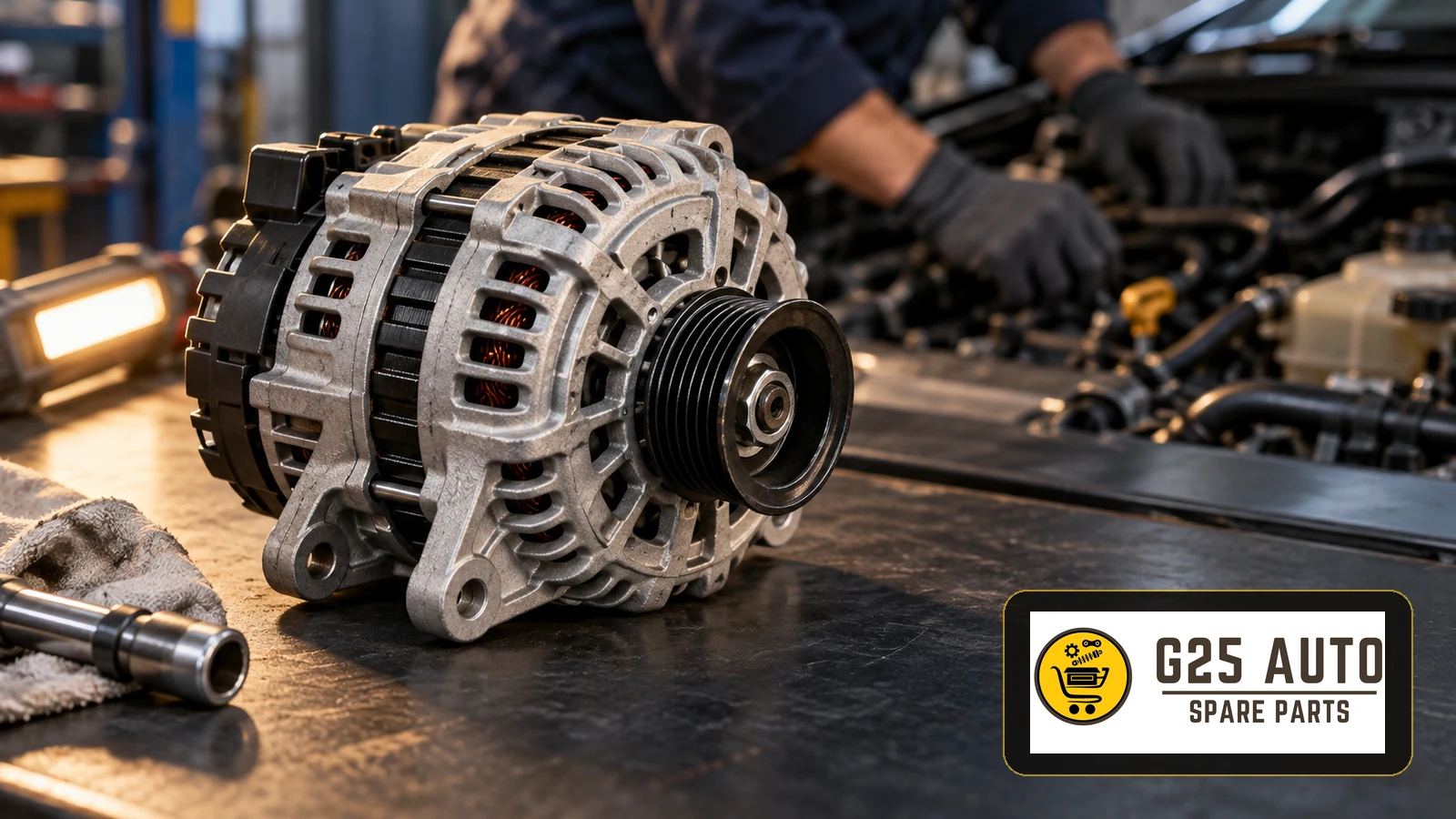
An alternator converts engine power into electrical energy to support the vehicle’s electrical system and recharge its battery. Replace it when diagnosis confirms an internal or structural fault that calls for replacement, rather than using mileage or a warning lamp alone. For European and Balkan workshops, the purchasing decision should combine a documented fault, a verified vehicle application and clear evidence about the replacement unit.
What the alternator does in the charging system
On a conventional belt-driven charging system, the engine turns the alternator through the auxiliary drive. A rotating magnetic field and stationary windings generate electricity; rectifier diodes convert the generated alternating current for the vehicle’s direct-current system. The regulator controls charging output. This is distinct from the starter motor, which turns the engine during starting.
The battery and alternator work together. The battery can supply additional energy when demand exceeds alternator output. A weak battery therefore does not, by itself, identify a defective alternator. Equally, replacing a discharged battery will not resolve an underlying charging fault.
Managed charging changes the interpretation
Some vehicles use a regulator that communicates with the vehicle’s control system. Battery condition, temperature and operating strategy can influence charging commands. Use the correct service information and diagnostic data for that application; a single generic voltage target cannot establish whether every charging system is healthy.
Which symptoms justify a charging-system investigation?
A charging warning, repeated battery discharge, fluctuating lighting or unusual noise around the belt drive warrants investigation. Record when the complaint occurs: after a cold start, with electrical consumers operating, intermittently during a journey or after parking. This gives the workshop and parts supplier a more useful starting point than an assumption that the alternator has failed.
Separate electrical and mechanical observations. A noisy pulley area may involve the belt, tensioner, alignment or bearings. A charging complaint may originate in the battery, wiring, grounds or protection circuits. Diagnose those possibilities before authorising an alternator order.
How to decide whether replacement is necessary
Establish the condition of the surrounding system
Start with battery condition and inspect the cables, terminals and grounds. Check the auxiliary drive and relevant fuses or fusible links. Follow the manufacturer’s procedure for charging tests and voltage-drop checks on the output and ground paths. Record the test conditions alongside the results so another technician can interpret them.
Confirm the failure and address its cause
Where fitted, read relevant fault codes and charging data. Internal electrical testing or bench assessment may be needed before condemning the unit. If external damage, poor connections or a drive fault contributed to the failure, include their correction in the repair plan. Fitting another alternator without addressing the cause can leave the original complaint unresolved.
There is no universal replacement mileage for every alternator. Service history, observed condition and application-specific test results provide a better basis for the decision. Keep the diagnosis attached to the job record, particularly when a fleet operator needs an explanation for an unscheduled repair.
Original, aftermarket or remanufactured: compare the evidence
An original replacement, a new aftermarket unit and a remanufactured unit can be evaluated as separate purchasing proposals. The label alone does not confirm the correct application, warranty coverage or suitability for the job. Request an identifiable manufacturer, a traceable part reference and written confirmation of the proposed application.
For a remanufactured offer, ask what inspection and final testing the supplier documents. Clarify whether an exchange unit is required and obtain the core-return conditions before accepting the quotation. Do not assume every remanufactured product follows the same process.
For distributors supplying workshops across different markets, keep the technical enquiry and commercial quotation connected. Ask the supplier to state price, availability, warranty terms and any return requirements for that specific offer. This avoids turning general expectations about a product category into promises to the customer.
Alternator ordering checklist for workshops and distributors
- Record the VIN, engine identification and relevant vehicle equipment.
- Photograph the existing unit’s label, connections, mounting points and pulley.
- Verify the proposed part reference against current application information.
- Confirm the required electrical specification and regulator/control-system compatibility.
- Compare mounting geometry, pulley type and offset, and terminal configuration.
- Attach the diagnosis and note any previous charging-system repairs.
- Request the supplier’s product documentation and specific commercial terms.
- Document the workshop’s acceptance checks before installation begins.
Installation and handover checks
Use the vehicle manufacturer’s isolation, removal and installation procedure. Compare the supplied unit with the removed alternator before fitting it. Inspect the drive and connections, then complete the specified charging checks after installation. Never disconnect the battery with the engine running as a diagnostic shortcut.
At handover, retain the replacement reference, diagnostic findings and final test record. Tell the customer which faults were corrected and what was checked. These records help a fleet workshop explain the repair and give a distributor a clearer basis for investigating any later query.
Frequently asked questions
Does the battery warning lamp prove the alternator is defective?
No. It identifies a charging-system concern that needs diagnosis. Wiring, battery, control-circuit or drive problems can produce related symptoms.
Can an alternator be selected by appearance alone?
No. Similar housings can conceal different electrical or control specifications. Verify the application and compare the relevant physical features.
Is an aftermarket alternator automatically equivalent?
No. Obtain evidence for the specific part and vehicle application. Brand descriptions and general quality claims cannot replace that check.
Should alternators be replaced at a fixed mileage?
Use applicable service information, condition and diagnostic results. A general mileage estimate is not a replacement instruction for an individual vehicle.
Technical references
Further workshop guidance: DENSO alternator function and replacement checks, DENSO symptom-led diagnosis, DENSO charging-circuit troubleshooting and HELLA alternator regulation and diagnostics.