
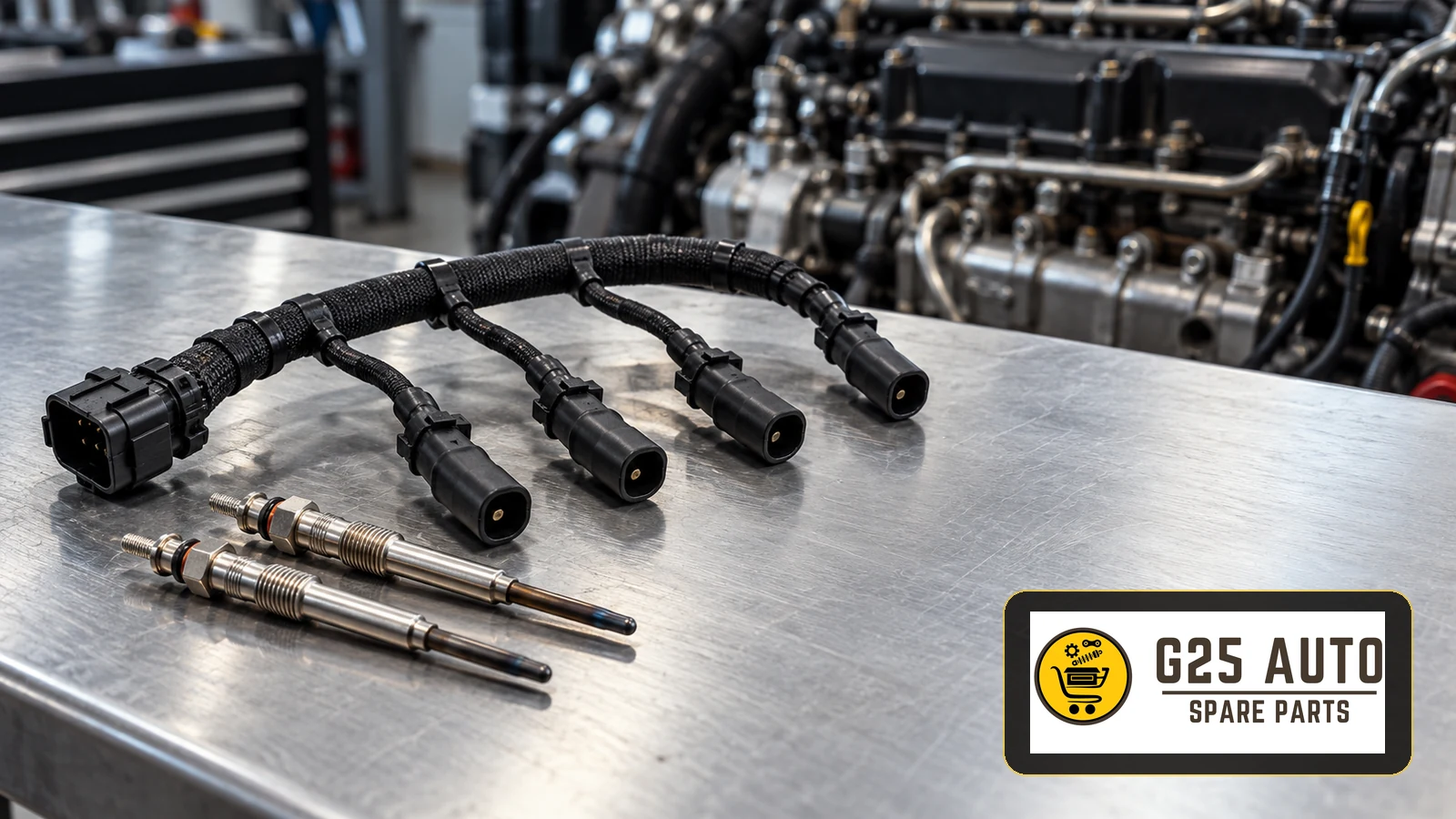
Glow plug wiring harnesses and connector caps carry electrical current to the glow plugs in diesel engines. They support starting, particularly in cold weather, and sound electrical connections are important to correct glow system operation. Faulty wiring or connectors can contribute to difficult starting and poor running; symptoms such as reduced power or increased fuel consumption also require investigation of other possible causes.
Glow Plug Wiring Harnesses: Function and Operating Principle
The glow plug wiring harness carries electrical power from the battery, through the relay or control unit, to the glow plug for each cylinder. Connector caps provide secure connections between the wiring, the glow plug terminals and the main supply circuit, depending on the system design.
In modern diesel vehicles, this circuit can carry substantial current. Copper or copper-alloy conductors are commonly used to supply power for rapid glow plug heating. The connectors and insulation must be suitable for the temperatures and vibration encountered in their intended application.
Fault Symptoms and Possible Problems
Problems with the glow plug wiring harness or connector caps may be associated with the following symptoms:
- Delayed starting or failure to start, particularly in cold weather
- An engine or glow system warning lamp illuminating or flashing, depending on the vehicle
- White or grey smoke during initial starting
- Shaking or uneven running during starting
- One or more cylinders firing poorly when cold
- An unexpected increase in fuel consumption
- A burnt smell or signs of melted wiring
- Greenish or white corrosion around connection points
Important: These symptoms can also indicate other faults. Diagnosis requires visual inspection and systematic testing by a qualified workshop, including appropriate resistance measurements with a multimeter in accordance with the vehicle manufacturer’s procedure.
Inspection and Assessment
The following checks help assess the wiring harness and connector caps:
Inspection Checklist
- Check how the glow plug indicator behaves with the engine cold, using the vehicle’s specified operating sequence
- Visually inspect all wiring connections for security and corrosion
- Look for cracks, tears or melting in the cable insulation
- Check that connector caps are neither loose nor broken
- Inspect the main supply cable and its battery and relay or control unit connections
- Check that the wiring route in the engine compartment avoids sharp edges
- Inspect the terminal connection on each glow plug individually
- Check that any protective plastic sleeves are present and intact
Professional Diagnostic Methods
Workshop diagnostic procedures may include:
- Checking the continuity of each wire with a multimeter, with the circuit isolated as specified
- Checking current draw with suitable current-measuring equipment
- Using a thermal camera to identify abnormal heating where appropriate
- Reading glow system fault codes with an OBD diagnostic tool
- Comparing resistance measurements with the manufacturer’s specifications
Genuine (OEM) and Aftermarket Options
Both genuine and aftermarket glow plug wiring harnesses and connector caps may be available. Each option has advantages and points that need to be checked before selection.
Genuine Parts
Genuine parts are specified for particular vehicle applications. The correct reference should match the required connection points, cable lengths and material specifications. Fitment and warranty terms still need to be confirmed for the exact part and vehicle; the genuine designation alone does not verify that a selected reference is correct.
Aftermarket Parts
Aftermarket manufacturers may offer harnesses made to the requirements of particular applications, sometimes using different materials or designs. These parts can offer a cost advantage. Any claims of equivalent performance, improved materials or quality certification should be checked against documentation for the actual product and manufacturer.
Comparison Table
| Feature | Genuine Part | Quality Aftermarket Part |
|---|---|---|
| Vehicle fitment | Confirm the reference for the exact application | Confirm the documented application and specifications |
| Quality control | Vehicle manufacturer’s requirements for the specified part | Check manufacturer documentation and any applicable certification |
| Warranty period | Check the applicable supplier and manufacturer terms | Varies by manufacturer and supplier; confirm the terms |
| Availability | Confirm at the time of enquiry | Confirm at the time of enquiry |
| Technical support | Manufacturer or authorised service network, where available | Depends on the supplier and manufacturer |
| Material quality | Check the specifications for the selected reference | Varies by product; assess the documented specifications |
Essential Information for Correct Part Selection
The vehicle make and model alone may be insufficient when selecting glow plug wiring harnesses and connector caps. Verify the following information:
OEM Reference and Part Number Checks
Vehicle manufacturers use their own part numbering systems. The relevant original part number for glow system components should be checked in the manufacturer’s parts catalogue or service system. A reference helps identify the required specification and reduces the risk of ordering the wrong part, but any replacement or cross-reference must also be verified.
Checking by Vehicle Identification Number
Vehicles of the same model can use different harnesses depending on production date, engine type or equipment. The vehicle identification number (VIN) identifies the vehicle and supports a catalogue-based application check. Check fitment against the VIN and relevant production details before ordering.
Engine Code and Production Date
The engine code, recorded on the vehicle’s identification labels or in its documentation, helps distinguish engine versions within the same model range. Engines may have different cylinder counts or glow systems with different voltage requirements. Production date also matters because manufacturers may introduce technical changes during a model year.
Providing these details together gives a genuine or aftermarket parts supplier the information needed to identify and verify the required product.
Installation and Maintenance Advice
Installing glow plug wiring requires care, as incorrect work can cause serious problems. Follow the vehicle manufacturer’s isolation and installation procedures:
- Avoid excessive force when making connections, and do not damage threads or terminals
- Clean connections before assembly; address corrosion and use only cleaning products suitable for the connector and specified procedure
- Route wiring away from sharp edges, moving components and excessive heat
- After installation, check that connections are secure without overtightening; follow the specified fastening requirements
- Visually inspect wiring and connector caps during routine maintenance
Parts Sourcing with G25Auto
Choosing a reliable supplier helps workshops identify the right product and assess its suitability for service. For B2B parts enquiries involving Europe and the Balkans, provide the required glow plug harness or connector reference and the relevant vehicle information.
For parts sourcing enquiries, visit G25Auto. Compare documented applications and specifications with the supplier before selecting a product.
Frequently Asked Questions
When should glow plug wiring be replaced?
There is generally no single mileage interval applicable to all glow plug harnesses. Replacement may be necessary when corrosion, melting, broken wiring or connection faults are found. Visual checks during routine servicing help identify deterioration; follow any vehicle-specific maintenance requirements.
Can one wire be replaced, or is a complete set needed?
An individual faulty wire may be repairable or replaceable if the system design and approved repair method allow it. Since the remaining wiring has experienced similar conditions, inspect the whole harness. Choose a local repair or complete harness replacement based on its condition and the manufacturer’s procedure.
Can an aftermarket harness affect the engine warranty?
Warranty implications depend on the applicable terms, the selected part and the work performed. Do not assume that an aftermarket designation either preserves or invalidates coverage. Consult the warranty provider or authorised service network before work on a vehicle covered by a warranty.
Can a glow system fault prevent the engine from starting?
A warm engine or mild weather may make starting possible despite some glow system faults, depending on the engine and fault. In cold conditions, particularly at the first start, the system can be important enough that a failure contributes to a no-start condition.
Are connector caps universal?
No. Connector caps come in different dimensions and designs for different glow plug types. Verify the connector against the original part reference and the vehicle application, using VIN-based catalogue information where available.
Conclusion
Glow plug wiring harnesses and connector caps are important to reliable cold starting in diesel vehicles. Correct system operation supports stable starting and initial running; effects on fuel consumption or engine condition depend on the vehicle and the underlying fault.
Recognising symptoms early allows faults to be investigated before they worsen. Professional equipment and expertise are needed for a reliable diagnosis. When replacement is required, verify critical details such as the VIN, engine code and original part number for either genuine or aftermarket options.
A suitable aftermarket part may offer a cost advantage when its application and specifications have been verified and it is installed correctly. Reliable suppliers and careful fitment checks remain essential.
If a glow system problem develops, arrange an assessment by a qualified workshop so that the necessary checks and repairs can be carried out.