
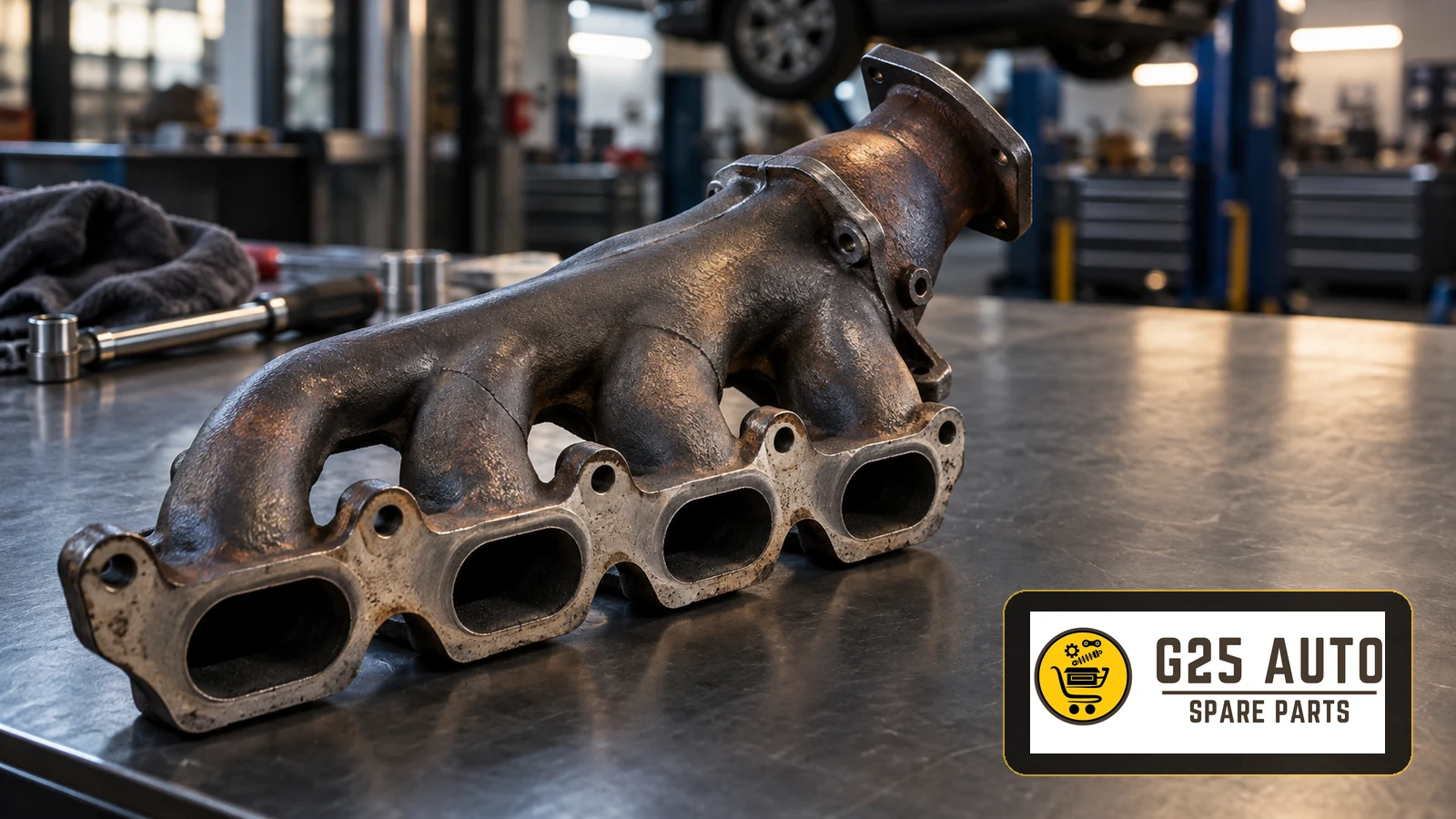
What is an exhaust manifold?
The exhaust manifold collects gases leaving the engine’s combustion chambers and directs them into the exhaust system. Common designs use cast iron or stainless steel to withstand the heat and pressure of exhaust gases. The manifold connects to the cylinder head and forms part of the engine’s exhaust path.
Gases pass from the cylinder head through the manifold and onwards through the exhaust system, including the catalytic converter and silencer where fitted. Manifold design and condition influence exhaust flow and engine operation.
The exhaust manifold’s role in the engine system
Main functions
The manifold carries combustion gases away from the engine. Its main functions and operating considerations include:
- Collecting and directing gases: It brings together exhaust flow from the cylinders and channels it towards the exhaust pipe.
- Managing exhaust flow: Its passage design influences flow resistance and exhaust back pressure.
- Handling heat: It carries hot gases out of the engine while withstanding repeated temperature changes.
- Vibration considerations: Its connections form part of an exhaust assembly exposed to engine movement and vibration.
Effect on engine performance
A correctly specified manifold supports the engine’s intended exhaust flow. Damage or leakage can affect engine operation, fuel consumption, emissions and exhaust noise, depending on the vehicle and fault.
Symptoms of exhaust manifold faults
Signs to watch for during early diagnosis
Recognising possible symptoms early helps workshops investigate faults before further damage develops. These symptoms can have other causes and should be assessed together.
Noise and vibration symptoms
- Unusual engine noise: Louder operation or ticking, particularly during a cold start.
- Exhaust leak noise: Puffing or hissing from the engine area.
- Increased vibration: Unusual vibration felt through the steering wheel or gear lever warrants investigation, although it does not identify a manifold fault by itself.
Performance and fuel consumption problems
Possible symptoms include reduced power, weaker pulling performance or increased fuel consumption. Exhaust odour and abnormal emissions results also warrant investigation; neither confirms a manifold fault alone.
Visible and physical signs
Cracks, corrosion and dark soot marks around the manifold or its joints may be visible during inspection. The extent and location of damage help determine the repair required.
When should an exhaust manifold be replaced?
Factors that determine replacement timing
Driving conditions, vehicle age and maintenance history affect manifold condition. Replacement should follow assessment of the actual damage.
Mileage and age considerations
There is no single mileage threshold for every manifold. Vehicle age, repeated heating and cooling, and demanding stop-start use can influence inspection needs. Follow the applicable vehicle maintenance guidance.
Conditions requiring prompt assessment for replacement
- Visible cracks in the manifold.
- A substantial exhaust leak.
- Broken or detached flange connections.
- Structural deterioration caused by corrosion.
Preventive maintenance
Regular engine servicing and inspections help identify developing problems. Use the specified engine oil, replace filters as required and follow the vehicle’s operating guidance.
Original equipment and aftermarket exhaust manifolds
Original equipment parts
Original equipment manifolds are specified for particular vehicle applications. Confirm the relevant application, price and warranty terms for the part under consideration.
Aftermarket part considerations
Aftermarket manifolds provide another sourcing option. For European and Balkan B2B purchasing, compare the following points:
- Cost: Compare the actual quotation with other suitable options.
- Quality: Assess the supplier’s documented product specifications.
- Availability: Confirm the offered range and delivery terms for the enquiry.
- Application: Verify suitability for the specific vehicle and engine; a model name alone does not establish fitment.
Which option should you choose?
Consider vehicle age, budget and intended use alongside the application requirements and available product information. These checks matter for both original equipment and aftermarket options.
Exhaust manifold maintenance tips
Recommendations for service life
Maintain the engine regularly and follow the manufacturer’s guidance on cold-engine operation, idling and fuel quality. Routine inspections can help detect problems early.
Conclusion
The exhaust manifold is an important part of the engine’s exhaust system. Appropriate part selection, timely inspection and maintenance help address faults and support reliable vehicle operation.