
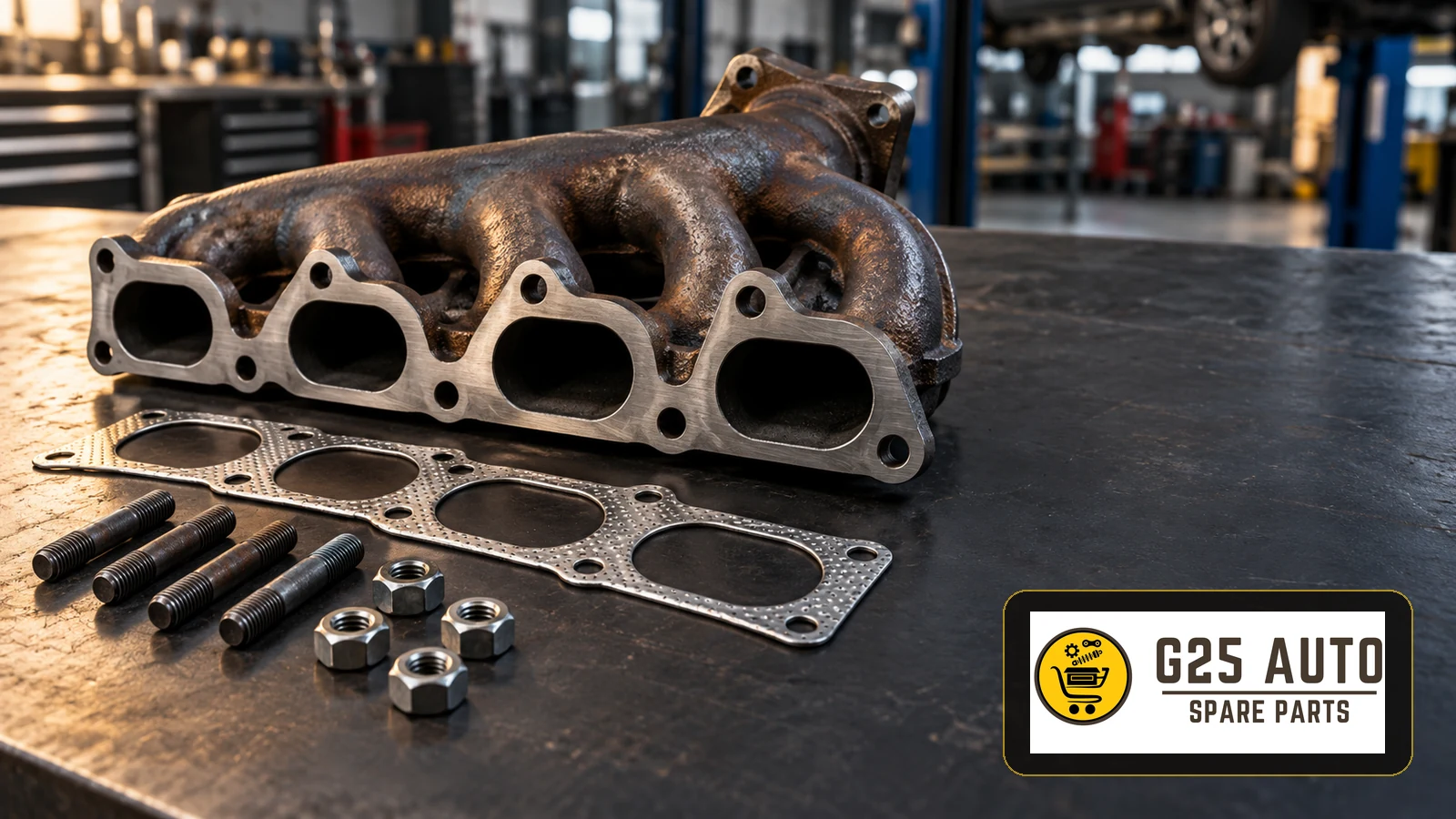
Exhaust manifold gaskets and studs help keep the engine’s exhaust connections sealed and secure. Faults can cause unusual noises, exhaust leaks and reduced performance. Accurate diagnosis and timely repair support reliable engine operation.
What are exhaust manifold gaskets and studs?
The gasket seals the joint between the cylinder head and exhaust manifold. Depending on the design, it may use heat-resistant graphite, metal or composite materials. Manifold studs or bolts secure the manifold to the cylinder head.
These components face high temperatures, pressure and vibration. Repeated heating and cooling place stress on the joint. Suitable materials and correct installation affect service life.
Symptoms of failure
Recognising symptoms early helps workshops investigate the problem before further damage develops.
Noises from the engine area
A leaking gasket or loose fastener may produce ticking, rattling or puffing sounds, particularly during a cold start. As the metal warms and expands, the sound may diminish or change.
Exhaust smell
Exhaust odour around the engine can indicate a leak. Exhaust entering the cabin is hazardous: stop using the vehicle and arrange professional diagnosis.
Reduced performance
A leak may affect engine operation. In particular, a leak upstream of an oxygen sensor can influence its reading and the engine management system’s fuel adjustment.
Engine warning light
An exhaust leak may be associated with a warning light and mixture-related or oxygen-sensor fault records. These findings require diagnosis rather than automatically identifying the gasket as the cause.
Diagnostic methods
Symptoms suggest a possible problem; a professional inspection helps establish its source.
Visual inspection
With the engine cold, inspect the manifold joint for carbon deposits, soot and leak traces. Check the accessible studs for damage, breakage or signs of loosening.
Pressure testing
Appropriate workshop pressure or smoke-testing equipment can help locate leaks when used according to the applicable procedure.
Fastener and torque checks
A technician should assess fastening concerns using the vehicle manufacturer’s procedure and specified torque values.
Original equipment and aftermarket parts compared
| Factor | Original equipment part | Aftermarket part |
|---|---|---|
| Materials | Check the specified construction | Check documented material specifications |
| Fitment | Confirm the exact vehicle application | Confirm the application and cross-reference |
| Supply | Confirm with the supplier | Confirm with the supplier |
| Price | Request a current quotation | Compare quotations for the required specification |
| Warranty | Check the applicable written terms | Check the applicable written terms |
Checklist for choosing the correct parts
- Have the vehicle identification number available.
- Identify the engine code from the vehicle’s records or markings.
- Check the production year and month.
- Record any original part reference on the existing component.
- Identify the engine capacity and fuel type.
- Note relevant equipment or sport-package details.
- Keep records of parts used in previous repairs.
- Check the supplier’s return and warranty terms for the B2B order.
Replacement process and key points
Manifold gasket and stud replacement should be handled by a professional workshop with suitable tools.
Preparation
Allow the engine to cool completely. Prepare a clean, well-lit work area and the required parts and tools.
Removal
Remove old fasteners carefully. Broken studs may require specialist extraction. Clean the mating surfaces using methods suitable for their material, and inspect for scratches or distortion.
Installation
Follow the gasket and vehicle manufacturer’s instructions, including whether any specified sealing product is permitted. Tighten the fasteners in the specified sequence and to the specified values.
Checks and testing
Check all connections after assembly and carry out a leak check following the repair procedure. Investigate persistent exhaust odour or leakage.
Why fitment verification matters
Even within the same vehicle model, the engine version, production date and equipment can affect the required gasket and studs.
Verification using the VIN
The VIN supports vehicle identification and catalogue checks. Supply it when ordering, alongside the other relevant application details.
Checking the engine code
Confirm the engine code from reliable vehicle information or engine markings. Engines with the same capacity but different versions or outputs may use different components.
Original part reference
An existing part reference is useful for comparison, but must be checked against the application. Ask the supplier to confirm any superseded references.
Frequently asked questions
How often should the manifold gasket be replaced?
There is no universal mileage interval. Assess leaks and damage, and follow the manufacturer’s gasket replacement requirements whenever the manifold is removed.
Should the studs also be replaced?
Replace broken, worn or deformed studs and any fastener designated for single use. Assess reuse against the manufacturer’s instructions.
Can an aftermarket gasket affect engine warranty coverage?
Check the applicable warranty terms and part requirements before choosing a replacement. Use a competent workshop and retain the part and installation records.
Does a manifold gasket fault need urgent attention?
Arrange prompt diagnosis: leaks can worsen and affect engine operation. Exhaust entering the cabin requires stopping vehicle use.
Is a special running-in period needed after replacement?
Follow the manufacturer’s post-installation checks and operating instructions. A fixed running-in distance cannot be applied to every gasket.
Maintenance and preventive measures
Appropriate maintenance helps support the condition of the manifold joint.
Regular inspection
Include exhaust inspection in routine servicing. Investigate small leaks early.
Engine temperature management
Address overheating and maintain the cooling system, including the thermostat and water pump, as specified.
Fuel quality
Use fuel meeting the vehicle manufacturer’s requirements.
Correct tightening torque
Have a professional address suspected fastener loosening. Follow the specified checking procedure rather than applying a universal retightening interval.
Conclusion
Early symptom recognition, professional diagnosis and appropriate parts are central to manifold gasket and stud repairs. For European and Balkan B2B orders, provide the VIN, engine code and available part references for application checks.
Compare documented specifications and supplier terms for original equipment and aftermarket options. Clean mating surfaces, correct tightening and installation to the manufacturer’s instructions help support a reliable repair.