
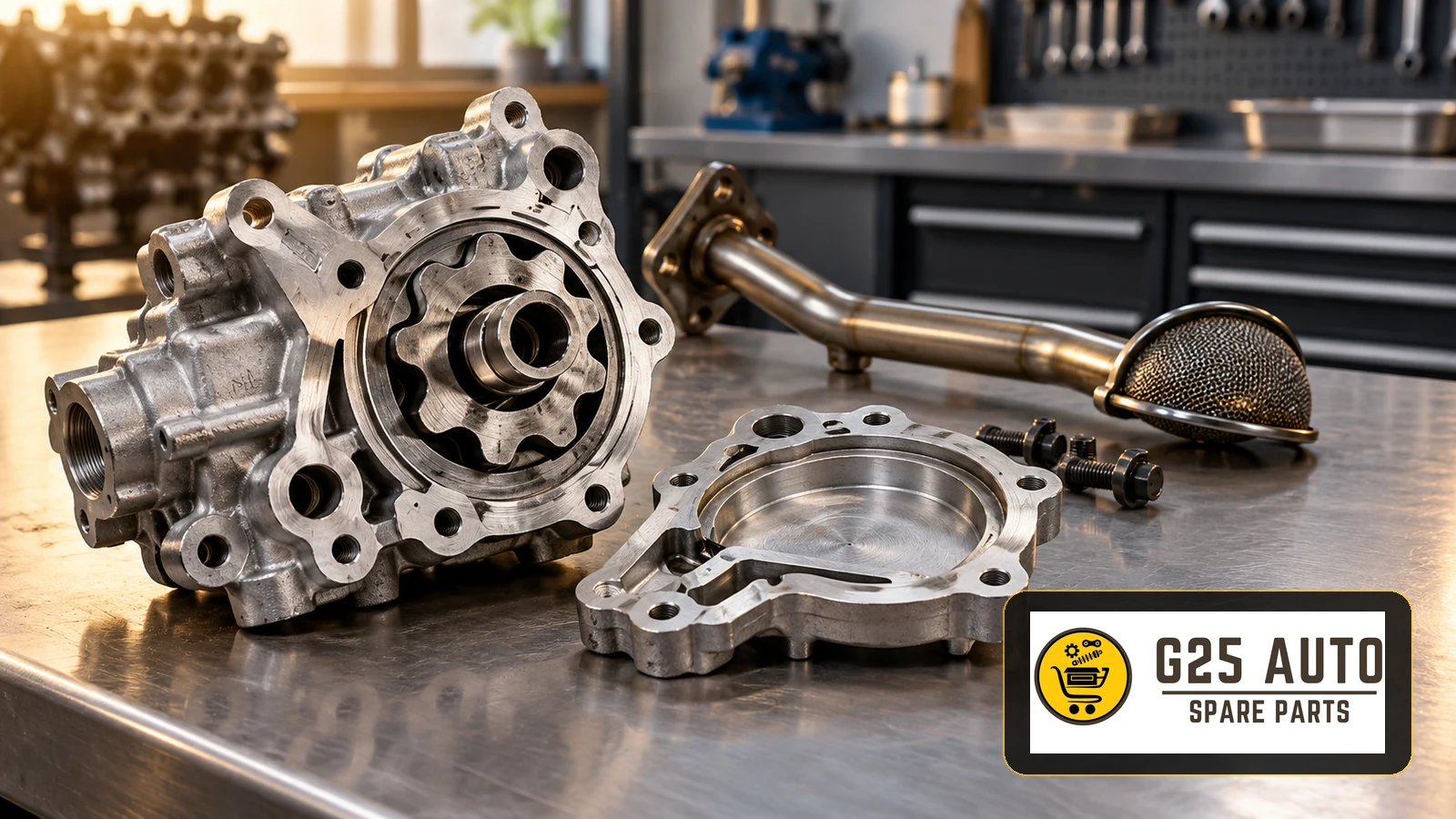
The engine oil pump circulates oil to critical engine components, helping reduce friction and wear. Pump failure can cause serious engine damage, making early diagnosis and correct replacement selection important.
What Is an Engine Oil Pump and How Does It Work?
An engine oil pump is a mechanical device located within or around the engine assembly, with its drive arrangement depending on the engine. Its basic task is to draw oil from the sump and deliver it through the engine lubrication circuit under pressure.
How the Oil Pump Operates
Common designs include gear pumps and rotor, or gerotor, pumps. As the engine drives the pump, its gears or rotors draw in and displace oil. Oil passes through the filtration and distribution circuit to bearing surfaces, the crankshaft, camshaft and other components, according to the engine design.
A pressure regulating valve helps limit excessive pressure. The required oil pressure depends on the engine, oil temperature and operating conditions; use the vehicle manufacturer’s specifications rather than a universal pressure range.
Oil Pump Types
Engine oil pumps can be described by their pumping mechanism, drive or delivery control:
- Gear pumps: Meshing gears move oil through the pump housing.
- Gerotor pumps: Inner and outer rotors displace oil in a compact assembly.
- Chain-driven pumps: Some engines drive the pump from the crankshaft through a chain.
- Variable-delivery pumps: These adjust delivery to suit engine requirements, depending on the control system.
Engine Oil Pump Fault Symptoms
Lubrication faults can have serious consequences. The following signs require attention, although none alone proves pump failure:
Visible and Audible Signs
- Oil warning lamp: A persistent oil pressure warning requires urgent action.
- Abnormal engine noises: Ticking, rattling or knocking can accompany inadequate lubrication.
- Reduced engine power: Lubrication problems may contribute to reduced performance, but other causes are possible.
- Engine overheating: Oil also helps carry heat away, so lubrication should be considered alongside cooling system checks.
- Blue exhaust smoke: This indicates an oil-burning concern requiring diagnosis; it does not establish that the pump has failed.
Measurable Signs
- Low oil pressure: A suitable mechanical gauge records pressure below the engine-specific requirement under the specified test conditions.
- Abnormal oil level or condition: Persistent oil loss or foaming needs investigation.
- Increased oil temperature: Restricted circulation may be one factor in abnormal oil temperature.
Separating Symptoms from a Confirmed Diagnosis
These symptoms can suggest a lubrication problem, but professional checks are needed to identify the cause. Similar signs may result from several faults:
| Symptom | Possible causes | Diagnostic approach |
|---|---|---|
| Oil warning lamp | Pump, pressure sensor, low oil level or filtration problem | Mechanical pressure measurement, sensor testing and visual inspection |
| Engine ticking | Inadequate lubrication, valve adjustment or camshaft wear | Noise localisation and oil pressure testing |
| Overheating | Thermostat, coolant pump, radiator or lubrication problem | Cooling system testing and lubrication checks |
| Power loss | Ignition, fuel supply, compression or lubrication problem | Comprehensive engine diagnosis |
A qualified workshop may need to carry out the following checks using the vehicle-specific procedure:
- Measure actual oil pressure with a suitable gauge at specified idle and higher-speed test conditions.
- Test the oil pressure sensor.
- Inspect the oil filter.
- Check oil specification, condition and level.
- Check the oil pickup pipe for restriction.
- Remove and inspect the pump when the diagnostic findings justify it.
When Should an Oil Pump Be Replaced?
Oil pumps are generally intended for long service, but replacement can become necessary depending on their condition and the engine repair plan:
Conditions That May Require Replacement
- Mechanical failure, such as damaged gears or a cracked housing.
- Wear that prevents the lubrication system meeting its pressure requirements.
- Damage to pump bearings or seals, where applicable.
- Condition-based replacement during an engine overhaul.
- Wear identified on a high-mileage engine; mileage alone is not a universal replacement trigger.
Checks During Replacement
- Renew the pickup pipe seal as required by the repair procedure.
- Fit the specified replacement oil filter when required.
- Renew the engine oil in accordance with the repair instructions.
- Inspect the pump drive chain or belt where fitted, replacing it when required.
- Check the pressure regulating valve using the applicable procedure.
Original and Aftermarket Oil Pumps Compared
Choosing between an original and an aftermarket pump requires consideration of the actual part, application and supply terms. Neither label alone establishes suitability.
Original Equipment Oil Pumps
Potential advantages to verify:
- Documented specification for the intended vehicle application.
- Applicable warranty terms and conditions.
- Availability of ongoing supply and replacement support.
- Traceable manufacturing and quality control information.
Points to assess:
- The quoted purchase cost.
- The confirmed supply lead time.
- Whether the offered part is the appropriate current revision.
Aftermarket Oil Pumps
Potential advantages to verify:
- Alternative price quotations.
- Supply options across different distributors.
- Manufacturer provenance; shared production origins must not be assumed.
- Documented design revisions, where offered for the application.
Points to assess:
- The reliability and traceability of the manufacturer and supplier.
- Evidence of the relevant quality requirements.
- Confirmed application compatibility.
Which Option Suits the Vehicle?
Consider the following factors before ordering:
- Vehicle age and value: Assess the repair plan and ownership requirements.
- Warranty status: Check the applicable warranty conditions before selecting a replacement.
- Budget: Compare documented suitable options and the overall repair cost.
- Operating conditions: Check suitability for the engine and its intended duty.
- Availability: Confirm supply without compromising application verification.
Verifying Oil Pump Compatibility
Correct application matching is essential. An unsuitable pump can compromise lubrication and cause serious engine damage.
Information Needed for Compatibility Checks
- Original part reference: Record the existing pump’s identification and verify the applicable catalogue reference and revisions.
- Vehicle identification number: Use the VIN to support a vehicle-specific catalogue lookup.
- Engine code: Different engines within the same vehicle model may use different pumps.
- Production year and date: Check relevant production changes and application limits.
- Engine capacity and output: Identify the exact engine version.
Verification Process
Before ordering:
- Prepare the relevant vehicle identification details from its documentation.
- Record all identification numbers on the existing pump.
- Check the engine code against the vehicle documentation or identification label.
- Provide these details to the supplier for catalogue confirmation.
- Compare the delivered part references with the confirmed order before installation.
A parts supplier can assist with catalogue checks, but suitability must be established for the specific engine rather than inferred from a broad product listing.
Oil Pump Maintenance Checklist
Correct routine maintenance supports the lubrication system and helps identify developing problems:
Routine Maintenance Checks
- ☐ Change engine oil at the intervals specified for the vehicle and its operating conditions.
- ☐ Renew the oil filter according to the manufacturer’s service instructions.
- ☐ Use oil meeting the required specification and viscosity.
- ☐ Check the oil level regularly as instructed for the vehicle.
- ☐ Respond promptly to oil pressure warnings.
- ☐ Inspect oil condition during maintenance; appearance alone does not establish suitability.
- ☐ Investigate abnormal engine noises.
- ☐ Investigate abnormal oil pressure warning behaviour after a cold start.
- ☐ Check regularly for oil leaks.
- ☐ Keep an accurate service history.
Recommendations for Long Service
- Avoid high engine speeds when the engine is cold, following vehicle guidance.
- Follow the manufacturer’s advice for engine warm-up and the vehicle’s driving pattern.
- Avoid oils that do not meet the required specification.
- Do not extend service intervals beyond the applicable maintenance schedule.
- Use oil suitable for the engine rather than mixing unidentified or unsuitable oils.
Frequently Asked Questions
When should an oil pump be replaced?
Replacement usually follows confirmed failure or wear, or a condition assessment during overhaul. High mileage alone does not define a replacement interval. Low pressure, abnormal noises or a persistent warning require investigation.
Can oil pump failure damage the engine?
Yes. Inadequate lubrication can seriously damage bearings, the crankshaft, camshaft and other engine components, potentially resulting in seizure.
What should I do if the oil warning lamp comes on?
For a persistent oil pressure warning, pull over safely and stop the engine. Follow the vehicle handbook when checking the oil level. If the warning persists even with the correct level, do not continue running the engine; arrange recovery and professional diagnosis.
Is an aftermarket oil pump suitable?
An aftermarket pump should be considered only with documented application compatibility and appropriate manufacturer and supplier evidence. A brand name alone does not confirm suitability or performance.
How long does oil pump replacement take?
Access varies by engine. Some pumps are relatively accessible, while others require substantial dismantling. Obtain a vehicle-specific labour estimate rather than relying on a general time range.
What are the symptoms of an oil pump problem?
An oil warning, abnormal ticking or knocking, and measured low pressure require investigation. Power loss, overheating and blue smoke may also be reported, but are not specific proof of pump failure.
Which oil pump type should I choose?
Choose the pump specified for the engine and its relevant production version. A replacement that does not meet the application requirements can damage the engine.
Conclusion
The engine oil pump is central to the lubrication system. It circulates oil to moving components, helping control wear and carry heat away.
Prompt attention to oil warnings, abnormal noises and low pressure can help limit engine damage. These signs can have several causes, so replacement should follow professional diagnosis.
When replacement is necessary, compare original and aftermarket options using documented suitability, supply terms and the repair requirements. The original reference, VIN, engine code and production date support accurate matching, but still need catalogue verification.
Correct oil, timely servicing and routine checks support pump and engine condition. Use the maintenance checklist alongside the vehicle-specific service instructions.
For workshops, distributors and fleet buyers, traceable sourcing and verified application data support sound purchasing decisions. Confirm the exact replacement before committing to installation.