
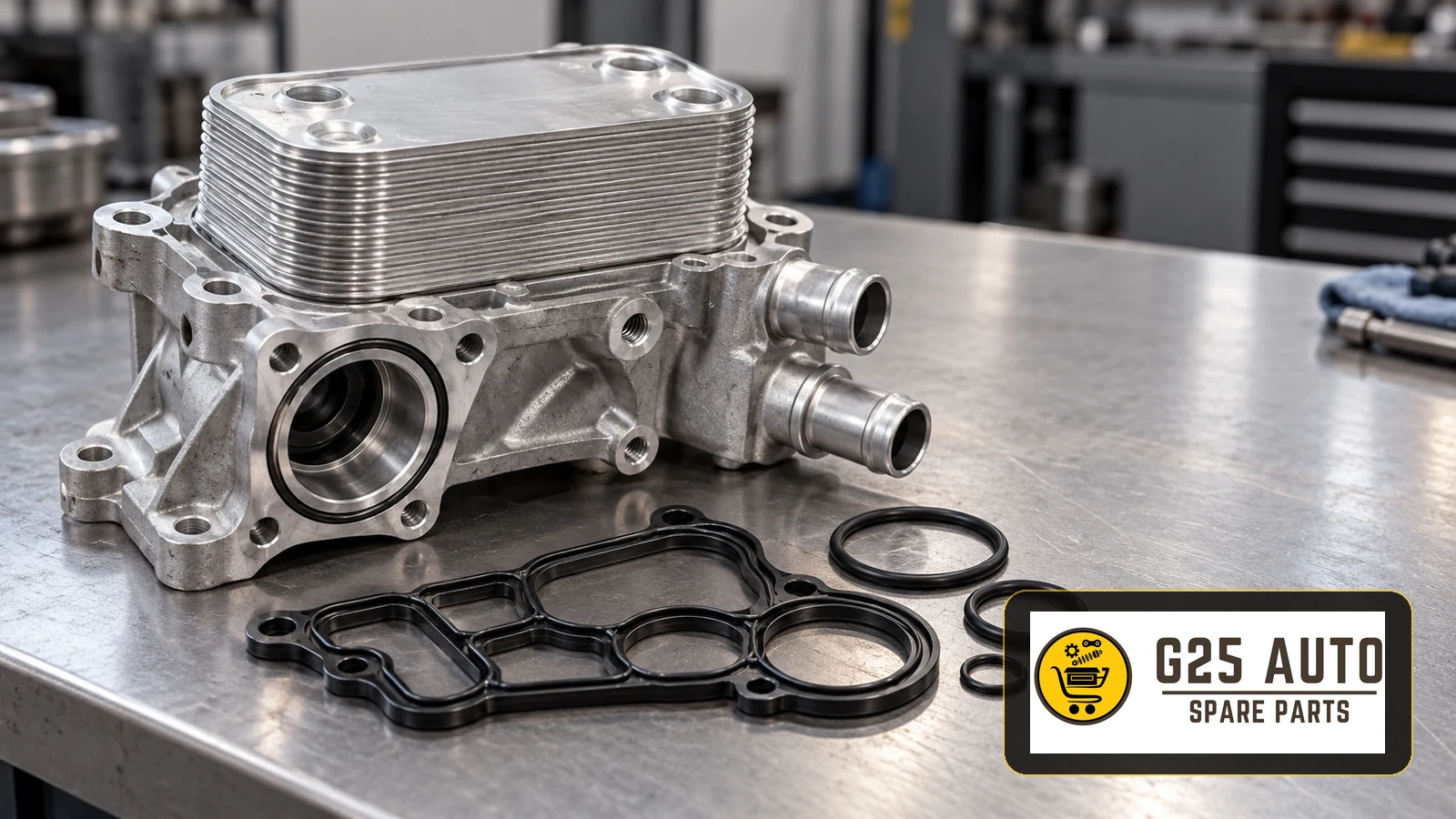
Engine oil cooler gaskets and housing connections support the system that controls engine oil temperature. These seals can deteriorate and leak over time, potentially affecting engine operation. Correct diagnosis and timely repairs help reduce the risk of more extensive damage.
What Is an Engine Oil Cooler System and How Does It Work?
An engine oil cooler is a heat exchanger designed to reduce the temperature of oil heated during engine operation. Depending on the vehicle, oil passes through a cooler integrated into the engine assembly or installed as a separate unit, transferring heat to coolant or air.
The system can include the following components:
- Oil cooler housing and main heat exchanger unit
- Inlet and outlet connection flanges
- Gaskets and sealing elements
- Mounting brackets and fastening bolts
- Coolant passages in liquid-cooled systems
Why Oil Cooler Gaskets and Housing Connections Matter
Gaskets and housing connections provide sealing at the interfaces specified by the system design. In a liquid-cooled assembly, the relevant seals help keep engine oil and coolant in their separate circuits. Their role includes preventing leakage and supporting the pressures and operating conditions for which the system was designed.
Gasket Types and Applications
Depending on the application, oil cooler sealing elements may include:
- O-rings: Circular-section elastomer sealing rings specified for the application
- Flat gaskets: Flat sealing elements used between a housing and the engine block
- Composite gaskets: Seals combining metal and elastomer where specified by the design
- Fibre gaskets: Fibre-based sealing materials used in particular applications
Fault Symptoms: What Should You Watch For?
Problems with oil cooler gaskets and housing connections can produce several warning signs. Recognising these signs early can help limit damage, but none establishes the failed component by itself.
Visible and Observable Signs
- Traces of oil leakage on or beneath the engine block
- An oil smell in the engine compartment
- An unexplained drop in engine oil level
- Oil traces or an emulsion in the coolant reservoir
- Possible coolant contamination in engine oil, including a milky appearance
- An engine temperature reading higher than normal
- A low oil pressure indication
- Unusual noises while the engine is running
More Advanced Warning Signs
If a problem remains unresolved, more serious or associated symptoms may appear. These are not specific to an oil cooler gasket fault:
- Engine overheating
- Loss of performance or power
- Increased fuel consumption
- A change in exhaust smoke colour
- Illumination of the engine fault warning lamp
How Is the Fault Confirmed?
Observing symptoms is useful, but confirming a fault requires professional inspection and appropriate tests. It is important to distinguish a warning sign from a confirmed diagnosis.
Professional Diagnostic Steps
- Visual inspection: A technician examines the engine compartment in detail.
- Pressure testing: The cooling system is tested using the applicable procedure.
- Leak detection: Suitable dye or dedicated test equipment may help locate the leak where appropriate.
- Fluid analysis: Laboratory testing of engine oil and coolant may be used when necessary.
- Temperature measurement: Thermal imaging or temperature sensors may help identify abnormal temperature areas.
What to Consider When Selecting Parts
Choosing the correct parts matters when replacing oil cooler gaskets and housing connections. An unsuitable part can lead to repeat leakage and further damage.
Verification Methods
OEM or original part number: Manufacturers use part references to identify components. Relevant references may appear in technical documentation or on the existing part. Check the applicable reference and any replacement information before ordering; a number alone is not an unconditional fitment guarantee.
Vehicle identification number: Use the VIN with the relevant catalogue to establish the vehicle specification and applicable original parts. This is particularly useful where different versions or production changes exist within the same model year.
Engine code: Different engine options within the same make and model may use different oil cooler systems. The engine code may be recorded on an engine identification label or in vehicle documentation.
Production date: Manufacturers can change parts during a production run. The exact production date helps identify the correct version, including changes within a model year.
Original and Aftermarket Parts Compared
| Feature | Original or OEM Part | Aftermarket Part |
|---|---|---|
| Compatibility | Check the specified vehicle application and current reference | Check the manufacturer’s application data and technical specification |
| Brand choice | Offered through the vehicle manufacturer’s parts range | Alternative manufacturers may offer suitable references |
| Supply time | Confirm availability for the particular reference | Confirm availability with the selected supplier |
| Warranty terms | Check the applicable written terms | Check the part manufacturer’s and supplier’s written terms |
| Technical support | Through the relevant authorised service or parts channel | Through the part manufacturer and distributor, where available |
Making an Informed Choice
Original and suitable aftermarket parts have different purchasing considerations. Consider the following when making a selection:
- The vehicle’s warranty status
- The vehicle’s age and mileage
- Its intended use, such as everyday driving or commercial operation
- Your budget and cost-performance expectations
- How urgently the part is required
Maintenance and Inspection Checklist
Regular maintenance and inspection help monitor the oil cooler system’s condition:
- ☐ Visually inspect the oil cooler area during an engine oil change.
- ☐ Check the engine compartment for traces of oil leakage during routine inspections.
- ☐ Monitor the engine oil level regularly.
- ☐ Periodically check coolant level and appearance using the vehicle’s instructions.
- ☐ Watch oil pressure and engine temperature indications during normal operation.
- ☐ Have cooling system maintenance performed at the recommended intervals.
- ☐ Use engine oil and coolant meeting the specified requirements.
- ☐ Keep the engine compartment sufficiently clean to make leaks easier to identify.
- ☐ Arrange prompt inspection if unusual noises, smells or performance changes occur.
- ☐ Maintain a clear service history.
Advice When Buying Replacement Parts
Use a reliable source when purchasing components such as engine oil cooler gaskets and housing connections. Confirm the required application and the contents of the supplied part or kit before ordering.
Checks Before Purchase
- Check the manufacturer’s identification and any relevant, verifiable quality documentation.
- Inspect the packaging for damage and authenticity concerns.
- Recheck that the part reference matches the vehicle application.
- Establish the warranty period and conditions.
- Clarify the return and exchange policy.
- Ask which additional installation items, such as bolts or clamps, are required.
Installation and Replacement
Replacing oil cooler gaskets and housing connections requires experience and suitable equipment. A professional workshop should carry out the work using the applicable vehicle procedure.
General Work Sequence
Depending on the vehicle and repair, a technician’s work can include the following steps:
- Allowing the engine and cooling system to cool
- Draining engine oil and coolant as required by the procedure
- Removing components needed to access the oil cooler
- Removing the old gaskets and relevant fasteners
- Cleaning and inspecting the mating surfaces
- Positioning the new seals correctly
- Tightening to the manufacturer’s specified torque values and procedure
- Refilling the relevant system fluids
- Bleeding air as required by the system
- Checking for leaks and carrying out an appropriate test drive
Frequently Asked Questions
When should an engine oil cooler gasket be replaced?
Replacement is generally based on evidence of leakage or damage rather than a universal mileage interval. During an engine overhaul or oil cooler replacement, follow the repair procedure’s requirements for renewing disturbed seals.
Can a gasket fault cause engine damage?
Yes. If a fault causes oil loss or oil and coolant to mix, serious engine damage can result. Early diagnosis and appropriate intervention matter.
How long does oil cooler gasket replacement take?
The time depends on the vehicle model and accessibility. More complex engine layouts may require additional dismantling, so the workshop should assess the work for the specific vehicle.
Is replacing the gasket alone enough?
It may be sufficient if inspection confirms that the fault is limited to the seal. Cracks, corrosion or distortion in the oil cooler housing may require replacement of the assembly. Decide after a detailed examination.
Which gasket material should be selected?
Select the seal specified for the engine and its operating conditions. Follow the manufacturer’s requirements rather than choosing a material solely on a general temperature or pressure claim.
Conclusion
Engine oil cooler gaskets and housing connections are important to correct engine system operation. Early diagnosis of problems matters for repair costs and safe operation. Regular maintenance and inspection help identify developing faults.
When replacement is needed, verify compatibility using the relevant OEM or part reference, VIN, engine code and production date. Assess both original and aftermarket options against the actual application and documented requirements. Select a part appropriate to the vehicle and its condition.
If the oil cooler system gives cause for concern, consult a professional workshop. A small sealing problem can lead to serious engine damage if left unresolved. Appropriate maintenance and correctly specified parts help support dependable operation.