
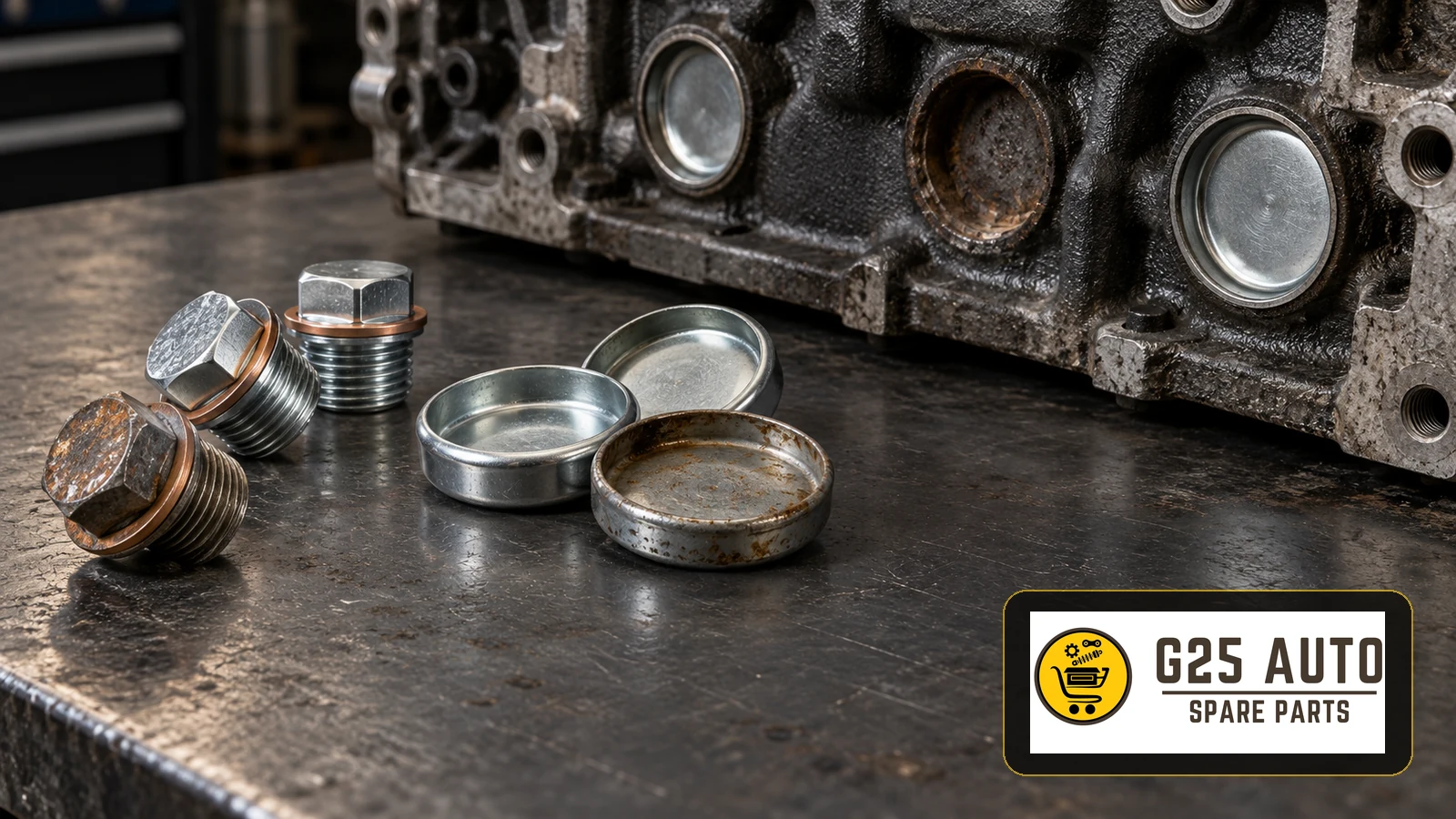
Engine coolant drain plugs and block plugs are important but often overlooked cooling-system components. A failed plug can cause coolant leakage, overheating and serious engine damage. Timely diagnosis and replacement matter for safe operation and repair costs.
What Is an Engine Coolant Drain Plug?
An engine coolant drain plug is a component on the engine block or radiator that allows controlled draining of coolant. Depending on the vehicle, it may be located low on the block or at the bottom of the radiator.
It is used during coolant replacement or cooling-system cleaning. Some vehicles have more than one drain plug, serving different areas of the cooling passages.
Main Functions of a Coolant Drain Plug
- Allowing controlled draining of coolant.
- Facilitating access during maintenance and repairs.
- Supporting cleaning during coolant replacement.
- Allowing separate sections to be drained where the design provides for this.
Block Plugs: Differences and Location
Block plugs, often called freeze plugs, differ from coolant drain plugs. They may be located on the sides of the engine block. Confirm the exact component and its location for the engine concerned.
Fault Symptoms: How to Recognise a Problem
Recognising problems early can help prevent more extensive damage. The following signs warrant investigation:
Visible and Physical Signs
- Coolant puddles or wet patches beneath the engine.
- Rust or corrosion around the plug.
- A plug that appears loose or poorly seated.
- White or greenish crystalline deposits around the plug.
- Discolouration on the engine-block surface.
Operating Symptoms
- A continuing fall in coolant level.
- An abnormal rise on the engine temperature gauge.
- Overheating even in cold weather.
- Coolant drops beneath a parked vehicle.
- Bubbles in the expansion tank.
Diagnosis: Identifying the Actual Fault
These symptoms require professional assessment to identify their cause. A technician may use the following checks:
Professional Inspection Steps
- Visual inspection: Clean the area beneath the engine and examine the plug and surrounding surfaces closely.
- Pressure testing: Check the cooling system with suitable pressure-test equipment to locate leaks.
- UV dye testing: Where appropriate, use a suitable cooling-system dye and ultraviolet light to help locate the leak.
- Seal inspection: Inspect the plug’s gasket or sealing elements when removed.
- Thread inspection: For threaded plugs, examine the mounting threads.
Important: Diagnosis requires a skilled technician and suitable equipment. Uninformed intervention can lead to a mistaken diagnosis and further damage.
Comparing Coolant Drain Plugs and Block Plugs
| Feature | Coolant drain plug | Block plug |
|---|---|---|
| Location | May be low on the engine block or radiator | May be on the sides of the block |
| Main function | Controlled coolant draining | Confirm the exact component’s function for the engine |
| Use during servicing | Used when required for draining | Do not assume it is a service drain |
| Replacement | Inspect during coolant servicing | Assess damage and leakage |
| Material | Metal or plastic, depending on the design | Check the specified material |
| Fault assessment | Check condition and sealing | Check condition and sealing |
Checklist Before Replacement
Before replacing a coolant drain plug or block plug, work through these checks:
Preparation Checklist
- Have the vehicle identification number ready, using the vehicle documents or identification plate.
- Identify the engine code from its label or vehicle documents.
- Record the production year and exact model.
- Obtain previous service records if available.
- Find the original part reference in the vehicle catalogue or through the authorised service network.
- Check the existing plug’s dimensions and, where applicable, thread type.
- Establish the cooling-system capacity for the required coolant quantity.
- Identify the coolant type currently specified for the vehicle.
Part Selection Checklist
- Verify the replacement against the original part reference and vehicle application.
- Check whether gaskets and sealing elements are included.
- Ask for material-quality information and relevant supporting documentation.
- Check the warranty period and conditions.
- Establish whether special installation tools are required.
- Obtain the applicable installation instructions and any specified tightening torque.
Why the Original Part Reference Matters
Correct selection matters for cooling-system plugs. An incorrect part can cause leakage and potentially engine damage.
Why Check the OEM Reference?
The original equipment manufacturer reference identifies a part used by the vehicle manufacturer. Use it when checking:
- The relevant technical specification.
- Critical dimensions such as thread diameter, pitch and length where applicable.
- The specified material and durability requirements.
- References for an aftermarket replacement.
Verification Using VIN and Engine Code
Different engines or equipment variants within the same model and year may use different parts. Check:
- VIN: Identifies the vehicle and helps establish its production configuration.
- Engine code: Identifies the engine type, displacement and variant for engine-specific parts.
- Production date: Helps identify revisions or part changes within a model year.
Without these details, a part that appears to fit physically may still fail to meet the required specification.
Original and Aftermarket Parts: Making a Choice
When replacing a coolant drain plug or block plug, compare original and aftermarket options using the requirements of the exact vehicle and component.
Original Parts
For an original part, assess the manufacturer’s specification and the application offered:
- Check the vehicle manufacturer’s approval and part reference.
- Verify compatibility with the exact vehicle.
- Read the actual warranty terms.
- Check the part offered by the authorised service network.
- Compare the current quoted price.
Aftermarket Parts
Independent manufacturers offer replacement parts. Assess the specific product rather than assuming equivalence:
- Compare the actual cost.
- Check documented specifications and suitability.
- Confirm the available range and current availability.
- Check the option offered by an independent workshop.
- Evaluate the manufacturer and product quality carefully.
Which Option Suits the Situation?
Consider the following factors:
- Vehicle warranty: Check the applicable terms before choosing a part.
- Vehicle age and value: Consider these when evaluating original and replacement options.
- Budget: Compare suitable options within the available budget.
- Intended use: Consider the requirements of everyday, specialist or classic vehicles.
Use a dependable supplier and confirm the exact application before ordering.
Checks After Replacement
After replacement, the cooling system needs checks to establish that it operates correctly.
Initial Checks
- For a threaded plug, use the specified tightening method and torque where applicable.
- Bleed air from the cooling system as required.
- Set the coolant level correctly.
- Check for leakage after the initial start.
- Check that the engine temperature remains within its normal range.
Follow-up Monitoring
During the period after replacement:
- Check beneath the engine for leaks before driving.
- Check the coolant level regularly.
- Monitor engine temperature.
- Seek service promptly if unusual odours or steam appear.
Frequently Asked Questions
How often should a coolant drain plug be replaced?
There is no single replacement interval for every plug. Inspect it during coolant servicing and assess any damage, corrosion or leakage. Follow the vehicle’s own maintenance requirements.
Which vehicles have block plugs?
The arrangement depends on the engine. Check the vehicle documentation or ask a workshop to identify whether and where the engine has these plugs.
Is there a temporary solution for a leaking plug?
A leaking plug needs prompt professional assessment and repair. Temporary patches or fillers can leave the underlying problem unresolved, with a risk of coolant loss and overheating.
How long does replacement take?
The time depends on access and plug location. Allow for coolant draining, refilling, bleeding and system checks as well as replacing the component. Obtain an estimate for the specific vehicle.
Is a new seal needed as well as the plug?
Check the sealing arrangement and installation instructions. Some plugs are supplied with a seal; others require it separately. Do not assume an old sealing element can be reused.
Will an aftermarket part affect the vehicle warranty?
Check the vehicle’s warranty conditions and consult the relevant service provider before arranging the repair. Do not assume the effect from the part’s original or aftermarket label alone.
Conclusions and Recommendations
Coolant drain plugs and block plugs are small but important components. A neglected leak can contribute to overheating and expensive engine damage.
Arrange professional diagnosis when coolant gathers beneath the engine, the level keeps falling, or corrosion appears around a plug.
Before ordering, verify the original part reference, VIN, engine code and production date. These details help avoid selecting an incompatible component.
Consider the vehicle’s warranty conditions, age, use and budget when choosing an original or aftermarket part. Check suitability for the exact application.
Have an experienced technician carry out the replacement and complete the relevant checks afterwards. Follow-up monitoring helps identify continuing leakage or other problems.
Use regular inspection and prompt professional assessment when symptoms appear to reduce the risk of more extensive repairs.