
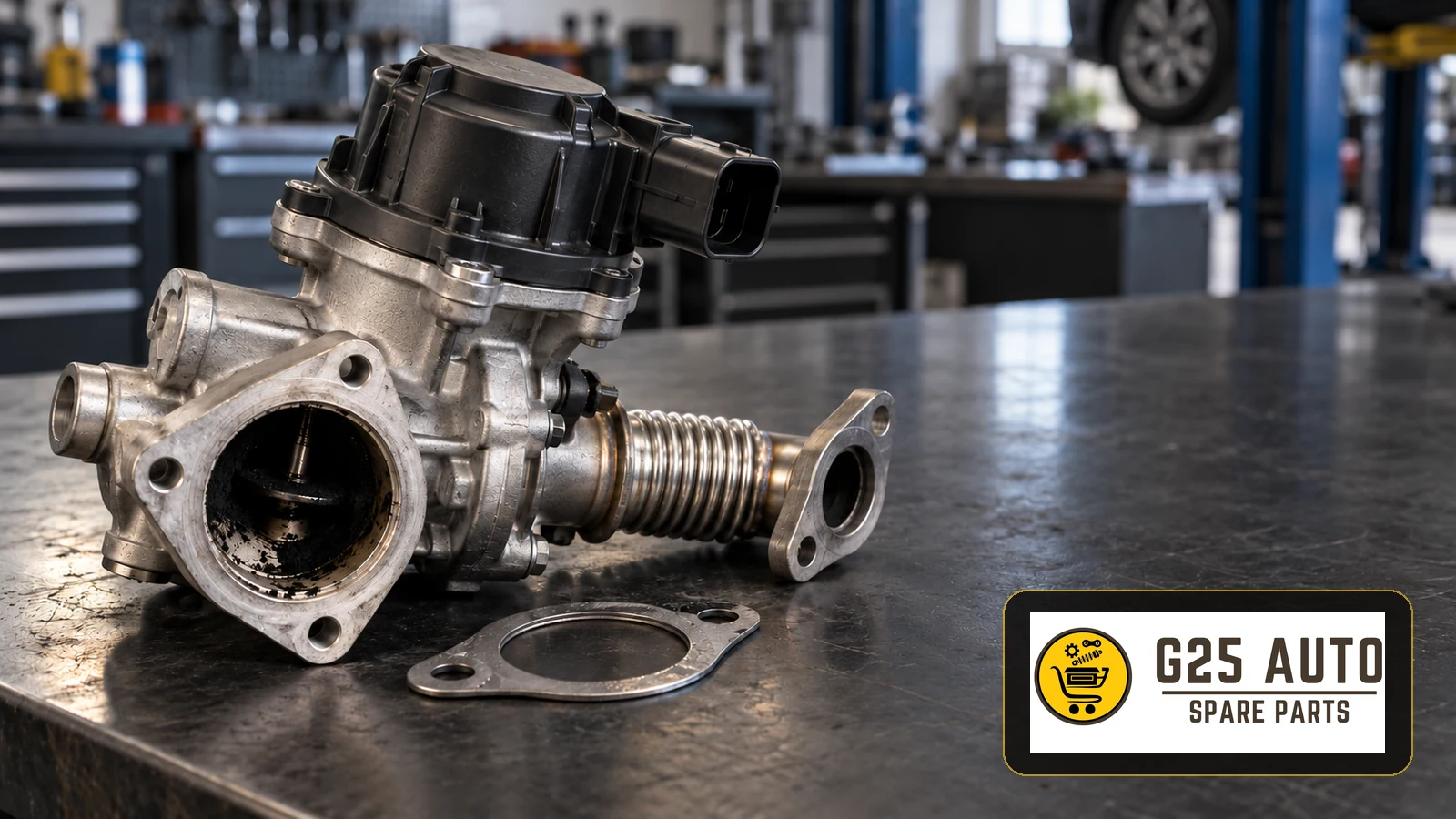
An EGR valve meters exhaust gas returned to the engine intake to help reduce nitrogen oxide emissions. Rough running, hesitation or an engine warning lamp can justify investigating the EGR system, but they do not identify the valve as the failed part. For European and Balkan workshops and parts distributors, the practical approach is to establish the fault, confirm the exact application and decide between an authorised service procedure and replacement before placing an order.
Understand the valve and its control system
EGR is part of engine air management. Designs include vacuum-operated valves and electrically driven units, with different arrangements for position feedback and connected controls. A visually similar housing does not establish that two assemblies perform the same role.
HELLA’s EGR system overview explains these variations and recommends inspecting relevant connections and lines before detailed testing. Use the vehicle’s service information to identify the installed system rather than transferring a test from another engine.
Investigate symptoms before authorising a valve order
Keep the complaint separate from the diagnosis
A warning lamp, irregular idle, reduced performance or hesitation may accompany an EGR fault. HELLA’s electrical EGR technical information also lists wiring, contact and control faults among possible causes. These symptoms therefore support an investigation rather than an automatic replacement decision.
Ask the workshop to record the complaint, stored faults and relevant operating conditions before clearing diagnostic information. Keep the resulting report with the parts enquiry so that the buyer and technician are discussing the same repair.
Check function and flow, not just electrical response
Where supported, diagnostic equipment can assess measured values and command an actuator test. HELLA notes that related inputs, including air-mass and engine-temperature signals, can affect EGR control. An electrical response alone does not establish that the gas passage is clear.
In HELLA’s specific removed-valve example, electrical checks did not reveal the mechanical sticking subsequently identified. That example supports checking both aspects; its connector assignments and test values are not instructions for other applications.
Cleaning or replacement: follow the applicable instructions
Carbon deposits need context. Motorservice’s EGR troubleshooting guidance describes sticking associated with soot and oil contamination, and advises against cleaning EGR components because cleaning can damage them and will not repair an already defective component.
Do not quote cleaning as a universal alternative to replacement. If a workshop proposes it, require explicit permission in the applicable vehicle and component instructions, together with the acceptance criteria. If the relevant guidance prohibits cleaning, follow that restriction. There is no universal cleaning interval to apply across a mixed fleet.
Unusually heavy deposits can also warrant investigation of underlying engine or air-system faults. Treat replacement as part of a diagnosed repair rather than assuming that a new valve alone removes the cause of contamination.
B2B purchasing checklist for an EGR enquiry
Use a shared enquiry record for the workshop, distributor and purchasing team. The following is a procurement workflow, not a substitute for a catalogue fitment decision:
- Vehicle identity: Record the VIN, engine code and production details supplied by the workshop.
- Existing reference: Capture readable markings from the removed assembly and request a current catalogue cross-reference.
- Repair evidence: Attach the diagnostic conclusion and identify whether the enquiry concerns the valve or another EGR-system component.
- Supply scope: Ask whether the quotation covers a separate valve or a larger assembly; obtain an itemised description.
- Included items: Confirm which seals, gaskets, fasteners and other installation items are included or separately required.
- Application restrictions: Ask the supplier to document relevant catalogue notes, exclusions and reference supersessions.
- Commercial terms: Obtain the actual quotation, confirmed availability, return conditions and warranty terms in writing.
- Workshop handover: Provide the agreed reference, installation information and any application-specific commissioning requirements.
For enquiries moving between countries or languages, retain original reference strings and labelled photographs in the same record. Keep application approval separate from commercial approval: a competitively priced offer still needs a documented fitment check.
Receiving inspection and commissioning
At goods receipt, compare the package reference and supplied contents with the approved order. Photograph visible transit damage or discrepancies and resolve them before installation. A matching photograph should support identification, not override a conflicting catalogue result.
Motorservice’s component adaptation guidance includes electric EGR valves among components that may require learning procedures after replacement. Check the exact service instructions; do not assume that clearing fault codes completes commissioning or that every valve learns automatically.
Retain the workshop’s completed checks and repair outcome with the order. This gives a later technical enquiry a useful evidence trail without treating every repeat symptom as proof that the supplied part is defective.
Frequently asked questions
Does an EGR-related fault code mean I need a new valve?
No. The code belongs in a system diagnosis. Ask for the tests that distinguish a valve fault from a control, connection or related-system problem.
Can every carbon-contaminated EGR valve be cleaned?
No. Motorservice advises against cleaning EGR components. Follow the instructions applicable to the exact assembly and reject a generic cleaning promise.
Can I order by vehicle model and a product photograph?
Use those details to start the enquiry, then require documented catalogue confirmation against the vehicle and component information before ordering.
Does every replacement need the same adaptation procedure?
No. Confirm the application-specific requirement and ask the workshop to record completion of the prescribed commissioning checks.