
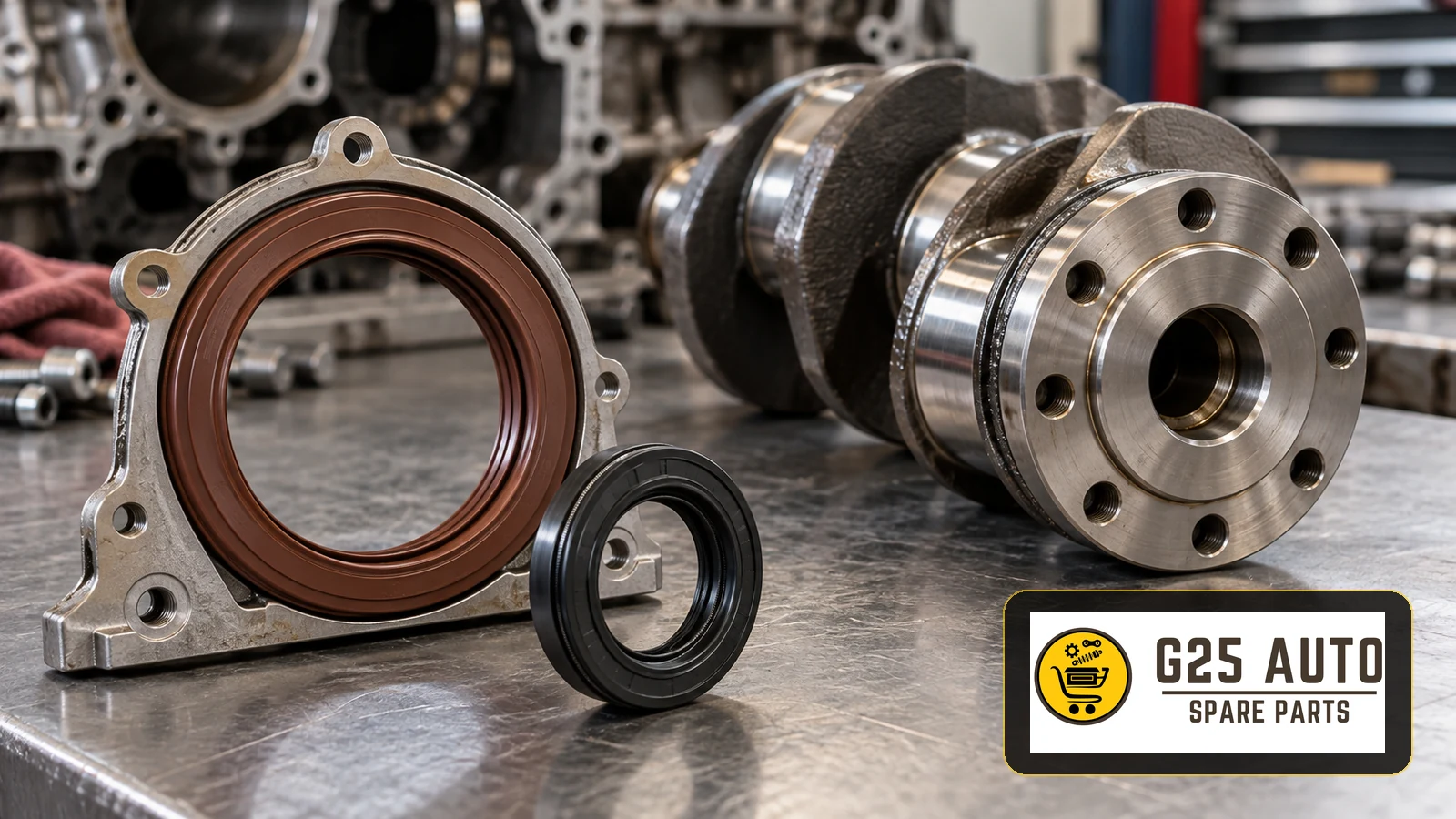
The crankshaft oil seal closes the gap around the crankshaft where it passes through the engine housing, helping prevent engine oil from escaping. This sealing component works around a rapidly rotating shaft and may require replacement as it wears or becomes damaged.
What Is a Crankshaft Oil Seal and What Does It Do?
A crankshaft oil seal is a specialised sealing element at the front or rear of the engine, where the crankshaft exits the housing. Its material depends on the design and application. It retains engine oil and helps keep external dust and contamination out.
Many engines have a front crankshaft seal and a rear crankshaft seal on the transmission side. Both help retain oil within the engine and support its proper operation; the exact arrangement depends on the engine.
Crankshaft Oil Seal Fault Symptoms
An ageing or damaged crankshaft seal can produce several warning signs. Recognising them promptly can help prevent more extensive engine problems:
Oil Leakage Under the Engine
A noticeable sign is oil dripping from the front or rear of the engine. Oil marks where the vehicle has been parked may indicate a leak, but do not identify the seal as its source. Professional inspection is necessary to locate the origin.
An Unexpected Drop in Engine Oil Level
Even without an obvious leak, an oil level falling faster than usual may suggest a crankshaft seal problem or another cause of oil loss. Regular level checks help identify the problem early.
Clutch Slip
If the rear crankshaft seal leaks, oil may contaminate the clutch disc where the arrangement allows this. Possible consequences include clutch slip, difficulty changing gear and a burning smell.
An Oil Smell Around the Engine
Leaking engine oil can produce a burning smell when it contacts hot engine components. Arrange an inspection if this occurs, particularly after the engine has warmed up.
How Is the Fault Confirmed?
These symptoms may point towards a crankshaft seal problem, but professional assessment is essential for a confirmed diagnosis. The engine contains many gaskets and seals, and locating the exact leak requires technical knowledge and experience.
A workshop diagnosis may include the following steps:
- A detailed visual inspection of the engine
- Locating the leak after suitable cleaning of the affected area
- Removing the engine undertray where necessary
- Direct inspection of the crankshaft seal where accessible
- Checking for associated damage
Having a professional workshop identify the actual fault before ordering replacement parts can avoid unnecessary work and expense.
Original and Aftermarket Crankshaft Seals Compared
| Feature | Original Part | Aftermarket Part |
|---|---|---|
| Manufacturer | Vehicle manufacturer or original supply channel | Alternative manufacturer; verify traceability |
| Quality requirements | Check the vehicle manufacturer’s specification | Check documented specifications for the application |
| Compatibility | Verify the exact vehicle application | Verify references and the exact vehicle application |
| Cost | Obtain a current quotation | Compare current quotations after technical checks |
| Availability | Confirm with the supplier | Confirm with the supplier |
| Warranty | Check applicable product and supplier terms | Check applicable product and supplier terms |
How to Select the Correct Crankshaft Oil Seal
Choose a seal verified for the vehicle’s specifications rather than ordering a similar-looking part. An unsuitable seal may leak after installation or may not fit at all.
Verification Using Original and Part References
The original part number provides a reference for identifying original and aftermarket options. Consult the vehicle manufacturer’s parts catalogue or markings on the existing seal where available. Searching by the reference can identify candidate parts, but the application and specifications still need checking before purchase.
Checking the Vehicle Identification Number
The vehicle identification number, or VIN, identifies the vehicle and supports catalogue searches against its production details. Parts may differ between years and versions of the same model, making this check important. A VIN lookup supports selection rather than guaranteeing compatibility by itself.
Engine Code and Type
The engine code identifies the specific engine version. A single vehicle model may have several engine options, so verify compatibility against the actual engine. Depending on the vehicle, the code may be available in documentation, on an engine label or in service records.
Production Date and Model Year
Manufacturers may introduce technical changes during a model year. The exact production date can therefore affect part selection, especially for vehicles built around a model transition.
Crankshaft Oil Seal Replacement Checklist
Points to check when replacing a crankshaft oil seal include:
- Part compatibility: Verify the application using the original reference, VIN and engine details as appropriate
- Seal quality: Choose a traceable product with documented suitability; price alone does not establish quality
- Kit completeness: Check that all components specified for the seal kit are present
- Workshop expertise: Rear seal access may require substantial dismantling, including transmission removal on some vehicles; use an experienced workshop
- Oil servicing: Assess whether an engine oil change is required by the repair procedure or maintenance schedule
- Additional checks: Inspect the crankshaft sealing surface and, where relevant, the clutch and flywheel
- Installation: Correct orientation and even installation in accordance with the specified procedure are essential
- Initial operation: Check for leakage after replacement according to the service procedure
What to Consider When Choosing an Aftermarket Seal
An aftermarket part may be an appropriate option, but both suitability and the commercial terms need checking. Consider the following criteria:
Manufacturer Reliability
Assess the manufacturer’s track record, product traceability and application documentation. A familiar brand name alone does not establish the suitability or quality of a particular crankshaft seal.
Material Quality
Crankshaft seals operate under demanding temperature and friction conditions. The material and construction must suit the specific application. Unsuitable materials can harden, crack or lose sealing performance; avoid judging material quality solely by appearance or price.
Certificates and Standards
Relevant certificates and approvals may support an assessment of manufacturing controls. Check their scope and relevance to the product. General ISO certification or broad quality claims alone do not establish that a seal is suitable for a particular engine.
Ways to Support Crankshaft Seal Service Life
Maintenance and operating habits that may help preserve seal condition include:
- Change engine oil at the specified intervals
- Use oil meeting the engine manufacturer’s requirements
- Avoid exceeding the engine’s permitted operating range
- Avoid sudden high engine speeds when the engine is cold
- Check the engine oil level regularly
- Keep the engine area reasonably clean using appropriate methods
- Keep up with scheduled vehicle servicing
Frequently Asked Questions
When Should a Crankshaft Oil Seal Be Replaced?
Replacement depends on its condition, confirmed faults and any applicable manufacturer guidance rather than a universal mileage interval. Wear rates and service life vary between vehicles and operating conditions.
How Long Does Replacement Take?
The time depends on the vehicle and access requirements. Front seals may be easier to reach, while rear seal replacement can require extensive dismantling, such as transmission removal. Obtain an estimate for the specific vehicle.
Can the Vehicle Be Driven After a Leak Is Noticed?
Arrange a prompt professional assessment rather than assuming that a small leak is safe to drive with. Monitor the oil level as directed. Significant oil loss can cause engine damage, and whether the vehicle can be moved safely depends on the severity and circumstances.
Is Only the Seal Replaced, or Are Other Parts Needed?
The seal may be the only component requiring replacement. However, a worn crankshaft sealing surface, an oil-contaminated clutch disc or a damaged flywheel may require additional work. Decide after a detailed inspection.
Does an Aftermarket Seal Affect the Warranty?
Warranty implications depend on the applicable vehicle, repair and supplier terms. Confirm those terms before choosing parts for a warranty repair. For other repairs, verified suitability and proper installation remain essential.
Selecting Crankshaft Seals for G25Auto B2B Procurement
Choosing the correct crankshaft seal matters for engine condition and repair costs. Compare original and aftermarket options using verified applications and documented product information.
Use VIN, original references and vehicle details when requesting parts information. Detailed specifications and compatibility checks can help reduce ordering errors; confirm the actual product and supplier terms before ordering.
Conclusion
The crankshaft seal is an important engine sealing component, and a fault can have serious consequences. Do not ignore oil beneath the engine, falling oil levels or a burning smell. These symptoms do not necessarily identify the crankshaft seal as the cause, so professional diagnosis is essential.
Whether selecting an original or aftermarket part, verify the application using the original reference, VIN and engine details. A suitable aftermarket seal may be an option where its specifications and manufacturing quality are documented; equivalent performance or savings should not be assumed.
Crankshaft seal replacement, particularly at the rear, can involve substantial work and should be performed by experienced personnel. Consider labour as well as part suitability when planning the repair. Regular maintenance and appropriate operation can help support seal condition.
For a suspected crankshaft seal fault, combine an accurate diagnosis, a verified replacement part and competent installation rather than rushing to replace a component based on symptoms alone.