
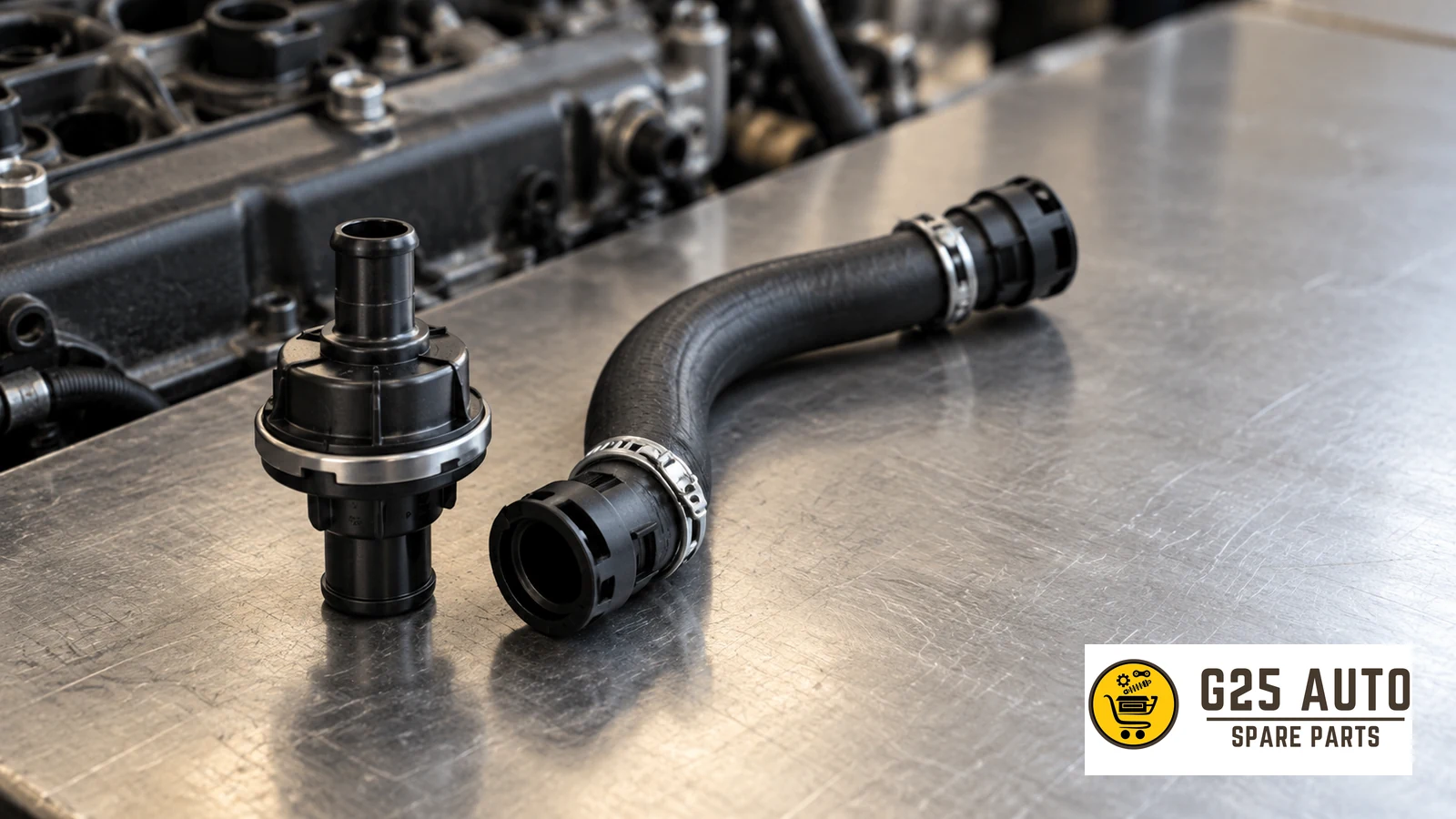
The crankcase ventilation valve (PCV valve) and PCV hose help regulate pressure inside the engine and control emissions. This system routes gases that escape into the crankcase during combustion back into the intake to be burned, helping reduce emissions and maintain engine performance. If the system does not work correctly, engine performance may deteriorate, oil consumption may increase and various fault symptoms may appear.
What Is Crankcase Ventilation and How Does It Work?
The crankcase ventilation system allows gases leaking from the combustion chambers into the crankcase to be burned again in a controlled way. If ventilation is restricted, excessive crankcase pressure can cause oil leaks through gaskets and seals.
The PCV (Positive Crankcase Ventilation) valve is a central component of this system. It regulates the flow of crankcase gases into the intake according to engine operating conditions and system design. Flow should not be assumed to follow engine speed alone. The PCV hose provides the passage between the valve and the intake connection.
Main System Components
A crankcase ventilation system typically includes:
- A PCV valve or pressure-regulating valve, depending on design
- A PCV hose connecting the valve to the intake
- A breather hose between the crankcase and the air intake circuit
- An oil separator on some engines
- Connectors and clamps
Fault Symptoms: How Can You Recognise a Problem?
Crankcase ventilation problems can show up in several ways. Recognising these symptoms early can help prevent further damage, although they may also have other causes:
General Fault Symptoms
- Uneven idling and vibration
- Low engine speed or unstable running
- Higher than normal oil consumption
- Oil leaks in the engine bay or around the dipstick tube
- Increased exhaust smoke, particularly blue smoke
- An illuminated engine warning light
- Reduced acceleration performance
- Increased fuel consumption
- Oil leaks or deposits around hoses
- Unusual oil deposits around the valve cover or elsewhere on the engine
Symptoms Associated with PCV Hose Faults
- Visible cracks or splits in the hose
- Hardening and loss of flexibility
- Loose connections or air leaks
- Excessive oil accumulation inside the hose
- A whistling sound from the hose area while the engine is running
Diagnostic Methods
The symptoms above suggest a possible system fault, but professional checks are needed to establish the cause. The diagnostic process includes the following:
Visual Inspection
Start by visually inspecting all hoses and the PCV valve. Do the hoses show cracks, splits or hardening? Are the connections secure? Are the clamps correctly positioned and fastened?
PCV Valve Function Test
Some removable valve designs allow basic movement and airflow checks. However, a rattling sound or a simple directional airflow check is not a reliable universal test. Use the procedure specified for the particular valve rather than applying the same test to every design.
Vacuum Test
Workshops use suitable pressure or vacuum measuring equipment to assess the system. Readings outside the vehicle manufacturer’s specified range may indicate a restriction or leak in the PCV system.
Emissions Testing and OBD Scanning
The engine control unit (ECU) may store fault codes associated with a PCV problem or its effects. An OBD scan can provide diagnostic clues, but not every fault generates a code, and a code alone does not identify the failed component.
Professional Workshop Inspection
For a confirmed diagnosis, consult an authorised repairer or an experienced automotive technician. Appropriate equipment helps identify carbon deposits, valve restrictions and air leaks.
Choosing Parts: Genuine or Aftermarket?
When selecting replacement parts, workshops and buyers often compare genuine and aftermarket options. Both have advantages and points that require attention:
Genuine Parts (OEM)
Advantages:
- Supplied to the vehicle manufacturer’s specification for the listed application
- A defined application that still requires part-reference verification
- Warranty terms that can be checked with the supplier
- A service-life expectation linked to the application and operating conditions
Points to Consider:
- Purchase cost may be higher
- Supply time depends on the particular part and supplier
- Pricing may include a brand premium
Aftermarket Parts
Advantages:
- Potentially more economical options
- A choice of suppliers, subject to actual availability
- Products whose documented specifications can be compared with the application requirements
- Alternative versions may be offered, but their suitability must be verified
Points to Consider:
- Quality varies, making supplier selection important
- Compatibility must always be checked
- A low price alone does not establish durability or suitability
Checklist for Selecting the Correct Part
Check the following before ordering replacement parts:
- Identify the vehicle’s relevant OEM part reference using reliable vehicle documentation or a repairer
- Have the vehicle identification number (VIN) available
- Confirm the engine code from reliable vehicle records or identification markings
- Record the production year and month where available
- Check the markings on the existing part when it can be accessed safely
- Review the supplier’s return and warranty terms
- Compare the part image and technical specifications with the existing component
- Ask whether additional items such as clamps or seals are required for installation
- Buy from a reliable supplier
Why Is OEM or Part-Reference Verification Critical?
For automotive parts, a statement that a component fits the same vehicle model is not always sufficient. Vehicles of the same model and year range may use different parts because of engine variants, equipment levels or production revisions.
Verification Using the VIN
The VIN identifies the vehicle and supports application checking through suitable vehicle records or a parts catalogue. Depending on the information available, this can help check:
- Production year and month
- Engine and transmission variant
- Equipment specification
- Relevant production revisions
Checking the Engine Code
The same vehicle model may have different engine options, each with a different PCV system. The engine code helps identify the specific engine variant.
Production-Date Differences
Vehicle manufacturers can introduce design changes during a model year. Vehicles of the same model produced only a short time apart may therefore use different parts. The actual production date can be important.
Genuine and Aftermarket Parts Compared
| Feature | Genuine Part (OEM) | Quality Aftermarket Part |
|---|---|---|
| Compatibility | Verify the correct application and reference | Verify application, reference and specifications |
| Quality Standard | Vehicle manufacturer’s specification | Depends on the brand and manufacturer |
| Price | May be higher | More economical options may be available |
| Supply Time | Confirm with the supplier | Confirm with the supplier |
| Warranty | Check the applicable terms | Check the applicable supplier terms |
| Choice | Application-specific catalogue options | Different brands and specifications may be offered |
| Availability | Confirm through the relevant supply channel | Confirm with the chosen supplier |
Replacing the PCV Hose and Valve
The skill and access required to replace these components vary by vehicle. Some applications require professional assistance because of restricted access or the design of the assembly.
General Replacement Steps
These steps are general guidance. Consult the vehicle-specific service procedure or obtain professional support before beginning.
- Ensure that the engine is cool
- Photograph the existing hose routing and valve position
- Release the clamps or connectors as specified
- Carefully remove the old hose and/or valve
- Clean the connection points using the specified method
- Install the new parts in the correct orientation
- Secure the clamps or connectors correctly
- Check all connections
- Start the engine and check for leaks using the appropriate procedure
Checks After Installation
- Are there any air leaks at the hose connections while the engine is running?
- Are there unusual noises or vibrations?
- Is the idle stable?
- Is the engine warning light illuminated?
Maintenance and Preventive Measures
The PCV system is often overlooked during maintenance. Regular inspection and appropriate servicing can help reduce the risk of costly faults:
- Inspect the PCV valve according to the vehicle manufacturer’s maintenance guidance
- Visually inspect hoses during engine servicing
- Replace components at the intervals or under the conditions specified by the manufacturer
- Use engine oil meeting the vehicle manufacturer’s specification to help limit deposits
- Observe the specified oil-change intervals
- With the engine cool and stopped, check accessible hoses for deterioration using the appropriate inspection method
Reliable Parts Sourcing
Choosing a reliable supplier matters as much as identifying the correct component. Look for a supplier that:
- Provides detailed application information
- Offers traceable cross-references to OEM part numbers
- Provides a relevant product range
- States clear return and warranty terms
- Can provide technical support
For G25Auto B2B enquiries serving Europe and the Balkans, provide the relevant vehicle details, part references and required specifications. Confirm application, supply and commercial terms for the particular order.
Frequently Asked Questions
How Often Should a PCV Valve Be Replaced?
Replacement requirements vary by engine and valve design. Follow the vehicle manufacturer’s guidance and investigate fault symptoms rather than applying a universal mileage interval or assuming that a valve will last for the life of the vehicle.
Can a Vehicle Be Used Briefly with a Cracked PCV Hose?
A cracked hose can admit unmetered air, affect engine operation and contribute to further problems. Have the fault assessed and the hose replaced promptly rather than assuming continued use is harmless.
Can a Crankcase Ventilation Fault Damage the Engine?
If left unresolved, a system fault can contribute to oil leaks, seal damage, deposits and increased wear. The outcome depends on the fault and the engine’s condition.
Can an Aftermarket PCV Valve Work as Well as a Genuine Part?
A suitable aftermarket part may meet the requirements of the application, but this must be established from its specifications and application information. Correct selection and a reliable supplier are essential; equivalence should not be assumed from the product description alone.
How Can a Blocked PCV Valve Be Cleaned?
Some designs may be serviceable, while others require replacement. Follow the manufacturer’s instructions before attempting cleaning, including any permitted cleaning product. Removing deposits does not guarantee restored function.
Can a PCV System Fault Affect Fuel Consumption?
Yes. A fault can disturb the air-fuel mixture, potentially increasing fuel consumption and reducing engine performance.
Conclusion
The crankcase ventilation valve and PCV hose are important for emissions control and efficient engine operation. Although relatively small components, they help protect engine condition and maintain performance.
Recognising faults early and addressing them promptly helps control repair costs and protect the vehicle. Whether genuine or aftermarket parts are chosen, checking compatibility against the correct part references remains essential.
The VIN, engine code and production date are among the key details for application verification. Ordering without the relevant information increases the risk of unsuitable parts and wasted time and money.
Supplier selection also matters. Look for clear application support, return terms and access to appropriate technical advice.
Regular maintenance and inspection help keep the PCV system functioning correctly and reduce the risk of more serious faults. Correct engine oil, suitable change intervals and general engine maintenance all contribute to system condition.
Although crankcase ventilation may appear simple, it plays an important role in overall vehicle health. Giving it appropriate attention supports reliable and economical operation over time.