
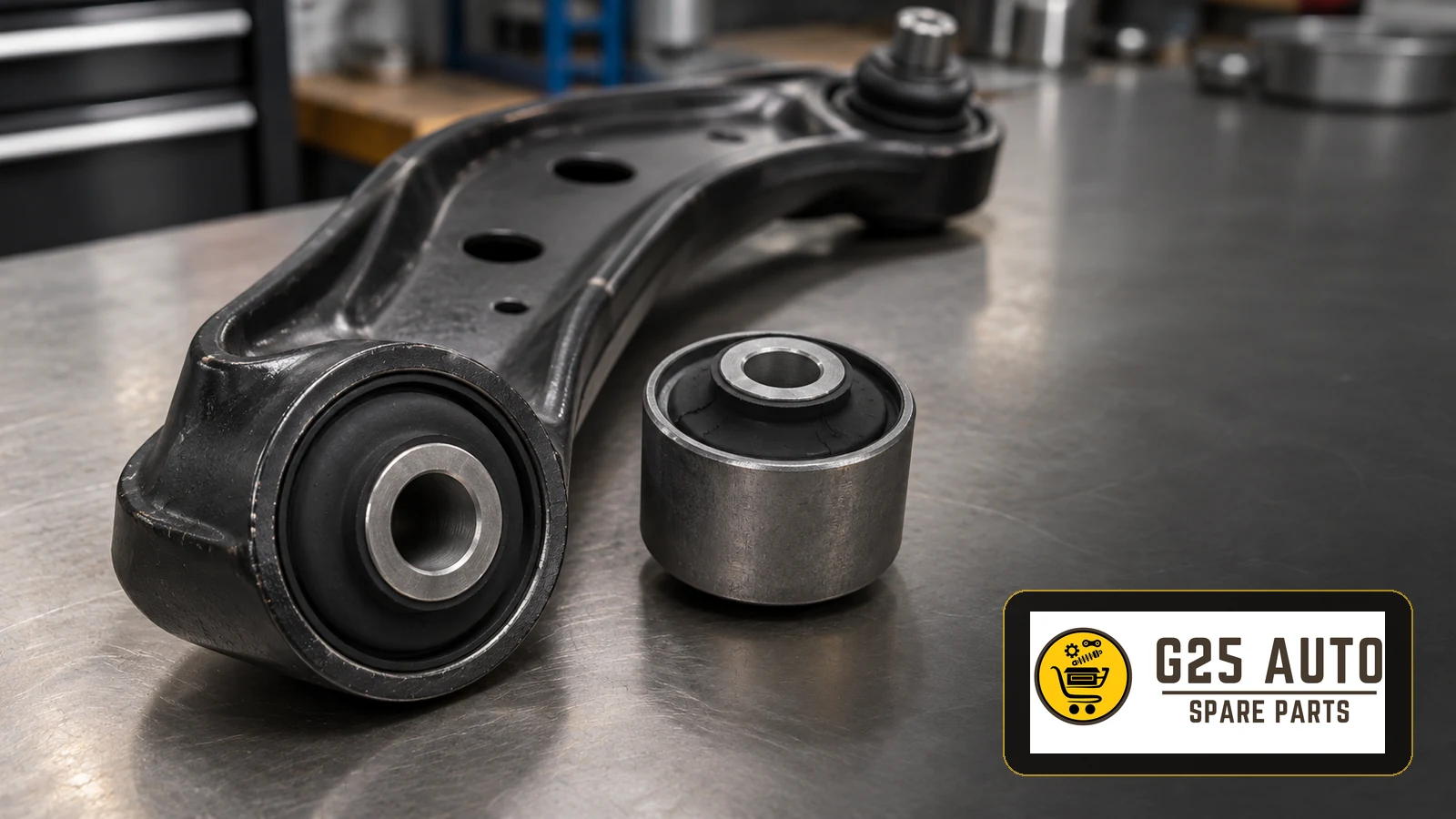
A control arm bushing is a flexible rubber-and-metal joint that connects a lower suspension control arm to the vehicle’s chassis or subframe. It lets the arm move as the suspension travels while helping to damp road vibration and maintain steering geometry.
What Is a Control Arm Bushing and What Does It Do?
A common design uses an inner metal sleeve and an outer housing with rubber or polyurethane between them. This construction provides a firm mounting point while allowing controlled movement and absorbing vibration.
- Connects the lower control arm to the chassis or subframe.
- Allows the suspension to move through its travel.
- Helps limit the road vibration transmitted into the cabin.
- Helps maintain wheel alignment and steering geometry as loads change.
- Contributes to the balance between ride comfort and handling.
Symptoms of a Worn Control Arm Bushing
Wear can develop gradually. The symptoms may become more apparent over time or when the suspension is loaded.
What You May Notice While Driving
- Less predictable handling through corners.
- Vibration or shaking at the steering wheel.
- A tendency to pull to one side on a straight road.
- A harsher response over speed bumps or potholes.
- Pulling under braking or a tug at the wheel under acceleration.
What You May Hear or See
- Clunks from the front suspension.
- Creaking or cracking sounds as you turn the steering wheel.
- Uneven tyre wear.
- Excessive movement at the control arm mount during inspection.
- Split or torn rubber around the bushing.
Tie rod ends, ball joints, dampers and other suspension parts can produce similar symptoms. A workshop can inspect the suspension on a lift, check movement at the control arm and measure wheel alignment if needed.
When Should a Control Arm Bushing Be Replaced?
Wear depends on road conditions, vehicle loading and use. If an inspection confirms excessive play or damaged rubber, replacement may be needed. Persistent steering symptoms, alignment that cannot be set or maintained, suspension damage after a collision and unusual tyre wear are reasons to have the control arm and surrounding components inspected.
Original Equipment and Aftermarket Control Arm Bushings
| What to check | Original equipment | Aftermarket |
|---|---|---|
| Vehicle fitment | Confirm the reference for the exact suspension variant. | Confirm the catalogue application and cross-reference for that variant. |
| Construction and quality | Check the vehicle manufacturer’s part specification. | Check the component manufacturer’s specification. |
| Warranty and supply | Confirm the terms and availability with the seller. | Confirm the terms and availability with the seller. |
Choosing a Control Arm Bushing
Verify the VIN and Part Reference
Vehicles sold under the same model name can use different bushings depending on when they were built and which suspension package they have. Check the following details before ordering:
- Vehicle identification number (VIN). Use it to identify the vehicle in the parts catalogue.
- Original equipment part reference. Record the marking on the old part if available and confirm it against the catalogue.
- Engine code and production date. Check these details when the catalogue shows a variant or production split.
- Trim and suspension package. Confirm whether the car has standard, comfort or sport suspension where the catalogue distinguishes them.
Material Quality
The elastomer’s composition and hardness affect how the bushing flexes and damps vibration. Check the manufacturer’s specification for the vehicle application. Cracking, hardening or softening can affect how an elastomeric bushing works.
Manufacturer Information
Look for a manufacturer that provides clear application information, product documentation and warranty terms.
What to Check When Buying an Aftermarket Bushing
Aftermarket suppliers may offer a choice of manufacturers for the same application. Compare the documented fitment and construction with the vehicle’s requirements before selecting one.
- Review any product certifications or test documentation the manufacturer provides.
- Check the seller’s reliability and the specific warranty and return terms.
- After installation, follow up with the workshop if the original symptoms persist.
Control Arm Bushing Replacement Checklist
- Confirm fitment using the VIN and record the old part reference where available.
- Inspect both the left and right bushings.
- Check the ball joints, tie rod ends and dampers during the same inspection.
- Select the part using confirmed application and supplier information.
- Check the warranty and return terms.
- Choose a workshop with the appropriate equipment and service information.
- Plan a post-installation wheel alignment check and road test.
- Keep the invoice and warranty documents.
Installation and Follow-up
Professional Installation
Incorrect installation can damage the control arm or bushing and affect suspension operation. Where the design calls for a press, the workshop should use suitable tooling and seat the bushing without damaging the arm. Follow the specified orientation and position, use the vehicle manufacturer’s tightening procedure and check which fasteners need to be renewed.
After Installation
Check wheel alignment according to the vehicle’s service procedure and adjust it if required. Incorrect alignment can contribute to uneven tyre wear and poor handling. A road test helps confirm whether the reported symptoms have been resolved.
Differences Between Vehicle Applications
Passenger cars, light commercial vehicles, SUVs and four-wheel-drive vehicles may require different bushing designs. Use the catalogue for the specific vehicle and its suspension rather than selecting a bushing based on the vehicle class alone.
Maintenance and Inspection
- Ask for the bushings to be checked during routine suspension inspections.
- Avoid hitting deep potholes at speed where possible and keep vehicle loading within the manufacturer’s limits.
- Check tyre pressures regularly and pay attention to changes in wear patterns.
- Have visible tears, cracks or excessive movement assessed promptly.
Frequently Asked Questions
When should a control arm bushing be replaced?
Have visible rubber damage, excessive play, steering vibration, uneven tyre wear or suspension noise inspected. The workshop can determine whether the bushing needs replacement and whether another component is contributing to the symptoms.
Can I replace a bushing on just one side?
Have both sides inspected. The other side may have been exposed to similar use, so base the scope of replacement on its condition and the vehicle manufacturer’s guidance.
How does an aftermarket bushing differ from the original?
Fitment, construction and warranty terms vary by product. Compare the catalogue reference and documented specifications for the exact vehicle application.
How long does replacement take?
Repair time depends on the vehicle, access to the bushing and whether the workshop needs to check or adjust wheel alignment. Ask the workshop for an estimate for your vehicle.
Can a worn bushing affect driving safety?
Excessive movement at a control arm mount can affect steering and handling. Have persistent pulling, unstable handling or suspension noise inspected promptly.
Conclusion
Control arm bushings help locate the suspension while allowing it to move and damping vibration. If wear is confirmed, verify the replacement using the VIN, part reference and suspension specification. Follow the vehicle manufacturer’s installation and alignment procedures and check that the original symptoms have been resolved.