
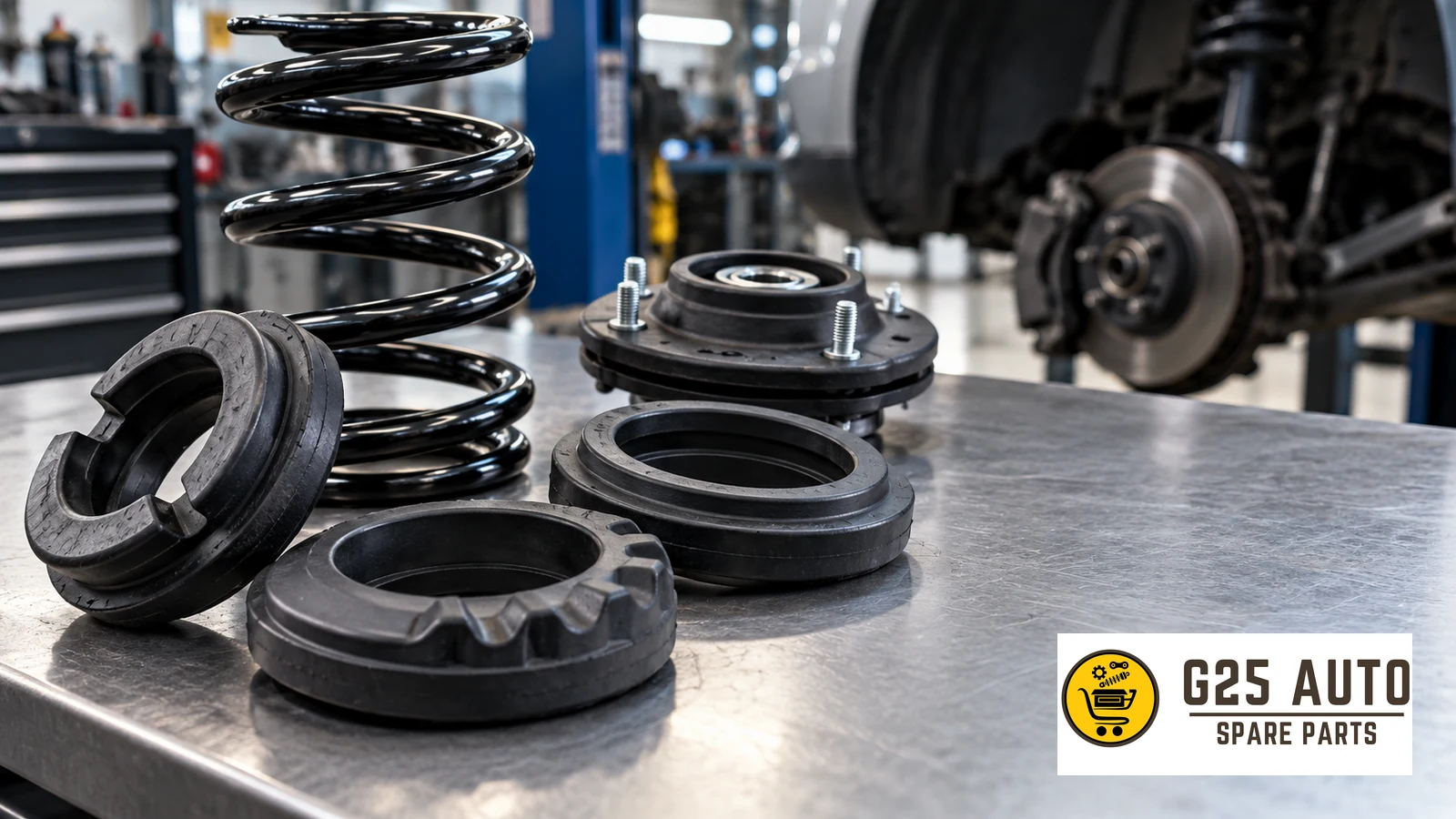
Coil spring rubber seats and upper isolators perform important roles in a vehicle’s suspension. They cushion the interfaces between the spring and its supporting structure, providing vibration isolation while transmitting suspension loads. Wear can reduce ride comfort and cause noise and vibration; associated suspension components should also be checked.
What Are Coil Spring Rubber Seats and Upper Isolators?
Coil springs support the vehicle’s weight and absorb road irregularities. Direct contact between a metal spring and the chassis or body would transmit impacts, vibration and noise into the cabin. Rubber seats and upper isolators cushion these interfaces.
A rubber spring seat sits at the lower end of the coil spring, locating it in its seat on the lower suspension arm or other supporting component. It helps hold the spring in position and absorbs small vibrations to improve comfort.
An upper isolator cushions the upper end of the spring against its supporting structure. Depending on the suspension design, it may form part of a strut top mount incorporating rubber, metal and a bearing around the damper rod. The spring isolator and top mount are not necessarily the same component; steering rotation is accommodated by the relevant bearing arrangement where fitted.
Functions and Operating Principles
These components work together within the suspension to perform the following functions:
- Vibration isolation: Reduce the transmission of vibration from road irregularities into the cabin.
- Noise reduction: Prevent direct metal-to-metal contact and reduce suspension noise.
- Spring location: Help keep the coil spring correctly positioned and prevent displacement.
- Freedom of movement: Where applicable, the upper mounting and bearing arrangement accommodates rotation during steering.
- Load distribution: Spread suspension loads across the seating area to reduce local stress.
Symptoms of Wear or Damage
A worn or damaged rubber seat or upper isolator can produce several symptoms. Because these overlap with other suspension faults, careful assessment is required:
Noise Symptoms
- Metal-to-metal rubbing noises over bumps or while cornering
- Squeaking or clicking from the upper suspension when steering
- Unusual front or rear suspension noises when moving off or braking
- Persistent creaking or rattling on rough roads
Changes in Driving Behaviour
- Excessive vibration felt through the steering wheel, particularly at low speeds
- Changes in vehicle balance or unexpected body movement when cornering
- Reduced ride comfort, with road irregularities feeling harsher
- Incomplete steering self-centring or a slight tendency to pull to one side
Visible and Physical Signs
- Cracking, tearing or fragmentation of rubber components
- Excessive hardening or softening of the rubber
- Movement or looseness in the upper mounting area
- Uneven tyre wear patterns
- A vehicle body that sits lower on one side when parked
Important: These are possible fault indicators, not a diagnosis. A professional inspection is needed to establish the cause.
Diagnosis and Inspection Methods
The following checks help assess the condition of spring rubber seats and upper isolators:
Visual Inspection
With the vehicle safely supported and the wheels removed as required, inspect the rubber components carefully. Look for cracks, tears, excessive deformation and deterioration caused by contact with oil or chemicals.
Physical Checks
A technician should check the upper mounting area for excessive play using the procedure appropriate to the suspension design. For the lower rubber seat, check the spring’s seating position and security without releasing a loaded spring.
Dynamic Testing
Using suitable workshop equipment and a safely supported vehicle, a technician can observe suspension movement and listen for abnormal noises. Steering from side to side can help assess the upper mounting and bearing movement where applicable.
Professional Diagnosis
A comprehensive suspension inspection by a qualified workshop helps establish the cause. Steering joints, ball joints, dampers and suspension arm bushes should also be checked to distinguish related faults.
Choosing Genuine and Aftermarket Parts
When replacement is necessary, choosing between genuine and aftermarket parts is an important step. Both options have advantages and points to consider.
Genuine Parts
These are parts supplied or approved by the vehicle manufacturer. Vehicle manufacturer part numbers are commonly used to identify them.
Advantages:
- Designed for specified vehicle applications, subject to correct identification
- Quality requirements defined by the vehicle manufacturer
- Warranty terms available from the relevant supplier or manufacturer
- Documented technical specifications for the intended application
Points to consider:
- Purchase costs may be higher
- Lead times should be confirmed for the specific part
- Local availability can vary
Aftermarket Parts
Independent manufacturers produce these parts as replacements for original components. The selected product’s specifications should be checked against the requirements of the application.
Advantages:
- Potentially more economical purchasing options
- A wider choice of products and suppliers, with availability to be confirmed
- Some manufacturers specialise in particular suspension components
- Competition can offer a useful balance between cost and specification
Points to consider:
- Quality varies by brand and manufacturer
- Choose established manufacturers and reliable suppliers
- Check application information carefully
- Warranty terms may differ from those of genuine parts
Verifying Part Compatibility
Correct identification is critical when selecting a spring rubber seat or upper isolator. Even within the same vehicle model, components can differ according to engine, chassis details, production year and equipment specification.
Information Required for Verification
Checklist: Before Ordering Parts
- ☐ Vehicle make, model and year
- ☐ Vehicle identification number (VIN)
- ☐ Engine code and displacement
- ☐ Production date, including the month
- ☐ Original or manufacturer part number on the existing component
- ☐ Front or rear suspension application
- ☐ Right-hand or left-hand side, where relevant
- ☐ Original suspension specification, such as standard, comfort or sport
This information helps a supplier identify the appropriate product. The VIN is an important reference for checking the vehicle specification, but the application details and part references still need to be confirmed before ordering.
Why Original Part Numbers Matter
Vehicle manufacturer part numbers identify components within the manufacturer’s catalogue. If a number is visible on the existing part, record it: this makes it easier to locate the corresponding genuine part or an aftermarket alternative.
Suppliers can check these references against cross-reference data to identify possible genuine and aftermarket options. Careful verification helps reduce ordering errors.
Genuine and Aftermarket Part Comparison
| Feature | Genuine Part | Quality Aftermarket Part |
|---|---|---|
| Compatibility | Application must be verified | Application and cross-reference must be verified |
| Quality standard | Vehicle manufacturer requirements | Varies by manufacturer |
| Price range | May be higher | May offer lower-cost options |
| Lead time | Confirm for the specific order | Confirm for the specific order |
| Warranty | Check applicable manufacturer and supplier terms | Check applicable brand and supplier terms |
| Product choice | Vehicle manufacturer catalogue options | Choice across independent manufacturers |
Installation and Replacement
Replacing spring rubber seats and upper isolators requires technical knowledge and specialist equipment. A compressed coil spring stores substantial energy, and incorrect handling can cause serious injury.
Installation Points
- Secure the coil spring with suitable professional spring-compression equipment where the procedure requires it
- Upper isolator replacement may require removal of the strut assembly
- Check orientation marks and seating positions when fitting new components
- Apply tightening torques specified by the vehicle manufacturer
- Check suspension geometry and wheel alignment after installation as required
Recommended Replacement Practice
Assess both sides when replacing a rubber seat or upper isolator. Replacement in pairs may be appropriate depending on wear, vehicle design and manufacturer guidance; uneven component condition can affect suspension behaviour.
Maintenance and Service Life
Rubber components deteriorate with time, but several measures can help limit premature wear:
- Regular inspection: Include visual checks in the vehicle’s maintenance schedule.
- Chemical protection: Avoid aggressive chemicals during engine cleaning and underbody treatment.
- Load management: Stay within the vehicle’s load limits; overloading increases stress on suspension components.
- Driving habits: Approach speed humps and potholes carefully to reduce suspension impacts.
- Complete inspection: Check dampers and related suspension parts regularly, as faults can affect other components.
G25Auto B2B Parts Enquiries
Identifying the correct replacement part matters for safe repairs and purchasing decisions. For European and Balkan B2B enquiries through G25Auto, distinguish the required genuine or aftermarket option and confirm the application.
For spring rubber seats, upper isolators and other components, provide the relevant vehicle and part information so that the requested specification can be checked. Product descriptions and application data should support the selection.
Use G25Auto as the starting point for a B2B parts enquiry. Include the vehicle details and existing part references when asking about suitable options.
Frequently Asked Questions
How long does upper spring isolator replacement take?
Workshop time depends on the suspension design, component condition and access. The work may include strut removal, spring compression and reassembly, so the workshop should assess the specific vehicle before estimating the time required.
Can only one side be replaced?
This may be possible, but both sides should be assessed and manufacturer guidance followed. If one side has failed, the opposite side may have similar wear; differing component condition can affect suspension behaviour.
Can these faults affect tyre wear?
Yes, where mounting wear affects suspension geometry, alignment can change and contribute to uneven tyre wear. Inner- or outer-edge wear can be a sign of suspension or alignment problems and requires diagnosis.
What is the typical service life of the rubber parts?
Service life varies with use, road conditions and maintenance. Aggressive driving, overloading and poor road surfaces can accelerate wear; a single mileage figure is not a reliable replacement rule for every vehicle.
Can the vehicle be driven with a fault?
Have a suspected fault assessed promptly before further use. As damage progresses, handling can deteriorate and related suspension components may be affected. The appropriate action depends on the condition found during inspection.
Are special isolators available for performance applications?
Some manufacturers offer firmer or adjustable performance mounting solutions. These are application-specific products and are not automatically appropriate or necessary for a standard road vehicle.
Conclusion
Although spring rubber seats and upper isolators are relatively small components, they contribute to ride comfort and correct suspension operation. Keeping them in suitable condition also helps avoid unnecessary stress on related suspension and steering components.
Recognising symptoms early and arranging timely repairs matters for both safety and running costs. Changes in noise, vibration or handling should be assessed by a qualified workshop.
Both genuine and aftermarket parts can be suitable when correctly selected. Use reliable suppliers, check the application against vehicle details and original part references, and assess product quality. For aftermarket options, review the manufacturer’s credentials and applicable warranty terms.
Vehicle maintenance should be considered as a whole. Regular inspection of spring rubber seats and upper isolators forms part of overall suspension care. Professional diagnosis, correct part selection and careful use support reliable suspension operation.