
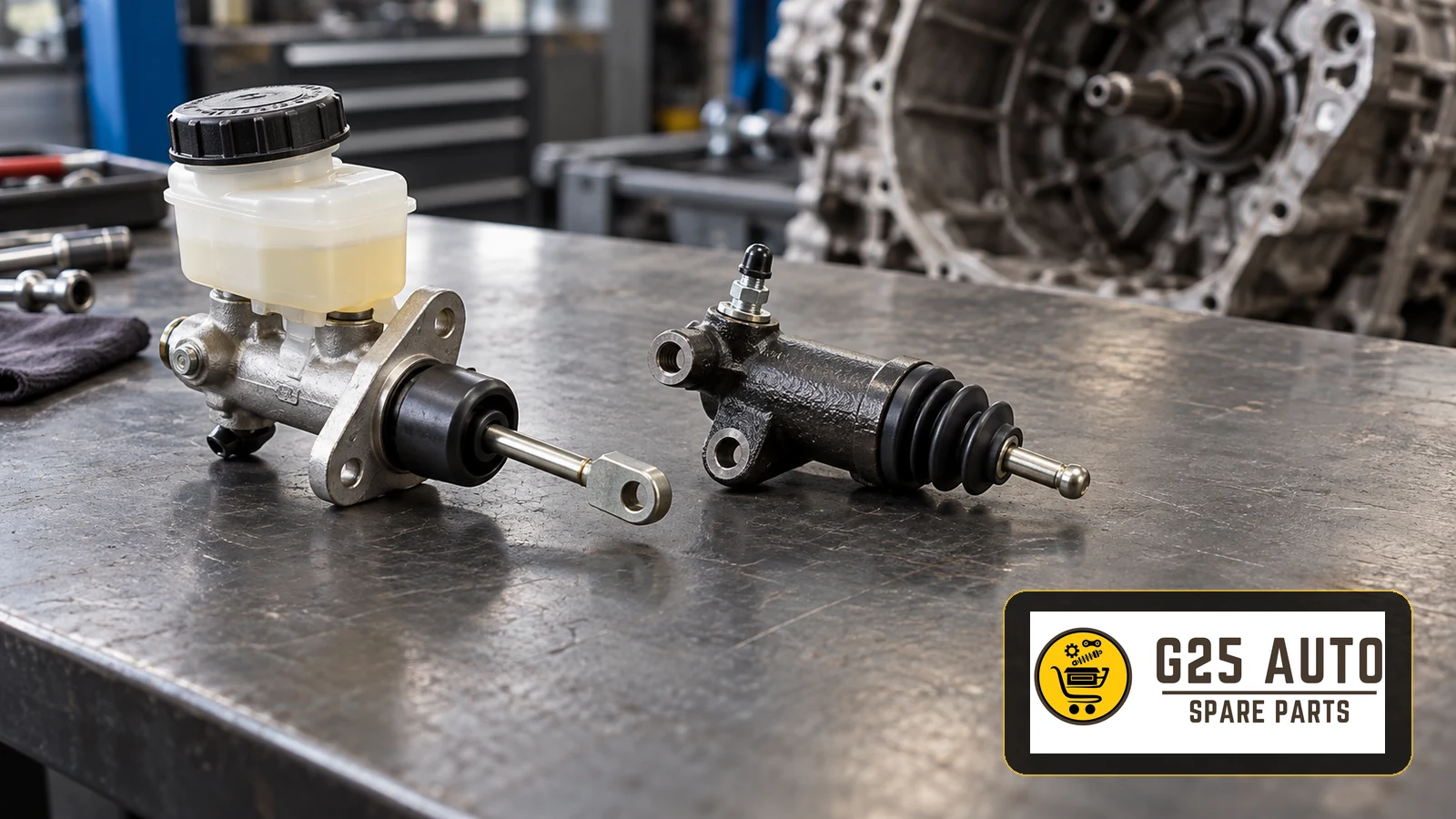
A clutch master cylinder turns pedal input into hydraulic pressure; the slave cylinder uses that pressure to operate the clutch release mechanism. To choose replacements, first identify the installed system and establish the repair scope through diagnosis. For European and Balkan workshops, ordering both cylinders by vehicle name alone is insufficient: the enquiry should identify the exact application, slave-cylinder arrangement and proposed parts.
Understand which component the workshop is requesting
Master cylinder: the pedal side
The master cylinder belongs to the hydraulic path between the pedal and the release system. Reservoir arrangements vary, so describe the installed fluid supply and connections in the enquiry. ZF’s hydraulic actuation guide explains the master/slave principle and the different component layouts.
Slave cylinder: external or concentric
A conventional slave cylinder operates a release lever. A concentric slave cylinder, commonly called a CSC, combines the cylinder and release bearing in one assembly mounted on the transmission. ZF illustrates these differences in its clutch actuation overview. Establish which arrangement is fitted before comparing offers.
Use precise descriptions on the job card and purchase order. “Clutch cylinder” leaves the component unspecified. For an international enquiry, retain the English component name, manufacturer and article reference alongside the workshop’s local terminology. Treat photographs as supporting identification material, then obtain documented application confirmation for the offered item.
Separate the symptom from the diagnosis
A change in pedal feel, poor pedal return or difficult gear selection deserves investigation; it does not select a replacement cylinder. ZF identifies trapped air as one possible cause of altered pedal travel and disengagement difficulty. Its separate disengagement fault guide also discusses release-system faults, pilot-bearing problems and installation errors.
Ask the technician to record the complaint, observed fluid loss, inspected connections and the outcome of the applicable diagnostic checks. Keep a suspected component clearly marked as provisional. If a recent repair preceded the complaint, include that history instead of assuming that another cylinder must now be ordered.
For a distributor, a useful enquiry distinguishes three things: what the driver reported, what the workshop confirmed and what remains unresolved. That structure helps the parts desk request missing evidence before converting a diagnostic possibility into a firm order. Agree who will provide the outstanding information and retain it with the quotation.
Prepare one application record for both cylinders
Collect the VIN, production details, engine and transmission identification where available, and steering configuration. Add legible markings from the existing components and photographs showing their mountings and hydraulic connections. Use those details to request the current catalogue application for each proposed article.
Check the master and slave as separate order lines. Ask the supplier to confirm the mounting, connections and documented specifications for each, including cylinder diameter where relevant. TRW’s cylinder installation instructions specifically draw attention to diameter during replacement. Resolve discrepancies before dispatch rather than relying on visual similarity.
If a supplier proposes a different reference, request the application evidence again and record the accepted substitution. Compare genuine and aftermarket offers against the same information. A brand description or a general equivalence claim should not stand in for the exact article reference, installation documentation and confirmed package contents.
Agree whether the repair includes one cylinder or both
TRW’s cited instructions recommend replacing master and slave cylinders as a pair. Check that recommendation against the actual products and applicable vehicle repair information when agreeing the job. Record the workshop’s authorised scope explicitly; the recommendation does not mean that a boxed master cylinder includes a slave cylinder.
For a CSC job, ask the workshop to identify the access work and any associated inspection or replacement decisions from the relevant instructions. Request a vehicle-specific estimate. Do not convert the broad distinction between external and concentric systems into a fixed labour allowance or a guaranteed repair cost.
Keep the commercial agreement alongside the technical record. Obtain actual prices, availability, supply terms and applicable warranty documentation from the supplier. List separately any seals, retainers, connection pieces or other items required for the agreed repair, and establish which are included in each package.
Plan installation and completion checks
Assign the repair to a trained technician using the vehicle and component instructions. Confirm the specified fluid, bleeding equipment and procedure in advance. ZF stresses cleanliness and approved fluid and equipment, followed by a function check including independent pedal return. Use application-specific instructions for operating details; this guide sets no universal fluid grade, pressure, torque or bleeding sequence.
Before closing the job, retain the fitted references and the workshop’s completion record. Where the parts desk and workshop operate in different countries, use the same references in the order confirmation and service record so a later enquiry can be traced without translating an ambiguous component description.
Workshop and purchasing checklist
- Separate reported symptoms from confirmed diagnostic findings.
- Identify the master cylinder and the installed slave-cylinder arrangement.
- Attach vehicle identifiers, markings and useful photographs.
- Confirm the application and specifications of each offered article.
- Resolve substitutions before authorising dispatch.
- Agree one-cylinder or paired replacement scope and package contents.
- Prepare the applicable installation and bleeding instructions.
- Record final leak, fluid-level, pedal and functional checks.
Frequently asked questions
Can pedal feel identify which cylinder has failed?
It provides a complaint to investigate. Air and other release-system faults can produce related symptoms, so obtain the technician’s findings before choosing the repair parts.
Are an external slave cylinder and a CSC the same item?
They use different release arrangements. Identify the installed system and confirm the exact application; the generic term “slave cylinder” is insufficient for an order.
Should every quotation include both cylinders?
Discuss paired replacement using the relevant product and vehicle instructions. Show the agreed components individually so the workshop can approve the scope and see what each package contains.
Does this guide confirm a part’s fitment or availability?
No. Obtain confirmation for the exact offered reference and the identified vehicle, together with the supplier’s current commercial quotation.