
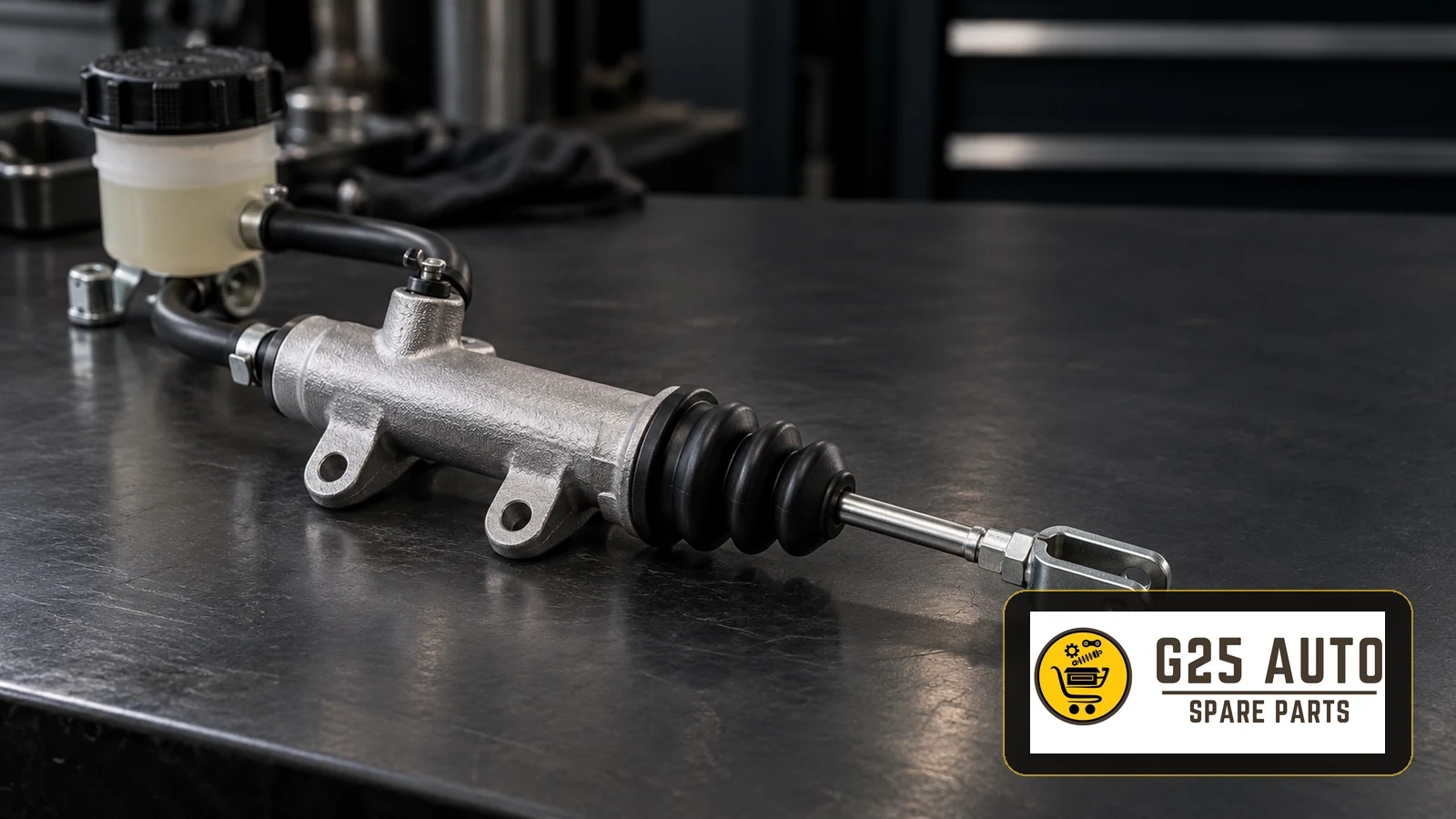
A clutch master cylinder converts clutch pedal movement into hydraulic pressure for the release system. A soft pedal, altered travel or difficulty disengaging the clutch calls for a complete system diagnosis before ordering a replacement: these symptoms alone do not identify the master cylinder as the failed part. For European and Balkan workshops, the practical starting point is a documented fault assessment followed by application verification, installation planning and recorded final checks.
Understand the component before naming the fault
The master cylinder is the pedal-operated part of a hydraulic clutch system. It supplies a slave cylinder, which acts on the release mechanism. The arrangement may use an external slave cylinder or a concentric slave cylinder, and the fluid supply arrangement also varies. ZF explains these differences in its hydraulic clutch actuation guide.
A parts enquiry should therefore identify which component the workshop actually needs. A description such as “clutch cylinder” leaves room for confusion between the master cylinder, external slave cylinder and concentric release unit. Include the component location and a photograph in the enquiry, alongside the vehicle identification details.
Separate reported symptoms from confirmed findings
Pedal feel and incomplete disengagement
ZF identifies changed pedal travel, imprecise pedal feel and disengagement difficulty as possible effects of trapped air. Record when the complaint occurs and whether hydraulic work preceded it. Avoid turning a symptom description into a confirmed master-cylinder diagnosis or promising that one replacement will resolve it.
Leak observations and the wider system
Ask the technician to document the observed condition of the master cylinder, hydraulic connections, lines, slave cylinder and pedal linkage. Distinguish a reported fluid loss from a leak location that has actually been established. Keep unresolved findings visible on the job record instead of using a parts order to close the diagnosis.
The assessment should follow the vehicle manufacturer’s diagnostic information. Record which checks were performed, their findings and any remaining uncertainty. If further investigation is required, make that the next workshop action before approving a speculative component order.
Build an application record that the supplier can verify
For a cross-border B2B order, send the VIN, production details, engine and transmission identification where available, and the vehicle’s steering configuration. Add a readable existing-part reference and photographs of the installed component and connections. Treat these as evidence for catalogue checking rather than a guarantee of fitment.
Request a documented application match for the proposed article. Confirm the mounting arrangement, pedal connection, hydraulic interfaces and any relevant dimensional criteria against the applicable catalogue and service information. Appearance alone is insufficient grounds for approving a substitute. Where information is missing, keep the quotation conditional until the workshop and supplier resolve it.
Part references can also change. The ZF catalogue shows superseded clutch master-cylinder entries; a replacement reference still needs its own application check. Keep the original enquiry, proposed reference and substitution decision together so the receiving workshop can follow the selection.
Agree the repair scope before installation
Check the applicable instructions when deciding whether the repair involves one cylinder or additional hydraulic components. TRW’s master and slave cylinder installation publication recommends replacing them as a pair. Record whether that recommendation applies to the selected product and how it fits the vehicle manufacturer’s requirements; do not treat it as proof that every slave cylinder is faulty.
Have the workshop confirm the required seals, retainers, fluid and other installation items from the relevant documentation. A product photograph does not establish box contents. List separately what is supplied with the cylinder and what the workshop must obtain for the planned job.
Installation must follow the vehicle-specific procedure, including the specified fasteners, connections and checks. Keep numerical torque, adjustment and fluid requirements in the workshop’s current service information rather than substituting general values from a blog.
Workshop and purchasing checklist
- Record the complaint, diagnostic findings and unresolved questions.
- Identify the master cylinder separately from the slave or concentric release unit.
- Verify vehicle details and the actual installed configuration.
- Obtain the proposed article’s application evidence and relevant instructions.
- Confirm interfaces, supplied contents and additional installation items.
- Document the agreed replacement scope and any substitution.
- Plan the specified fluid handling and bleeding procedure.
- Record final leak, pedal-return and functional checks before handover.
Complete the job with recorded functional checks
After hydraulic component replacement, use the bleeding method prescribed for the application. ZF stresses approved equipment, correct fluid and cleanliness. Its pressure-bleeding guidance also distinguishes bleeding from the later pedal function test; do not improvise a universal pumping sequence.
TRW’s publication includes fluid-level, leak, pedal-position and functional checks after assembly. The job record should identify the procedure used and the results. If the complaint remains, reopen diagnosis before authorising another component. For a fleet operator or distant purchasing team, a clear completion record is more useful than an unsupported assurance that the repair is finished.
Frequently asked questions
Does a soft pedal prove the master cylinder has failed?
No. Trapped air can produce pedal and disengagement complaints. Establish the fault through the applicable diagnostic process.
Can a visually similar cylinder be substituted?
Approve a substitute only after its application and interface requirements have been verified and documented.
Must both hydraulic cylinders be replaced?
Check the selected product instructions and vehicle requirements. TRW’s cited publication recommends paired replacement; document the scope chosen for the actual job.
Is bleeding enough to confirm a successful repair?
No. Complete and record the required leak and functional checks, including pedal return, before releasing the vehicle.