
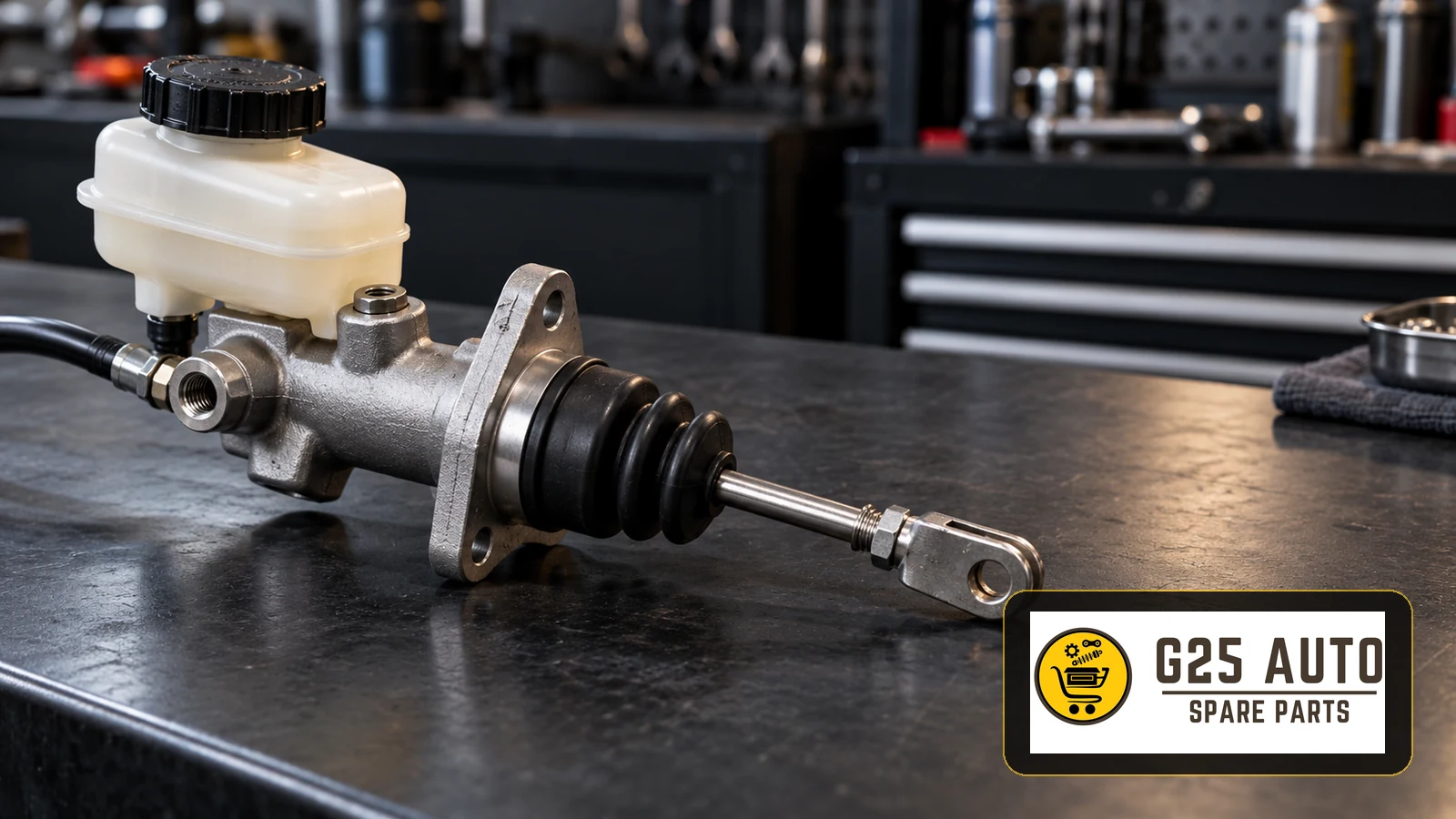
Choose a clutch master cylinder by verifying the vehicle application and the proposed part reference, after the workshop has established what needs repair. A soft pedal or difficult gear selection alone does not prove that the master cylinder has failed. For European and Balkan parts buyers, a sound order combines a documented diagnosis, current catalogue evidence, confirmed package contents and an agreed installation plan.
Start with the fault report
The master cylinder converts clutch pedal movement into hydraulic pressure. The release system also includes a slave cylinder, which may be external or concentric, and the connecting hydraulic circuit. ZF’s hydraulic clutch actuation guide explains these arrangements and identifies altered pedal travel, imprecise feel and disengagement difficulty as possible effects of trapped air.
Keep the driver’s complaint separate from the technician’s findings. Ask the workshop to identify observed leaks, the condition of connections and lines, and the results of the vehicle-specific diagnostic procedure. Record recent hydraulic repairs too. An enquiry marked “master cylinder suspected” should remain provisional until the required assessment is complete.
Build an application record before comparing brands
Identify the vehicle and installed system
Prepare the VIN, production details, engine and transmission identification where available, and steering configuration. Add clear photographs of the installed component, its markings, mounting and connections. A model name or registration year is a starting point for an enquiry, rather than sufficient evidence to authorise dispatch.
Use the existing reference to support catalogue research. Ask the supplier to resolve any discrepancy between that reference and the vehicle lookup before confirming the order. Preserve both the original information and the proposed replacement in the job record, so a later handover does not lose the reason for the selection.
Confirm the proposed article, including substitutions
Check the current catalogue application and associated restrictions for the exact article being offered. References can change: the ZF catalogue includes clutch master-cylinder entries with replacement references. A supersession should therefore be checked through the relevant current listing, rather than accepted solely because two numbers appear together in an informal cross-reference.
Request confirmation of the mounting, pedal connection, hydraulic interfaces, reservoir arrangement and any specified cylinder dimensions. TRW’s master and slave cylinder installation instructions specifically highlight cylinder diameter during replacement. Compare documented specifications; a photograph or similar external shape cannot establish the required hydraulic characteristics.
Compare genuine and aftermarket offers on evidence
Put each offer against the same application record. Ask for the manufacturer, exact article reference, application evidence, installation information and a clear list of supplied components. Avoid treating a familiar brand, packaging description or broad “equivalent” claim as the entire selection process.
Separate technical acceptance from commercial acceptance. Obtain the actual quotation, availability confirmation, stated supply terms and any applicable product warranty documentation from the supplier. Record what has been confirmed and what remains open. An article about component selection cannot establish today’s price, stock position, dispatch date or the terms applying to a particular transaction.
For a distributor supplying workshops across borders, use one agreed component description throughout the enquiry, quotation and order. Specify “clutch master cylinder” and retain the part reference even when the surrounding correspondence uses different languages. If the supplier proposes another article, request renewed application confirmation before accepting the substitution.
Agree the repair scope before the vehicle occupies a bay
Ask whether the quotation covers the cylinder alone or also the seals, retainers and other items required by the applicable repair instructions. Confirm contents explicitly instead of assuming that a product photograph represents everything in the box. Record separately any additional items approved after diagnosis.
TRW’s cited instructions recommend replacing master and slave cylinders as a pair. Check how that recommendation and the vehicle manufacturer’s repair information apply to the actual products and vehicle before agreeing scope. Do not turn it into an unconditional promise that every master-cylinder order includes a slave cylinder.
Plan installation using the applicable vehicle and component instructions. Confirm the specified fluid, equipment, connection handling and bleeding procedure. ZF stresses cleanliness, approved fluid and equipment, and a final function check including independent pedal return. Use the relevant procedure for operating details; this selection guide does not set a universal bleeding pressure, torque, fluid grade or labour time.
Workshop and purchasing checklist
- Record the complaint, confirmed findings and any unresolved diagnosis.
- Attach vehicle identifiers and photographs of the installed component.
- Verify the exact offered article against the current application information.
- Resolve reference changes and physical or specification discrepancies.
- Confirm package contents and the authorised repair scope.
- Obtain the actual commercial terms separately from technical approval.
- Prepare the installation instructions, specified fluid and required equipment.
- Document final leak, fluid-level, pedal and functional checks before release.
Frequently asked questions
Does a soft pedal mean I should order a master cylinder?
It calls for diagnosis. Trapped air can affect pedal feel and disengagement, so the complaint alone does not identify a failed component. Request the workshop’s findings before finalising the order.
Is the old part number enough to confirm a replacement?
Use it alongside the vehicle information and current application listing. Resolve any changed reference or conflicting information before dispatch, and retain the evidence supporting the selected article.
Is an aftermarket cylinder automatically interchangeable?
Assess the exact product and documented application. A general description of a brand or product range does not confirm the suitability of an individual article for the vehicle being repaired.
Can the supplier promise a standard installation time?
Request a workshop estimate for the identified vehicle and agreed scope. Access, diagnostic work and the prescribed repair procedure must be considered; a generic time allowance should not become a guaranteed completion commitment.