
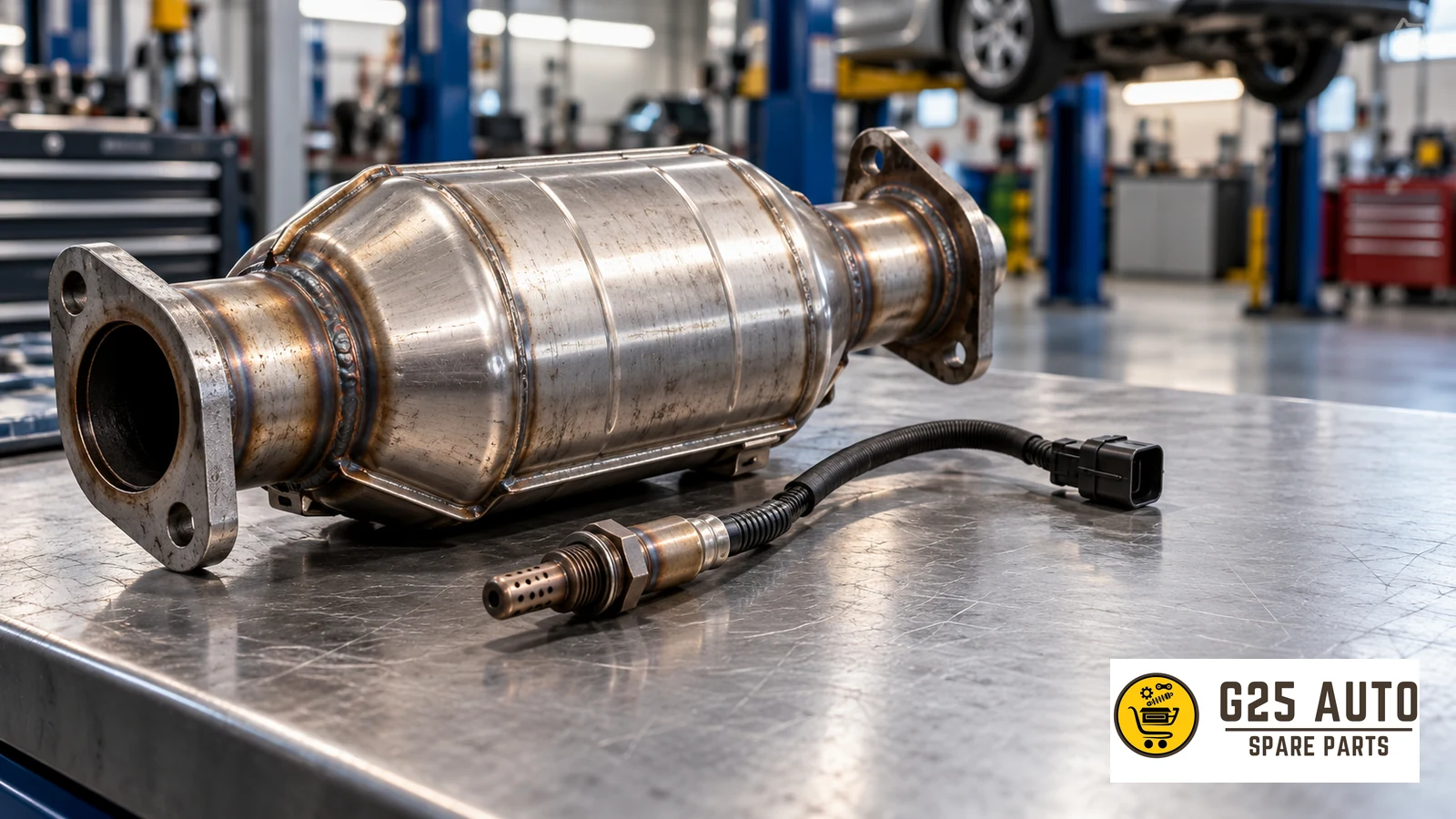
Catalytic converter faults can present as reduced engine performance, increased fuel consumption, an illuminated engine warning light and changes in exhaust noise. However, a reliable diagnosis requires professional equipment and checks specific to the vehicle.
What Is a Catalytic Converter and How Does It Work?
The catalytic converter is an important exhaust system component with a central role in emissions control. Through chemical reactions, it converts harmful engine exhaust constituents, including carbon monoxide, hydrocarbons and nitrogen oxides, into less harmful substances such as carbon dioxide, water vapour and nitrogen.
These reactions take place within a ceramic or metallic honeycomb structure coated with catalytic materials such as platinum, palladium and rhodium, depending on the converter design. The converter needs to reach a suitable operating temperature to work effectively; the relevant conditions depend on the application.
Symptoms of Catalytic Converter Problems
Converter problems can appear in several ways. Arrange an inspection if any of the following symptoms occur:
Engine Performance Symptoms
- A noticeable reduction in engine power and performance
- Loss of power when climbing hills or accelerating
- Uneven engine operation and vibration
- Unstable idling
- Difficulty starting when cold or hot
Visible and Audible Symptoms
- An illuminated engine warning light on the dashboard
- Unusual exhaust noise or rattling
- More exhaust smoke than usual
- Abnormal smells from the exhaust outlet
Fuel Consumption and Efficiency Symptoms
- Unusually high fuel consumption
- Failed emissions tests
- Unusual heat or a smell associated with overheating beneath the vehicle
Important: These symptoms can indicate other faults as well as a catalytic converter problem. A professional inspection is essential to establish the cause.
Diagnosing Catalytic Converter Faults
Symptoms provide a starting point, but confirming the fault requires a professional approach:
Professional Diagnostic Steps
1. OBD-II scan: A workshop uses diagnostic equipment to read fault codes from the vehicle’s electronic control unit (ECU). Codes such as P0420, P0421, P0430 and P0431 can indicate catalyst efficiency issues, but do not establish on their own that the converter needs replacement.
2. Emissions testing: Exhaust gas analysis helps assess the converter’s performance in conjunction with the engine’s operating condition.
3. Oxygen sensor readings: Comparing readings from sensors before and after the converter helps assess efficiency using the procedure appropriate to the vehicle.
4. Physical inspection: Check the converter for physical damage, cracks and corrosion.
5. Temperature measurements: An infrared thermometer may be used to compare inlet and outlet temperatures. Interpret the results under the specified test conditions; a simple temperature difference is not a universal pass-or-fail test.
Causes of Catalytic Converter Failure
A converter can fail for several reasons:
- Combustion problems: Unburnt fuel reaching the converter can cause overheating
- Faulty oxygen sensors: Incorrect mixture control can contribute to converter damage
- Engine oil or coolant entering the exhaust: These fluids can contaminate or obstruct the converter structure
- Physical impacts: Contact with speed humps, kerbs or road damage can harm the converter
- Unsuitable fuel: Contamination or unsuitable additives can damage the catalytic material
- Ageing and deterioration: Catalytic materials can lose effectiveness over time
Original and Aftermarket Catalytic Converters Compared
| Feature | Original Part | Aftermarket Part |
|---|---|---|
| Vehicle fitment | Check the manufacturer’s listed application | Check the product’s documented application |
| Warranty period | Confirm the applicable warranty terms | Varies by manufacturer and product |
| Supply lead time | Confirm for the specific order | Confirm for the specific order |
| Quality specifications | Check the relevant vehicle manufacturer specifications | Check product documentation and the scope of any claimed approvals |
| Cost | Request a current quotation | Compare quotations for suitable options |
| Emissions suitability | Verify the correct vehicle and emissions application | Verify application-specific emissions suitability and documentation |
What to Check When Selecting a Catalytic Converter
Correct Part Identification Checklist
- Vehicle identification number (VIN): Use the VIN to support an application check against the relevant catalogue
- OEM or original part reference: Check the reference on the existing converter
- Engine code: Different engines in the same vehicle model may require different converters
- Production date: Specifications can change during a model year
- Emissions specification: Identify the vehicle’s emissions specification and match the replacement accordingly
- Approval documentation: Check the claimed approvals and their applicability to the specific product and vehicle
- Warranty terms: Review the product’s coverage and conditions
- Installation requirements: Establish whether additional sensors, gaskets or other components are required
Why Do Part References and Fitment Checks Matter?
Catalytic converters can vary by vehicle model, engine type, production year and even production month. Converters that look similar can have different technical specifications. Consider the following:
VIN check: The VIN identifies the vehicle and supports a catalogue lookup of its relevant specification. It should be used alongside application information rather than treated as a standalone guarantee of compatibility.
OEM reference check: The original reference on the existing part is an important starting point for identifying a replacement or documented alternative. Verify the current application and any cross-reference before ordering.
Engine code: One model may be offered with several engines, each potentially requiring a different converter.
Production date: Manufacturers can introduce technical changes during a model year, so the vehicle’s actual production date matters.
Catalytic Converter Replacement and Installation
Replacing a catalytic converter requires experience and suitable equipment:
Preparation Before Installation
- Confirm that the fault actually originates in the converter
- Resolve any underlying problem responsible for the failure
- Obtain the required gaskets, studs and installation materials
- Check the condition of the oxygen sensors
Checks After Installation
- Check all joints for leaks
- Clear fault codes and carry out the prescribed road test
- Check that the engine warning light does not return during the required diagnostic checks
- Assess emissions performance with the appropriate test
What to Consider When Choosing an Aftermarket Part
When selecting an aftermarket converter, assess both its quality and its suitability for the application:
Reliable supplier: Work with an established automotive parts supplier and compare documented product specifications. For G25Auto B2B enquiries serving Europe and the Balkans, provide the relevant vehicle details and part references so that suitable options can be assessed.
Approvals and standards: Request relevant product approval documentation and check its scope. A general quality-management certificate should not be treated as proof that a converter is approved for a particular application.
Technical specifications: Ask about relevant details such as cell density, expressed in cells per square inch (cpsi), catalyst coating specifications and emissions suitability.
Manufacturer information: Assess the manufacturer’s references and automotive industry experience.
Catalytic Converter Care and Service Life
The following measures can help protect the converter:
- Maintain the engine regularly and address combustion problems promptly
- Use suitable fuel from reliable sources
- Check engine oil and coolant levels
- Have oxygen sensors checked in accordance with the vehicle’s service guidance
- Have an illuminated engine warning light investigated without delay
- Avoid unnecessarily harsh vehicle use and follow the manufacturer’s operating guidance
- Watch road conditions and avoid physical impacts to the converter
Frequently Asked Questions
How Long Does a Catalytic Converter Last?
Service life varies with the vehicle, maintenance, operating conditions and fuel quality. A converter can fail prematurely if underlying engine faults occur, so a universal mileage figure should not be used to predict replacement.
Can a Vehicle Be Driven Without a Catalytic Converter?
The engine may still run, but removing the converter compromises emissions control, can cause operating problems and may make the vehicle unsuitable for its required inspection or road-use conditions. Retain the specified emissions equipment and check the requirements applicable to the vehicle and destination market.
Can a Catalytic Converter Be Cleaned?
Whether cleaning is appropriate depends on the condition and the manufacturer’s guidance; chemical treatment should not be assumed to restore performance. Physical damage, a collapsed substrate or severe deterioration may require replacement rather than cleaning.
Will an Aftermarket Converter Pass an Emissions Test?
A suitable aftermarket converter may provide the required emissions performance, but passing a test cannot be guaranteed from the product category or an approval claim alone. Check the documented application and emissions specification, and assess the vehicle’s overall condition.
Will Replacing the Converter Turn Off the Engine Warning Light?
After replacement, clear fault codes and test the vehicle according to the diagnostic procedure. If the converter was the only cause, the warning light may remain off once the relevant checks complete. Other faults can cause it to return.
Should a Used Catalytic Converter Be Fitted?
A used converter presents uncertainty about internal deterioration and remaining efficiency. Warranty and reliability can also be difficult to establish, making an undocumented used component a poor choice.
Conclusion
The catalytic converter is important to emissions control and correct vehicle operation. Recognising symptoms early and investigating their cause can help prevent further damage and avoid unnecessary repair costs.
When replacement is needed, use the VIN, OEM reference, engine type and production date to support correct part selection. Ordering without the relevant details increases the risk of fitment and performance problems.
The choice between original and aftermarket parts depends on procurement requirements and the documented suitability of the product. In either case, examine the applicable approval documentation, warranty terms and technical specifications.
Supplier selection matters for a component such as a catalytic converter. Clear product information and reliable application support help professional buyers compare technically suitable options and commercial terms.
Converter condition matters for both emissions control and engine operation. Regular maintenance, suitable fuel and careful use can help protect the component, although service life depends on the particular vehicle and operating conditions.